By mumu
Watering sounds simple. You pour water on a plant. How complicated can it be?
As it turns out — very complicated. Incorrect watering is the number one reason container plants die. Not pests, not disease, not poor soil. Watering. Too much of it, too little of it, or done in the wrong way at the wrong time.
I’ve lost more container plants to watering mistakes than to any other cause. And when I talk to other beginner container gardeners, the story is almost always the same. Learning how to water container plants correctly is the single most important skill you can develop.
Here is everything you need to know about watering container plants the right way.
Table of Contents
- Why Watering Container Plants Is Different
- When to Water Container Plants
- How to Water Container Plants Correctly
- How Much Water Do Container Plants Need?
- Signs of Overwatering
- Signs of Underwatering
- How Often to Water Container Plants
- Top Watering Tips for Container Gardens
- Best Watering Tools for Container Plants
- Common Watering Mistakes to Avoid
1. Why Watering Container Plants Is Different
Plants growing in containers need to be watered very differently from plants growing in the ground. Understanding why makes it much easier to water correctly.
In the ground, plant roots can spread outward and downward to find water. The soil holds large reserves of moisture, and natural processes like rain and groundwater replenish it regularly.
In a container, roots are confined to a limited amount of soil. That soil dries out much faster — sometimes within a single day in hot weather. There is no groundwater to draw from, no natural replenishment, and no buffer against heat or drought.
This means container plants depend entirely on you for their water supply. Water correctly, and they thrive. Water incorrectly, and they struggle or die.
2. When to Water Container Plants
The most important rule of watering container plants: water when the plant needs it, not on a fixed schedule.
Many beginners water on a set schedule — every Monday and Thursday, for example. The problem is that a plant’s water needs change constantly based on temperature, humidity, sunlight, plant size, and pot size. A schedule that works in spring may lead to overwatering in cool autumn weather and severe underwatering during a summer heat wave.
How to know when to water container plants:
| Method | How to Do It | Best For |
|---|---|---|
| Finger test | Stick your finger 1 inch into the soil. If it feels dry, water. If it feels moist, wait. | Most container plants |
| Weight test | Lift the pot. A dry pot feels noticeably lighter than a watered one. | Small to medium pots |
| Look at the plant | Slight wilting in the morning (not afternoon heat wilting) signals the plant needs water. | All container plants |
| Moisture meter | Insert the probe into the soil. Water when the reading falls below 3. | Large containers, indoor plants |
The finger test is the most reliable method for most beginner container gardeners. Make it a daily habit — check your containers every morning, and water those that need it.
3. How to Water Container Plants Correctly
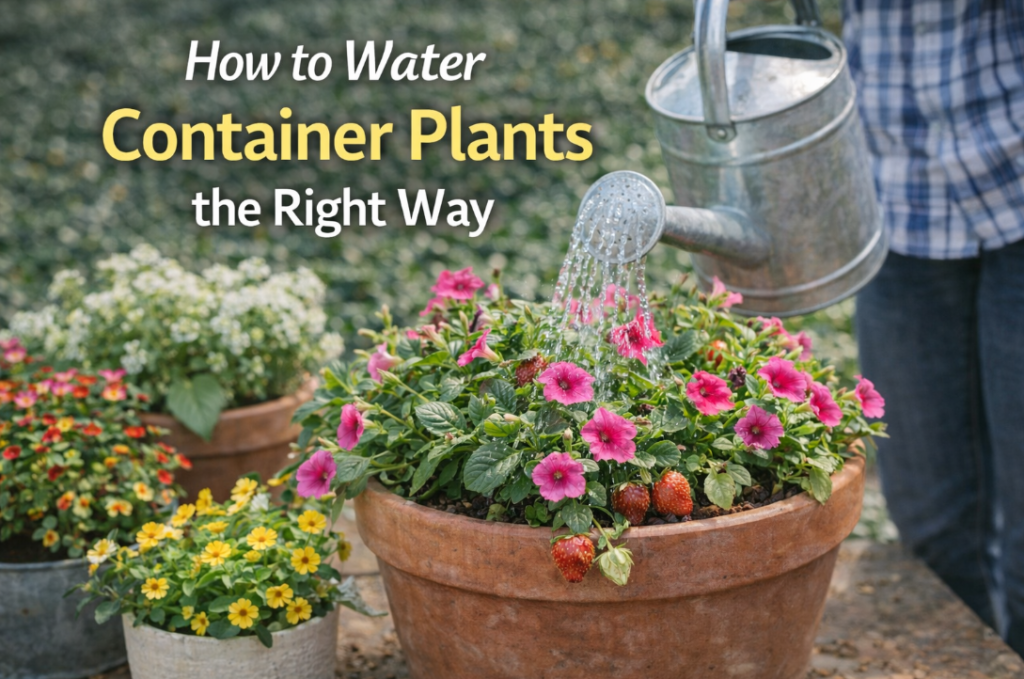
How you water matters just as much as when you water. Follow these steps every time you water your container plants:
- Water slowly — Pour water slowly around the base of the plant, allowing it to absorb gradually rather than running straight through.
- Water deeply — Continue watering until water flows freely from the drainage holes at the bottom of the pot. This ensures the entire root zone is moistened.
- Water at the base — Direct water at the soil, not on the leaves or stem. Wet foliage promotes fungal diseases.
- Water in the morning — Morning watering gives plants moisture for the day ahead and allows any wet foliage to dry before nightfall.
- Empty the saucer — After 30 minutes, empty any water that has collected in the saucer under the pot. Roots sitting in standing water will rot.
4. How Much Water Do Container Plants Need?
The correct answer is: enough to moisten the entire root zone, with excess draining out the bottom.
There is no single measurement that works for all containers. A 6-inch pot needs far less water than a 20-gallon container. The goal is always the same — thoroughly moisten the soil from top to bottom, then stop.
Signs you’ve watered enough:
- Water flows steadily from the drainage holes
- The soil feels evenly moist when you press it
- The pot feels heavier than before watering
5. Signs of Overwatering
Overwatering is the most common mistake beginner container gardeners make. Ironically, the symptoms of overwatering often look similar to underwatering — which leads many people to add even more water, making the problem worse.
| Symptom | What It Means |
|---|---|
| Yellow leaves | Roots suffocating from too much water |
| Soft, mushy stems | Root rot beginning to set in |
| Wilting despite wet soil | Roots damaged by rot, unable to absorb water |
| Mold on soil surface | Soil staying too wet for too long |
| Fungus gnats | Larvae thrive in consistently moist soil |
| Dropping leaves | Plant stressed by waterlogged roots |
What to do if you’ve overwatered: Stop watering immediately. Move the pot to a spot with good air circulation. If the soil is completely waterlogged, consider repotting the plant into fresh, dry potting mix. Check the roots — if they’re brown and mushy, trim them back to healthy white roots before repotting.
6. Signs of Underwatering
| Symptom | What It Means |
|---|---|
| Wilting in the morning | Plant lacks water (afternoon wilting can be heat stress) |
| Dry, pulling-away soil | Soil has shrunk away from the pot edges — very dry |
| Crispy brown leaf edges | Plant dehydrated, leaf tips dying |
| Extremely light pot | Soil completely dried out |
| Slow or no growth | Plant conserving energy due to water stress |
What to do if you’ve underwatered: Water thoroughly immediately. If the soil has become hydrophobic (water rolls off instead of soaking in), place the entire pot in a basin of water for 30 minutes to rehydrate the soil completely.
7. How Often to Water Container Plants
| Condition | Watering Frequency |
|---|---|
| Hot summer weather | Once or twice daily for small pots |
| Warm spring/fall weather | Every 1–2 days |
| Cool or cloudy weather | Every 2–4 days |
| Indoor plants | Every 3–7 days depending on plant and pot size |
| Succulents and cacti | Every 1–2 weeks (allow to dry completely) |
| Large containers | Less frequent — more soil holds more moisture |
8. Top Watering Tips for Container Plants
- Check daily — Make checking your containers part of your morning routine. It takes 30 seconds and prevents most watering problems.
- Group containers together — Grouped pots create a more humid microclimate, which reduces how quickly soil dries out.
- Use self-watering containers — These have a built-in reservoir that keeps soil consistently moist. Excellent for busy people or frequent travelers.
- Add mulch to the soil surface — A thin layer of bark mulch or pebbles on top of the soil slows evaporation significantly.
- Water more in hot, windy weather — Wind dries out container soil much faster than still air. Check containers more frequently on windy days.
- Use larger pots — Larger containers hold more soil and dry out more slowly, making watering more forgiving for beginners.
9. Best Watering Tools for Container Plants
| Tool | Best For | Why |
|---|---|---|
| Watering can with long spout | Indoor plants, herbs, small containers | Precise control, waters at the base |
| Garden hose with adjustable nozzle | Outdoor containers, large pots | Fast and efficient for multiple containers |
| Drip irrigation system | Large container gardens | Consistent, automatic watering |
| Self-watering spike | Vacations, busy schedules | Keeps soil moist for days without attention |
| Moisture meter | All container plants | Takes the guesswork out of watering |
10. Common Watering Mistakes to Avoid
| Mistake | Why It’s a Problem | What to Do Instead |
|---|---|---|
| Watering on a fixed schedule | Plants’ needs change with weather | Check soil before every watering |
| Shallow watering | Only top inch gets wet, roots stay dry | Water until it drains from the bottom |
| Watering leaves and stems | Promotes fungal disease | Always water at the base |
| Leaving water in saucers | Roots sit in water and rot | Empty saucers after 30 minutes |
| Watering at night | Wet soil overnight encourages disease | Water in the morning |
| Using cold water in summer | Temperature shock stresses roots | Use room-temperature water |
Final Thoughts
Learning how to water container plants correctly takes a little time and observation, but it is one of the most valuable skills you can develop as a container gardener. Check your plants daily, water deeply when the soil is dry, and avoid the common mistakes outlined above.
Once you get your watering right, you’ll be amazed at how much better your container plants grow. Healthy roots mean healthy plants — and healthy plants are happy plants. 🌱
Have questions about watering container plants? Visit the Contact page — I’d love to hear from you!
— mumu, Green Garden Tips