By mumu
Repotting is one of the most important skills every container gardener needs to learn. When a plant outgrows its pot, its roots become crowded and compacted, water drains poorly, and the plant stops growing — no matter how well you water or fertilize it.
The good news is that repotting is much easier than most beginners expect. Once you know the signs that a plant needs repotting, how to choose the right new pot, and the simple steps to move a plant safely, you’ll be able to repot with confidence every time.
Here is a complete, step-by-step guide on how to repot a plant without stressing it — or yourself.
Table of Contents
- When to Repot a Plant
- Signs Your Plant Needs Repotting
- How to Choose the Right New Pot
- What Soil to Use When Repotting
- What You Need Before You Start
- How to Repot a Plant Step by Step
- How to Care for a Plant After Repotting
- Common Repotting Mistakes to Avoid
- Repotting FAQ
1. When to Repot a Plant
The best time to repot most container plants is in spring, just as the plant is coming out of its winter rest and beginning its active growing season. Repotting in spring gives the plant the entire growing season to establish itself in its new container.
| Season | Repotting Suitability | Notes |
|---|---|---|
| Spring | ✅ Best time | Plant has full growing season to recover and establish |
| Early summer | ✅ Good | Still enough growing season remaining for recovery |
| Late summer | ⚠️ Acceptable if necessary | Avoid if possible — less time to recover before winter |
| Fall | ❌ Avoid | Plant going dormant — repotting causes unnecessary stress |
| Winter | ❌ Avoid | Plant dormant — roots won’t establish in cold conditions |
Exception: If a plant is severely root-bound, diseased, or in clearly poor health, repot immediately regardless of the season. A struggling plant in the wrong pot will only get worse if you wait.
2. Signs Your Plant Needs Repotting
| Sign | What It Means |
|---|---|
| Roots growing out of drainage holes | Plant is severely root-bound — repot immediately |
| Roots circling on top of the soil | No more room to grow downward — time to repot |
| Water runs straight through without absorbing | Roots have taken up all the soil space |
| Plant drying out very quickly after watering | Too many roots, not enough soil to hold moisture |
| Slow or stopped growth despite good care | Plant is pot-bound and unable to expand |
| Plant looks too big for its pot | Top-heavy plant at risk of tipping over |
| It has been 1–2 years since last repotting | Time to refresh the soil and check root health |
3. How to Choose the Right New Pot
Choosing the right size pot is critical when repotting. Going too large is one of the most common repotting mistakes beginners make.
| Rule | Detail |
|---|---|
| Go up one size only | Choose a pot 1–2 inches larger in diameter than the current pot. No more. |
| Never go too big | A pot that’s too large holds excess moisture that roots can’t absorb, leading to root rot |
| Always use drainage holes | Non-draining pots cause waterlogging and root rot |
| Match pot material to plant needs | Terracotta for plants that like to dry out; plastic or glazed ceramic for moisture-loving plants |
Simple rule: If your plant is currently in a 6-inch pot, repot into an 8-inch pot. If it’s in a 10-inch pot, move it to a 12-inch pot. One size up — that’s it.
4. What Soil to Use When Repotting
Always use fresh potting mix when repotting — never reuse old soil from the same container. Old potting mix becomes compacted, depleted of nutrients, and may harbor pests or diseases.
- Most container plants — Use a high-quality, well-draining potting mix
- Succulents and cacti — Use a cactus and succulent specific mix, or add extra perlite to regular potting mix
- Orchids — Use bark-based orchid mix, never regular potting soil
- Vegetables and herbs — Use a rich potting mix with added compost
- African violets — Use a lightweight, peat-based African violet mix
5. What You Need Before You Start
- New pot (1–2 inches larger than current pot)
- Fresh potting mix appropriate for your plant
- A trowel or large spoon
- Watering can
- Newspaper or plastic sheet to protect your work surface
- Scissors or pruning shears (to trim any damaged roots)
Tip: Water your plant thoroughly 24 hours before repotting. A well-hydrated plant handles the stress of repotting much better than a dry one, and moist soil holds together better around the roots when you remove the plant.
6. How to Repot a Plant Step by Step
Step 1: Prepare the new pot
Add a layer of fresh potting mix to the bottom of the new pot — enough so the plant will sit at the same depth as it did in its old pot. The top of the root ball should sit about 1 inch below the rim of the new pot.
Step 2: Remove the plant from its old pot
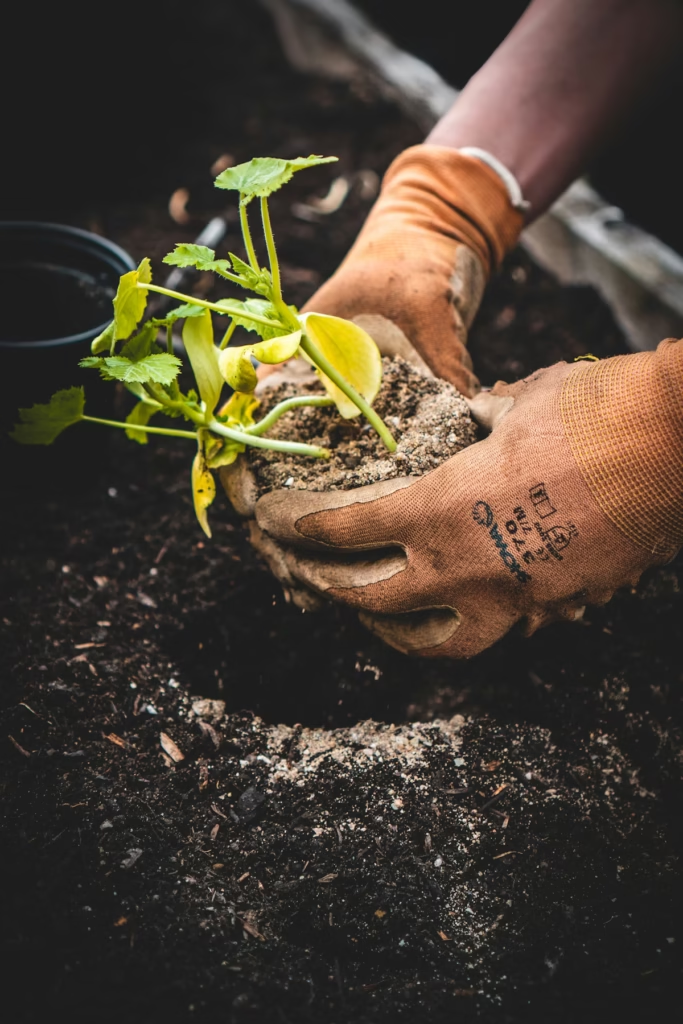
Turn the pot on its side and gently squeeze the sides if it’s plastic, or run a knife around the inside edge if it’s rigid. Hold the plant at the base of its stem and gently pull it free. Never yank — work slowly and carefully.
Step 3: Examine and loosen the roots
Gently shake off excess old soil from the root ball. Look at the roots — healthy roots are white or light tan. Brown, mushy, or rotten roots should be trimmed off with clean scissors. If the roots are tightly coiled, gently loosen them with your fingers.
Step 4: Place the plant in the new pot
Set the plant in the center of the new pot on top of the fresh soil layer. Check that it’s sitting at the correct depth — the top of the root ball should be about 1 inch below the rim of the pot.
Step 5: Fill in with fresh potting mix
Add fresh potting mix around the sides of the root ball, pressing it gently but firmly to eliminate air pockets. Fill to within 1 inch of the pot rim — this space is important for watering.
Step 6: Water thoroughly
Water the plant slowly and deeply until water drains freely from the bottom. This settles the soil around the roots and gives the plant its first drink in its new home.
Step 7: Place in a shaded spot to recover
Move the newly repotted plant to a spot with bright indirect light (not direct sun) for 1–2 weeks. This allows it to recover from transplant stress before returning to its normal position.
7. How to Care for a Plant After Repotting
| Care Aspect | What to Do |
|---|---|
| Watering | Water well after repotting, then allow to dry slightly before watering again |
| Sunlight | Keep in bright indirect light for 1–2 weeks to reduce stress |
| Fertilizing | Wait 4–6 weeks before fertilizing — fresh potting mix has enough nutrients |
| Wilting | Some wilting is normal for 1–3 days after repotting — don’t panic |
| Leaf drop | Some leaf drop is normal — the plant is adjusting to its new environment |
8. Common Repotting Mistakes to Avoid
- Going up too many pot sizes — A pot that’s too large causes root rot from excess moisture
- Repotting in fall or winter — Plants are dormant and can’t recover well in cold conditions
- Reusing old soil — Old soil is depleted and may harbor pests — always use fresh potting mix
- Burying the stem too deep — Burying the stem causes rot — keep the plant at the same depth as before
- Fertilizing immediately after repotting — Fresh potting mix has nutrients — wait 4–6 weeks before feeding
- Putting in direct sun right after repotting — Stressed plants need gentle light while they recover
9. Repotting FAQ
How often should I repot my container plants?
Most container plants need repotting every 1–2 years. Fast-growing plants may need it annually; slow-growing plants like cacti and succulents may only need repotting every 3–4 years.
Can I repot a plant that is flowering?
It’s best to wait until the plant has finished flowering. Repotting a flowering plant causes stress that can lead to flower and bud drop.
What if I don’t want my plant to get bigger?
Instead of moving to a larger pot, you can root-prune the plant — trim back the roots by about one-third and repot into the same container with fresh potting mix. This keeps the plant at the same size while refreshing the soil.
My plant looks wilted after repotting — is this normal?
Yes, some wilting is completely normal for a few days after repotting. Keep the plant in a shaded spot, water it gently, and it should recover within a week.
Final Thoughts
Repotting is one of the kindest things you can do for your container plants. Fresh soil, more room for roots, and a clean new pot gives your plants everything they need to thrive and grow.
Follow these simple steps, avoid the common mistakes, and your plants will bounce back quickly and reward you with healthy, vigorous new growth. 🌱
Have questions about repotting container plants? Visit the Contact page — I’d love to hear from you!
— mumu, Green Garden Tips