By mumu
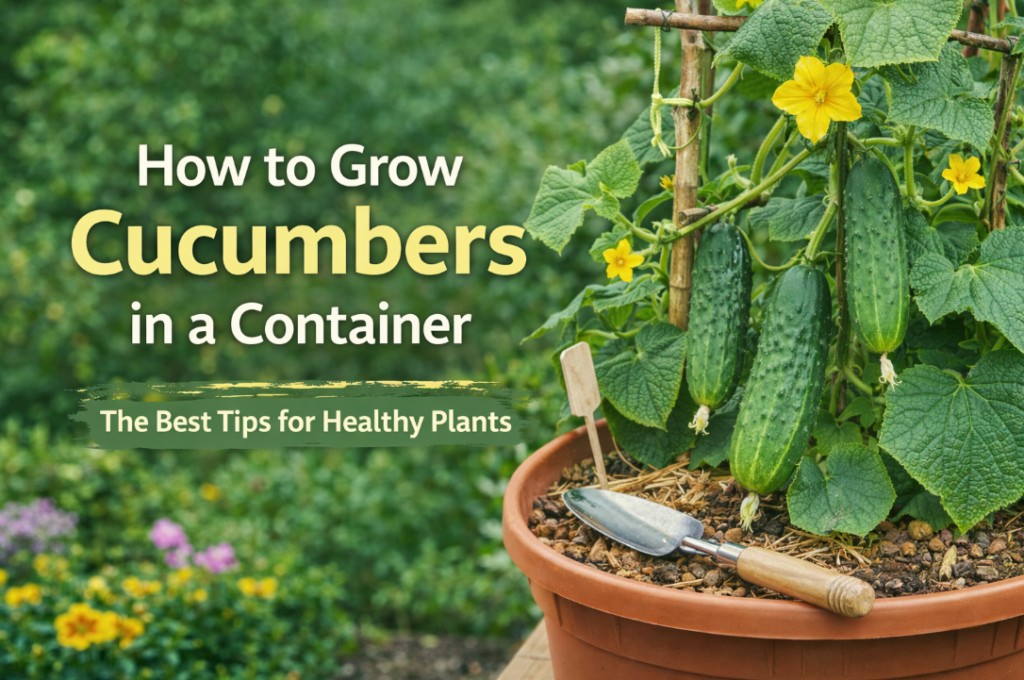
Fresh cucumbers straight from your own container garden are crisp, juicy, and far more flavorful than anything you’ll find at the grocery store. And the best part? You don’t need a large garden to grow them. Cucumbers are surprisingly well-suited to container growing — as long as you choose the right variety and give them what they need.
Growing cucumbers in a container requires a little more attention than some other vegetables, but the reward — handfuls of fresh cucumbers all summer long — is absolutely worth it. Here is everything you need to know to grow cucumbers in containers successfully.
Table of Contents
- Best Cucumber Varieties for Containers
- Choosing the Right Container for Cucumbers
- Best Soil for Growing Cucumbers in Containers
- How to Plant Cucumbers in Containers
- Sunlight Requirements
- How to Water Container Cucumbers
- How to Fertilize Cucumbers in Containers
- Supporting Cucumber Plants in Containers
- Common Problems and Solutions
- When and How to Harvest Container Cucumbers
1. Best Cucumber Varieties for Containers
Choosing the right variety is the most important decision when growing cucumbers in containers. Full-size vining varieties grow too large for most containers — compact or bush varieties are a much better choice.
| Variety | Type | Container Size | Notes |
|---|---|---|---|
| Bush Pickle | Compact bush | 5 gallons | Perfect for containers — compact plant, productive |
| Patio Snacker | Compact | 5 gallons | Bred specifically for container growing |
| Spacemaster | Compact bush | 5 gallons | Short vines, very productive, excellent flavor |
| Salad Bush | Compact bush | 5 gallons | Award-winning variety, great for small spaces |
| Bush Champion | Compact bush | 5–7 gallons | Large fruits on compact plants |
Best choice for beginners: Bush Pickle or Spacemaster — both are compact, reliable, and produce well in containers throughout the season.
2. Choosing the Right Container for Cucumbers
Cucumbers have deep, extensive root systems and need more container space than most vegetables. A container that’s too small will severely restrict growth and reduce your harvest.
| Container Size | Suitability | Plants Per Container |
|---|---|---|
| 5 gallons | Minimum for compact varieties | 1 plant |
| 7–10 gallons | Good — recommended for most varieties | 1 plant |
| 15–20 gallons | Excellent — best results | 1–2 plants |
Best container materials: Fabric grow bags and large plastic containers work best for cucumbers. They’re lightweight, provide good drainage, and come in large enough sizes for cucumber roots to spread comfortably.
Most important rule: Always use a container with drainage holes. Cucumbers are very susceptible to root rot in waterlogged soil.
3. Best Soil for Growing Cucumbers in Containers
Cucumbers need rich, well-draining soil that retains enough moisture to support their fast growth while never becoming waterlogged.
Best soil mix for container cucumbers:
- 60% high-quality potting mix
- 20% compost (for nutrients and moisture retention)
- 20% perlite (for drainage)
Cucumbers prefer a slightly acidic to neutral soil pH of 6.0–7.0. They are heavy feeders, so starting with a rich potting mix that contains compost gives them a significant advantage from day one.
4. How to Plant Cucumbers in Containers
From seed:
- Sow seeds directly in the container after the last frost date, when soil temperature is at least 60°F (15°C)
- Plant seeds 1 inch deep in the center of the container
- Sow 2–3 seeds per container and thin to the strongest seedling once they reach 3 inches tall
- Keep soil consistently moist until germination — usually 5–10 days
From transplants:
- Wait until all frost danger has passed and nighttime temperatures stay above 55°F (13°C)
- Plant at the same depth as the transplant was growing in its nursery pot
- Water thoroughly after planting
- Set up your trellis or support at planting time — before the plant starts growing
Key tip: Cucumbers dislike root disturbance. If starting from seed indoors, use biodegradable pots that can be planted directly into the container without disturbing the roots.
5. Sunlight Requirements
Cucumbers are warm-weather, sun-loving vegetables that need plenty of direct sunlight to produce well. Insufficient sun is one of the most common reasons container cucumbers underperform.
| Sunlight | Result |
|---|---|
| 8+ hours direct sun | Maximum production — ideal conditions |
| 6–8 hours direct sun | Good production — acceptable conditions |
| Less than 6 hours | Reduced production — plants will grow but fruit less |
Key advantage of containers: Move your cucumber container to follow the sun throughout the day — something impossible with in-ground plants. Use this flexibility to maximize sun exposure.
6. How to Water Container Cucumbers
Cucumbers are mostly water — about 96% — which makes consistent moisture absolutely critical for good growth and flavor. Inconsistent watering causes bitter cucumbers, blossom drop, and poor fruit development.
- Water when the top inch of soil feels dry
- Water deeply until it drains from the bottom of the container
- In hot summer weather, container cucumbers may need watering once or twice daily
- Mulch the soil surface with a layer of straw or compost to slow moisture evaporation
- Water at the base — wet foliage encourages powdery mildew, the most common cucumber disease
Self-watering containers are an excellent choice for cucumbers — they maintain consistent soil moisture automatically, which is exactly what cucumbers need.
7. How to Fertilize Cucumbers in Containers
Cucumbers are heavy feeders that need regular fertilizing to produce abundantly all season.
| Growth Stage | Best Fertilizer | Frequency |
|---|---|---|
| Seedling to early growth | Balanced fertilizer (10-10-10) | Every 2 weeks |
| Flowering stage | Switch to high-potassium fertilizer | Every 1–2 weeks |
| Fruiting stage | Continue high-potassium fertilizer | Every 1–2 weeks |
Important: Once cucumbers start flowering, reduce nitrogen and increase potassium. Too much nitrogen at this stage produces lots of leafy growth but fewer cucumbers.
8. Supporting Cucumber Plants in Containers
Even compact bush varieties benefit from some support as they grow. Vining varieties absolutely need a trellis — without one, the vines will sprawl across the ground, making harvesting difficult and increasing disease risk.
- Bamboo stakes — Simple and effective for compact bush varieties
- Small tomato cage — Easy to set up and provides good support for compact varieties
- Trellis net — Best for vining varieties — attach to a wall, fence, or freestanding frame
- A-frame trellis — Sturdy, self-supporting, and works well for large containers
Key benefit of trellising: Growing cucumbers vertically improves air circulation, reduces disease, makes harvesting easier, and allows you to grow more plants in less space.
9. Common Problems and Solutions
| Problem | Cause | Solution |
|---|---|---|
| Bitter cucumbers | Inconsistent watering or heat stress | Water consistently, harvest before cucumbers get too large |
| Flowers but no fruit | Poor pollination — male flowers appear before female flowers | Be patient — female flowers (with tiny cucumber behind them) appear later. Hand pollinate with a soft brush. |
| Powdery mildew | Fungal disease from poor air circulation or wet leaves | Water at base only, improve air circulation, remove affected leaves |
| Yellow leaves | Nutrient deficiency or overwatering | Check soil moisture, apply balanced fertilizer |
| Misshapen cucumbers | Inconsistent watering or poor pollination | Water consistently, hand pollinate flowers |
10. When and How to Harvest Container Cucumbers
Cucumbers are best harvested young and frequently. Leaving cucumbers on the plant too long causes them to become bitter, seedy, and yellow — and signals the plant to stop producing new fruit.
| Cucumber Type | Ideal Harvest Size | Color When Ready |
|---|---|---|
| Slicing cucumbers | 6–8 inches long | Dark green |
| Pickling cucumbers | 2–4 inches long | Medium green |
| Mini/snacking cucumbers | 3–4 inches long | Dark green |
How to harvest: Use scissors or a sharp knife to cut the cucumber from the vine, leaving a short stem attached. Check your container daily during peak season — cucumbers grow very fast in warm weather and can go from perfect to overripe within 24 hours.
Final Thoughts
Growing cucumbers in a container is one of the most satisfying container gardening projects you can take on. With the right variety, a large enough container, consistent watering, and regular feeding, you can harvest crisp, fresh cucumbers all summer long — right from your balcony or patio.
Choose a compact bush variety, give it maximum sun, water it consistently, and harvest frequently. Do those four things well, and your container cucumber plant will reward you with an abundant, delicious harvest all season. 🥒
Have questions about growing cucumbers in containers? Visit the Contact page — I’d love to hear from you!
— mumu, Green Garden Tips