By mumu
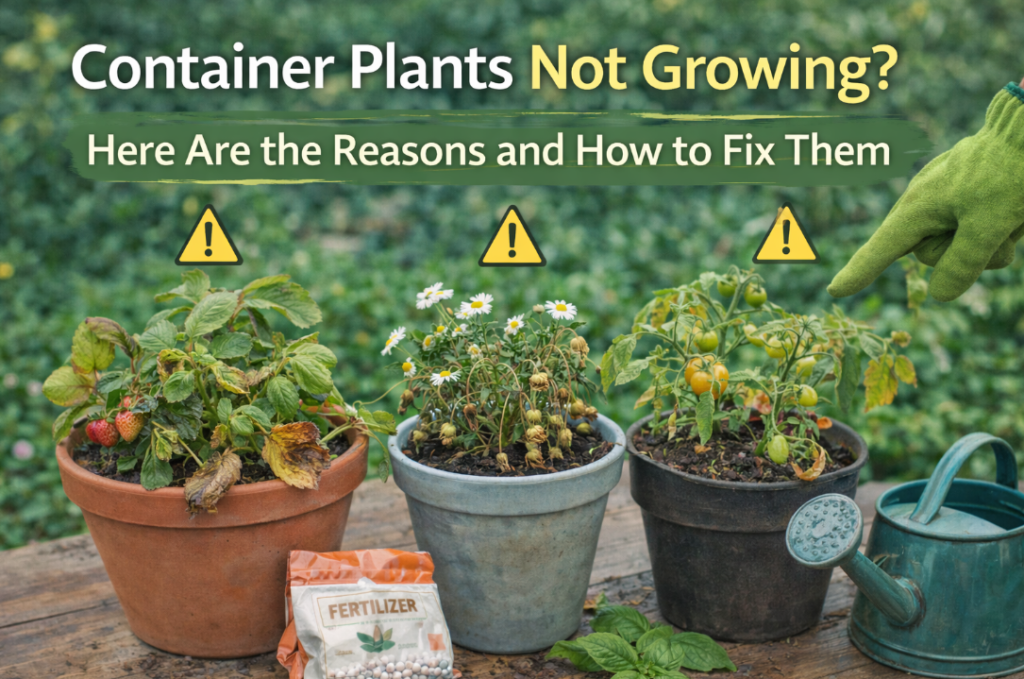
You’ve planted your containers, you’re watering regularly, and yet — nothing is happening. Your plants just sit there, barely growing, looking the same week after week. Or maybe they started well but suddenly stopped growing for no obvious reason.
Slow or stopped growth in container plants is frustrating, but it’s almost always fixable once you identify the cause. The most common reasons are surprisingly simple — and so are the solutions.
Here are the most common reasons your container plants are not growing and exactly what to do to fix each one.
Table of Contents
- Not Enough Light
- Nutrient Deficiency
- Root Bound Plant
- Watering Problems
- Wrong Temperature
- Poor Soil Quality
- Pests and Disease
- Wrong Pot Size
- How to Diagnose the Problem
- Top Tips to Get Container Plants Growing Again
1. Not Enough Light
Insufficient light is the number one reason container plants stop growing. Plants use light as their energy source through photosynthesis — without enough light, they simply don’t have the energy to grow.
| Signs | Fix |
|---|---|
| Leggy, stretched growth reaching toward light; pale or yellowing leaves; no flowers or fruit despite good care | Move container to a sunnier location. Add a grow light for indoor plants. Check light requirements for your specific plant. |
Light requirements by plant type:
- Vegetables and fruiting plants — Need 6–8 hours of direct sun
- Herbs — Need 4–6 hours of direct sun
- Flowering plants — Most need 4–6 hours of direct sun
- Foliage houseplants — Many tolerate 2–4 hours of indirect light
2. Nutrient Deficiency
Container plants depend entirely on the nutrients available in their potting mix. Every time you water, nutrients wash out through the drainage holes. Without regular fertilizing, plants become nutrient-starved and growth slows or stops completely.
| Symptom | Likely Deficiency | Fix |
|---|---|---|
| Pale yellow leaves overall, slow growth | Nitrogen (N) | Apply balanced liquid fertilizer immediately |
| Purple-tinged leaves, poor root development | Phosphorus (P) | Apply fertilizer with higher P content |
| Brown leaf edges, poor fruiting | Potassium (K) | Apply high-potassium fertilizer |
| Yellow leaves with green veins | Iron or Magnesium | Apply micronutrient fertilizer |
Fix: Start a regular fertilizing schedule. Feed vegetables and flowering plants every 1–2 weeks with a balanced liquid fertilizer during the growing season.
3. Root Bound Plant
When a plant’s roots completely fill its container, growth stops. There is no more room for roots to expand, soil dries out almost immediately after watering, and the plant can no longer absorb enough water and nutrients to support new growth.
| Signs | Fix |
|---|---|
| Roots growing out of drainage holes; water running straight through without absorbing; plant drying out very quickly after watering; growth completely stopped despite good care | Repot into a container 1–2 inches larger with fresh potting mix. Do this in spring for the best results. |
Key tip: Check your containers for signs of root binding every spring. Most container plants need repotting every 1–2 years to maintain healthy growth.
4. Watering Problems
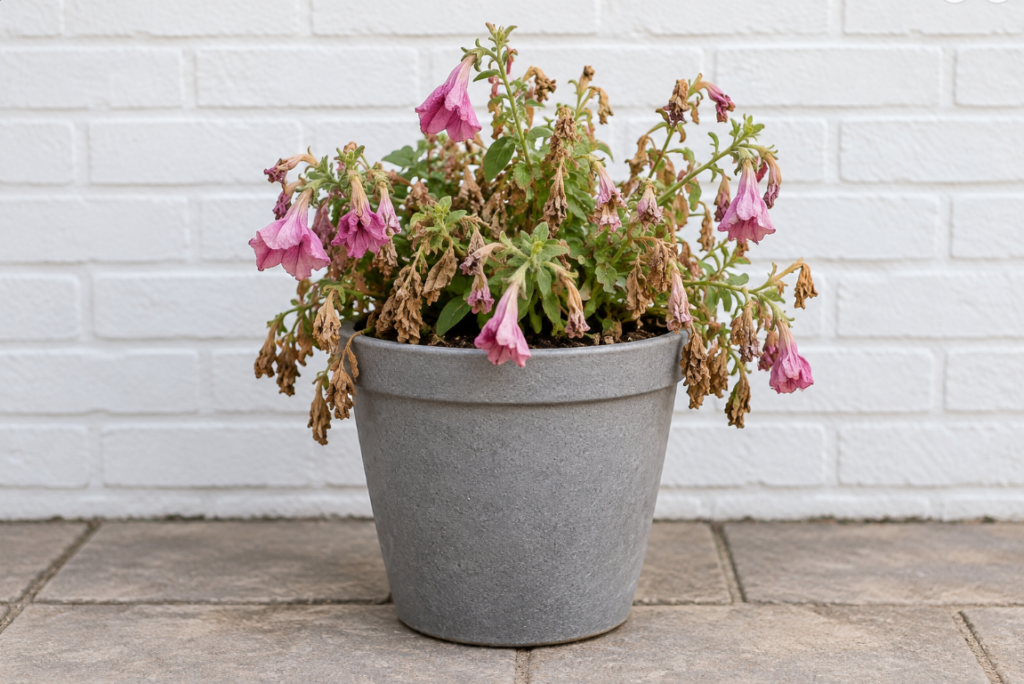
Both overwatering and underwatering stop plant growth — but in different ways. Overwatering causes root rot that destroys the plant’s ability to absorb water and nutrients. Underwatering causes the plant to go into survival mode, shutting down growth to conserve energy.
| Problem | Signs | Fix |
|---|---|---|
| Overwatering | Yellow leaves, wilting despite wet soil, mushy stems, mold on soil | Stop watering, allow to dry out, repot if root rot has set in |
| Underwatering | Wilting, crispy brown leaf edges, bone-dry soil | Water thoroughly immediately, check soil daily going forward |
Fix: Check soil moisture before every watering using the finger test. Only water when the top inch of soil feels dry.
5. Wrong Temperature
Temperature has a huge impact on plant growth. Most container plants have a preferred temperature range — outside of that range, growth slows dramatically or stops altogether.
| Plant Type | Ideal Temperature | Effect of Wrong Temperature |
|---|---|---|
| Warm-season vegetables (tomatoes, peppers) | 65–85°F (18–29°C) | Growth stops below 55°F (13°C) |
| Cool-season vegetables (lettuce, spinach) | 45–65°F (7–18°C) | Bolt and decline above 75°F (24°C) |
| Tropical houseplants | 65–80°F (18–27°C) | Growth slows significantly below 60°F (15°C) |
| Succulents | 60–80°F (15–27°C) | Go dormant in winter — very slow or no growth |
Fix: Move containers to warmer or cooler spots as needed. One of the great advantages of container gardening is the ability to move plants to their ideal environment.
6. Poor Soil Quality
Old, compacted, or nutrient-depleted potting mix is a very common but often overlooked reason for slow plant growth. Potting mix breaks down over time, losing its structure, drainage, and nutrient content.
- Old potting mix compacts and drains poorly — roots suffocate
- Depleted potting mix has no nutrients left for plant growth
- Hydrophobic potting mix repels water — roots stay dry even after watering
Fix: Replace potting mix annually or every two years. Always start each new growing season with fresh, high-quality potting mix. Add compost and perlite to improve nutrient content and drainage.
7. Pests and Disease
A pest or disease infestation can severely slow or stop plant growth — often before the problem is visible to the naked eye. Root aphids, vine weevil larvae, and root rot fungi can all destroy a plant’s root system while the above-ground plant still looks relatively normal.
| Pest/Disease | Signs | Fix |
|---|---|---|
| Root aphids | Slow growth, wilting, white powdery substance on roots | Repot with fresh soil, apply systemic insecticide |
| Vine weevil larvae | Plant suddenly collapses — roots eaten away | Check roots for white grubs, treat with nematodes |
| Root rot | Slow decline, yellow leaves, mushy roots | Repot in fresh dry soil after trimming rotten roots |
| Spider mites | Fine webbing, stippled yellow leaves, slow growth | Spray with neem oil or insecticidal soap |
8. Wrong Pot Size
Both too-small and too-large pots cause growth problems. A pot that’s too small restricts root growth. A pot that’s too large holds excess moisture that roots can’t absorb — leading to root rot and stunted growth.
| Problem | Effect on Growth | Fix |
|---|---|---|
| Pot too small | Root bound — growth stops completely | Repot into a container 1–2 inches larger |
| Pot too large | Excess wet soil causes root rot and slow growth | Repot into a more appropriately sized container |
9. How to Diagnose the Problem
When your container plants stop growing, work through this checklist to identify the cause:
- Check the light — Is the plant getting enough direct sunlight for its needs?
- Check the soil moisture — Is the soil too wet or too dry?
- Check the roots — Are they coming out of the drainage holes? Are they healthy white or brown and mushy?
- Check for pests — Look under leaves and at the soil surface for insects or webbing
- Check when you last fertilized — Has it been more than 4–6 weeks?
- Check the temperature — Is the plant in its preferred temperature range?
- Check the potting mix age — Has it been more than 2 years since you repotted?
10. Top Tips to Get Container Plants Growing Again
| Tip | Why It Helps |
|---|---|
| Move to more sun | More light = more energy for growth |
| Start fertilizing regularly | Provides nutrients that drive new growth |
| Repot if root bound | Fresh soil and more room = immediate growth response |
| Fix watering issues | Correct moisture levels allow roots to function properly |
| Check and treat for pests | Eliminating pests removes a major growth inhibitor |
| Replace old potting mix | Fresh soil provides nutrients and proper drainage |
Final Thoughts
Slow or stopped growth in container plants is almost always fixable. Work through the common causes listed above, identify what’s holding your plant back, and apply the appropriate fix. In most cases, you’ll see new growth within 1–2 weeks of addressing the underlying problem.
Container gardening is a learning process — every challenge you solve makes you a better, more confident gardener. Keep going, keep learning, and your container garden will reward you for it. 🌱
Have questions about container plant growth problems? Visit the Contact page — I’d love to hear from you!
— mumu, Green Garden Tips