By mumu
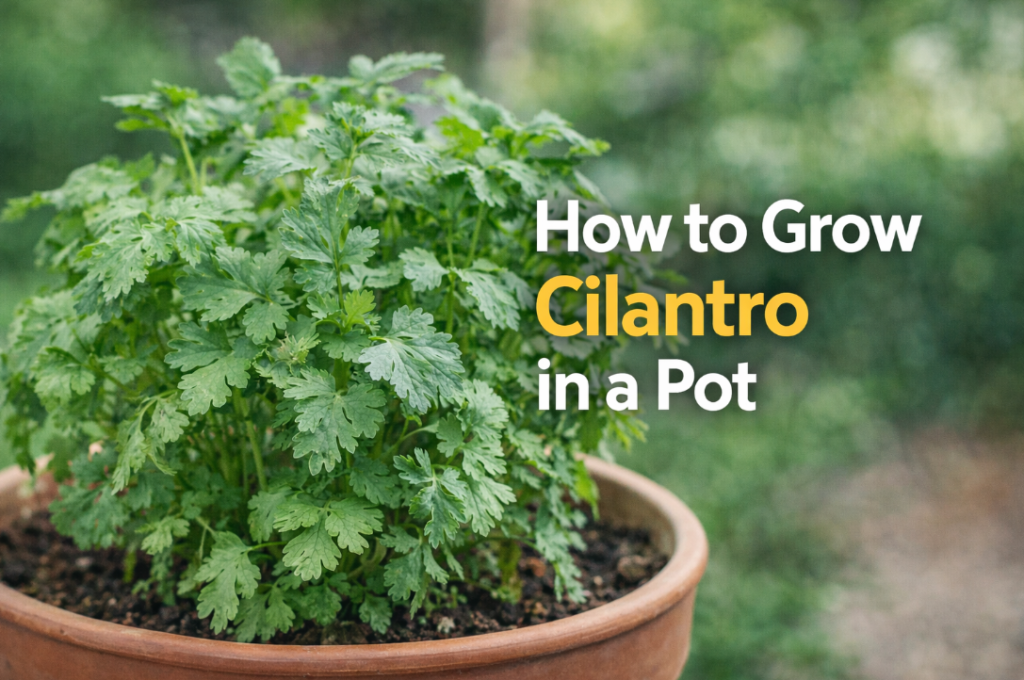
Fresh cilantro is one of the most used herbs in the kitchen — essential in Mexican, Asian, and Middle Eastern cooking — and one of the most rewarding herbs to grow in a pot at home. Store-bought cilantro wilts within days of purchase, but a pot of homegrown cilantro gives you fresh leaves whenever you need them.
Cilantro has a reputation for being tricky to grow, but once you understand its one key quirk — it bolts quickly in heat — growing cilantro in a pot becomes much more straightforward. Here is everything you need to know.
Table of Contents
- Best Cilantro Varieties for Pots
- Choosing the Right Pot for Cilantro
- Best Soil for Growing Cilantro in Pots
- How to Plant Cilantro in Containers
- Sunlight Requirements
- How to Water Cilantro in a Pot
- How to Fertilize Pot Cilantro
- How to Prevent Cilantro from Bolting
- How to Harvest Cilantro from a Pot
- Common Problems and Solutions
1. Best Cilantro Varieties for Pots
| Variety | Best For | Notes |
|---|---|---|
| Slow Bolt | All seasons | Best for beginners — stays leafy much longer before flowering |
| Calypso | Warm weather growing | Most bolt-resistant variety available — great for summer |
| Santo | Spring and fall | Classic variety — fast-growing, abundant leaves |
| Leisure | All seasons | Compact, slow to bolt, ideal for containers |
Best choice for beginners: Slow Bolt or Calypso — both stay leafy much longer than standard varieties, giving you more harvests before the plant flowers.
2. Choosing the Right Pot for Cilantro
Cilantro has a long taproot that doesn’t like to be disturbed, so choosing a pot with adequate depth is important.
| Detail | Recommendation | Why |
|---|---|---|
| Minimum depth | 8 inches deep | Accommodates cilantro’s long taproot |
| Minimum width | 8 inches wide | Allows enough plants for a useful harvest |
| Best material | Plastic or glazed ceramic | Retains moisture well — cilantro dries out quickly in terracotta |
| Drainage holes | Always required | Cilantro roots rot in waterlogged soil |
Key tip: A deeper pot is better than a wider one for cilantro. The long taproot needs depth more than it needs width.
3. Best Soil for Growing Cilantro in Pots
Cilantro needs light, well-draining soil that retains just enough moisture to stay evenly moist between waterings.
Best soil mix for pot cilantro:
- 60% high-quality potting mix
- 20% compost (for nutrients)
- 20% perlite (for drainage)
Cilantro prefers a neutral soil pH of 6.2–6.8. Most quality potting mixes fall within this range naturally.
4. How to Plant Cilantro in Containers
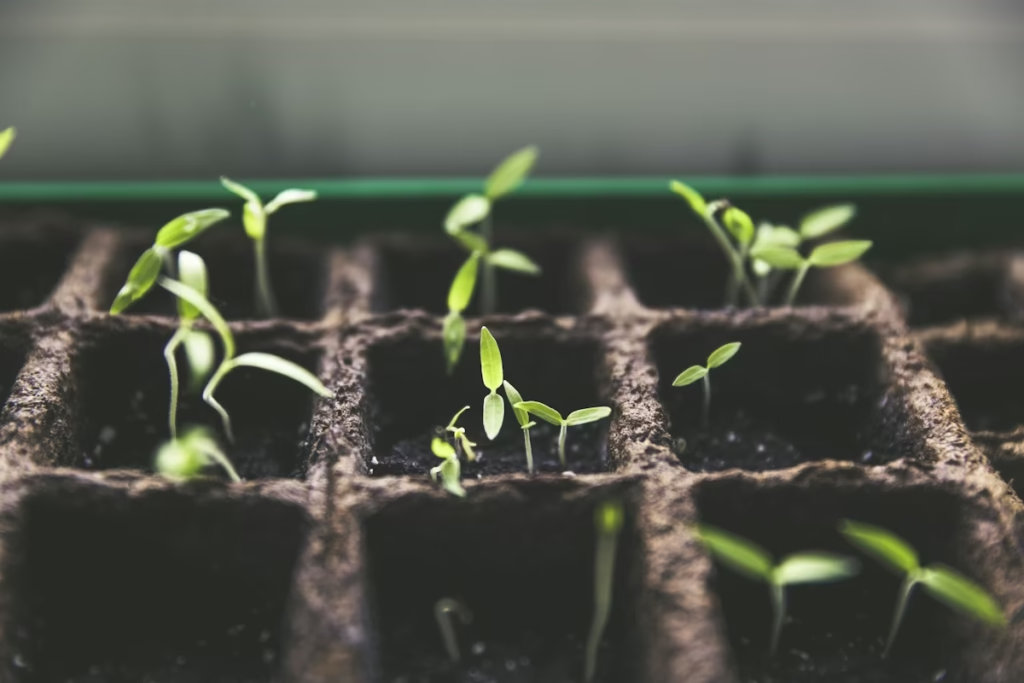
Important: Always sow cilantro seeds directly in the container — never start in seed trays and transplant. Cilantro has a long taproot that is easily damaged by transplanting, which causes the plant to bolt immediately.
- Fill the container with prepared soil mix to within 1 inch of the rim
- Lightly crush the cilantro seeds between your fingers before sowing — each “seed” is actually two seeds joined together. Crushing helps both seeds germinate.
- Scatter seeds thinly across the surface, spacing about 1 inch apart
- Cover with ¼ inch of soil and press gently
- Water gently with a fine mist
- Keep soil consistently moist until germination — usually 7–10 days
- Thin seedlings to 3–4 inches apart once they reach 2 inches tall
Succession planting tip: Sow a new batch of cilantro seeds every 2–3 weeks for a continuous supply. This is the most effective way to always have fresh cilantro available.
5. Sunlight Requirements
| Light Condition | Result |
|---|---|
| Full sun (6+ hours) | Fast growth in cool weather — bolts quickly in heat |
| Partial sun (4–6 hours) | Ideal in spring and fall — steady growth |
| Partial shade (2–4 hours) | Best in summer — slows bolting significantly |
Summer tip: Move cilantro containers to a spot with afternoon shade during hot summer months. This dramatically slows bolting and extends your harvest window by weeks.
6. How to Water Cilantro in a Pot
- Keep soil consistently moist but never waterlogged
- Water when the top half inch of soil feels dry
- Water at the base — wet foliage invites fungal disease
- In hot weather, check daily — cilantro dries out quickly
- Drought stress is one of the most common triggers for bolting — consistent moisture is key
7. How to Fertilize Pot Cilantro
Cilantro is a light feeder that needs only gentle fertilizing. Too much nitrogen produces lush growth but triggers early bolting.
- Use a balanced liquid fertilizer diluted to half strength
- Fertilize every 3–4 weeks during the growing season
- Stop fertilizing once the plant starts to flower
- Organic options like fish emulsion or liquid seaweed work very well for cilantro
8. How to Prevent Cilantro from Bolting
Bolting — sending up a flower stalk — is cilantro’s biggest challenge. Once cilantro bolts, the leaves become sparse, small, and bitter. Here is how to slow it down:
| Strategy | How It Helps |
|---|---|
| Choose slow-bolt varieties | Calypso and Slow Bolt stay leafy much longer than standard varieties |
| Grow in partial shade in summer | Heat is the primary trigger for bolting — shade slows it significantly |
| Water consistently | Drought stress triggers bolting — keep soil evenly moist |
| Harvest regularly | Regular harvesting signals the plant to keep producing leaves |
| Succession sow every 2–3 weeks | When one batch bolts, the next is ready — continuous supply all season |
If cilantro has already bolted: Let it flower and set seed. The seeds (coriander) are a valuable spice in their own right — harvest and dry them for cooking. Then collect some seeds to sow your next batch.
9. How to Harvest Cilantro from a Pot
- Begin harvesting once plants reach 4–6 inches tall
- Cut outer stems at the base, leaving the inner growing point intact
- Never remove more than one-third of the plant at one time
- Harvest in the morning for the most flavorful leaves
- Use fresh immediately — cilantro loses flavor quickly after cutting
- To store: wrap loosely in a damp paper towel and refrigerate, or stand stems in a glass of water like flowers
10. Common Problems and Solutions
| Problem | Cause | Solution |
|---|---|---|
| Bolting quickly | Heat, drought stress, or too much light | Move to shade, water consistently, choose slow-bolt varieties |
| Poor germination | Old seeds or soil too warm | Use fresh seeds, sow in cool conditions (below 75°F/24°C) |
| Yellowing leaves | Overwatering or nutrient deficiency | Check soil moisture, apply diluted balanced fertilizer |
| Leggy, weak growth | Not enough light | Move to brighter spot |
| Wilting despite moist soil | Root rot from overwatering | Improve drainage, reduce watering frequency |
Final Thoughts
Growing cilantro in a pot is very achievable once you understand its nature — it’s a cool-season herb that bolts in heat. Work with that nature rather than against it: choose slow-bolt varieties, provide afternoon shade in summer, water consistently, and sow new batches every few weeks.
Do those things and you’ll have a steady supply of fresh, flavorful cilantro from your containers all season long. 🌿
Have questions about growing cilantro in pots? Visit the Contact page — I’d love to hear from you!
— mumu, Green Garden Tips