By mumu
One of the biggest worries for container gardeners is leaving plants unattended while on vacation. Container plants dry out much faster than in-ground plants — sometimes within a single day in hot summer weather — and coming home to a garden full of dead plants is a genuinely heartbreaking experience.
The good news is that with the right preparation, your container plants can survive — and even thrive — while you’re away for days or even weeks. Here is everything you need to know about keeping container plants alive while on vacation.
Table of Contents
- What to Do Before You Leave
- Use Self-Watering Containers
- DIY Water Reservoirs
- Drip Irrigation Systems
- Wicking Methods
- Mulching to Retain Moisture
- Grouping Containers Together
- Ask a Neighbor or Friend
- How Long Can Container Plants Go Without Water?
- Top Tips for Vacation-Proofing Your Container Garden
1. What to Do Before You Leave
Preparation in the days before you leave makes a huge difference to how well your plants survive your absence.
| Task | When to Do It | Why It Helps |
|---|---|---|
| Water thoroughly | The day you leave | Starts plants with maximum soil moisture |
| Move containers to shade | Before leaving | Reduces water evaporation significantly in hot weather |
| Remove flowers and fruit | Before leaving | Reduces plant’s water demand while you’re away |
| Add mulch to soil surface | Before leaving | Slows moisture evaporation from soil |
| Group containers together | Before leaving | Creates humid microclimate that slows drying |
| Set up watering system | 1–2 days before leaving | Test system before you go to make sure it works |
2. Use Self-Watering Containers
Self-watering containers are the most reliable solution for vacation plant care. They have a built-in water reservoir that plants draw from as needed — maintaining consistent moisture for days or even weeks without any attention.
- Fill the reservoir to the maximum level before leaving
- A large self-watering container can keep plants watered for 1–2 weeks depending on conditions
- Check reservoir size before buying — larger reservoirs last longer
- Move self-watering containers to a shadier spot to extend reservoir life in hot weather
Best for: Vacations of 1–2 weeks. Self-watering containers are the single best long-term investment for container gardeners who travel regularly.
3. DIY Water Reservoirs
If you don’t have self-watering containers, you can create simple DIY water reservoirs that slowly release water into your containers while you’re away.
Plastic bottle reservoir method:
- Take a clean plastic bottle (500ml to 2 liter)
- Poke 3–5 small holes in the cap with a pin
- Fill the bottle with water
- Turn upside down and push the cap end into the soil of your container
- The bottle will slowly drip water into the soil over 1–3 days
Terracotta spike method:
- Fill a wine bottle with water
- Insert a terracotta spike into the bottle neck
- Push the spike into the container soil
- Water slowly wicks through the terracotta into the soil — lasts 3–5 days
4. Drip Irrigation Systems
For longer vacations or larger container gardens, a simple drip irrigation system connected to a timer is the most reliable watering solution available.
| System Type | Best For | Duration | Cost |
|---|---|---|---|
| Timer + drip system | Multiple containers, long vacations | Unlimited with water source | $30–80 |
| Battery-powered timer | Outdoor hose connections | Weeks to months | $20–40 |
| Indoor drip system | Indoor plants and houseplants | 1–2 weeks per reservoir | $15–30 |
Setup tip: Always test your drip system for 2–3 days before leaving to confirm it’s working correctly and delivering the right amount of water to each container.
5. Wicking Methods
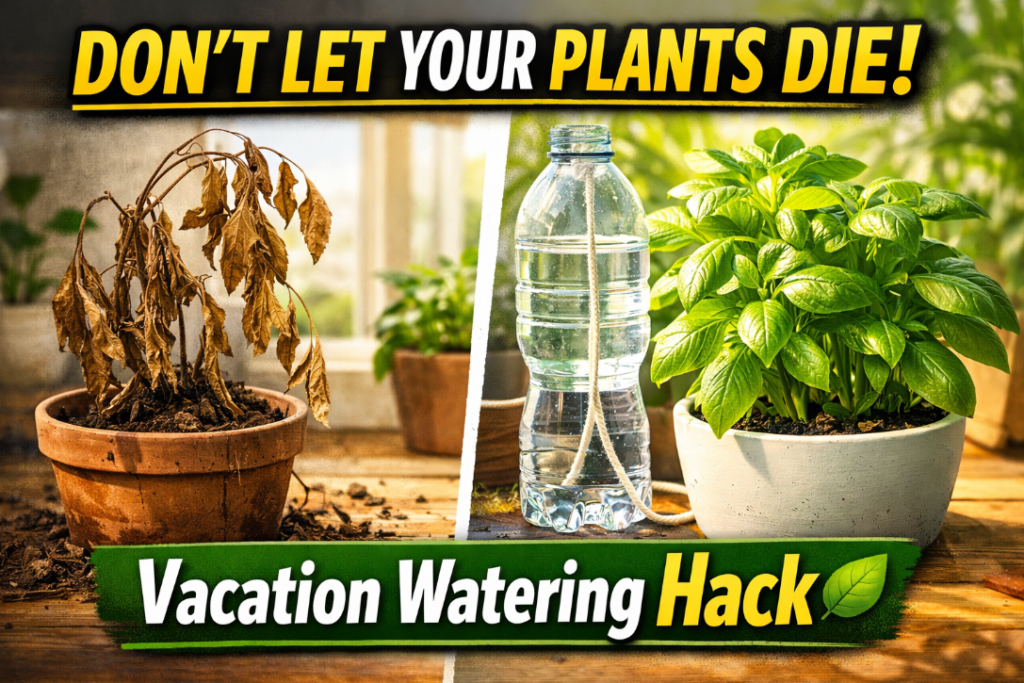
Wicking uses absorbent materials to draw water from a reservoir into the soil — a simple, cheap, and surprisingly effective method for short vacations.
Basic wicking method:
- Place a large container of water next to your plant containers
- Cut strips of absorbent fabric, rope, or thick cotton cord
- Dip one end in the water reservoir and bury the other end 2–3 inches into the container soil
- Water wicks from the reservoir into the soil continuously
- One large reservoir can supply multiple containers via multiple wicks
Best for: Short vacations of 3–7 days. Works best for smaller containers and moisture-loving plants.
6. Mulching to Retain Moisture
Adding a thick layer of mulch to the surface of your containers before leaving is one of the simplest and most effective ways to slow moisture evaporation.
- Apply a 1–2 inch layer of bark mulch, straw, or moss to the soil surface
- Avoid covering the plant stems — leave a gap around the base
- Mulch can reduce water evaporation by up to 50% in hot weather
- Pebbles or gravel work as an alternative mulch for succulents and Mediterranean plants
7. Grouping Containers Together
Grouping your containers closely together before leaving creates a more humid microclimate around the plants. The transpiration from each plant increases the humidity around its neighbors — which slows the rate at which all the containers dry out.
- Move all containers into a tight group before leaving
- Place larger containers on the outside and smaller ones in the center — larger pots help shield smaller ones from drying wind
- Move the group to a shadier spot if possible — less sun means less evaporation
- In very hot weather, grouping alone can extend the time between waterings by 1–2 days
8. Ask a Neighbor or Friend
For vacations longer than a week — especially in hot summer weather — asking a trusted neighbor or friend to water your containers is often the most reliable option of all.
How to make it easy for them:
- Leave clear, written instructions — which plants need daily water, which can go every 2 days
- Show them the finger test — check soil before watering
- Label containers with watering frequency
- Leave a watering can filled and ready
- Group containers together so they don’t have to search for them
9. How Long Can Container Plants Go Without Water?
| Plant Type | Without Watering (Cool Weather) | Without Watering (Hot Weather) |
|---|---|---|
| Succulents and cacti | 2–3 weeks | 1–2 weeks |
| Large containers (10+ gallons) | 5–7 days | 2–3 days |
| Medium containers (5 gallons) | 3–5 days | 1–2 days |
| Small containers (under 5 gallons) | 1–3 days | Less than 1 day |
| Hanging baskets | 1–2 days | Less than 1 day |
10. Top Tips for Vacation-Proofing Your Container Garden
- Test your watering system before leaving — Never set up a new system the day you leave
- Move containers to shade — Even partial shade dramatically reduces water needs
- Use the largest containers you can — Larger containers hold more soil and dry out more slowly
- Combine methods — Use mulch + grouping + a DIY reservoir for the best results
- Accept some losses — Even with the best preparation, some plants may not make it through a long, hot vacation. Focus on your most valuable and irreplaceable plants.
- Invest in self-watering containers — If you travel regularly, self-watering pots pay for themselves quickly
Final Thoughts
With the right preparation, your container garden can survive — and often thrive — while you’re away on vacation. The key is choosing the right method for the length of your trip and testing it before you leave.
A combination of good preparation, mulching, grouping, and at least one automated watering solution will give your plants the best chance of welcoming you home healthy and growing. 🌿
Have questions about keeping container plants alive while traveling? Visit the Contact page — I’d love to hear from you!
— mumu, Green Garden Tips