By mumu
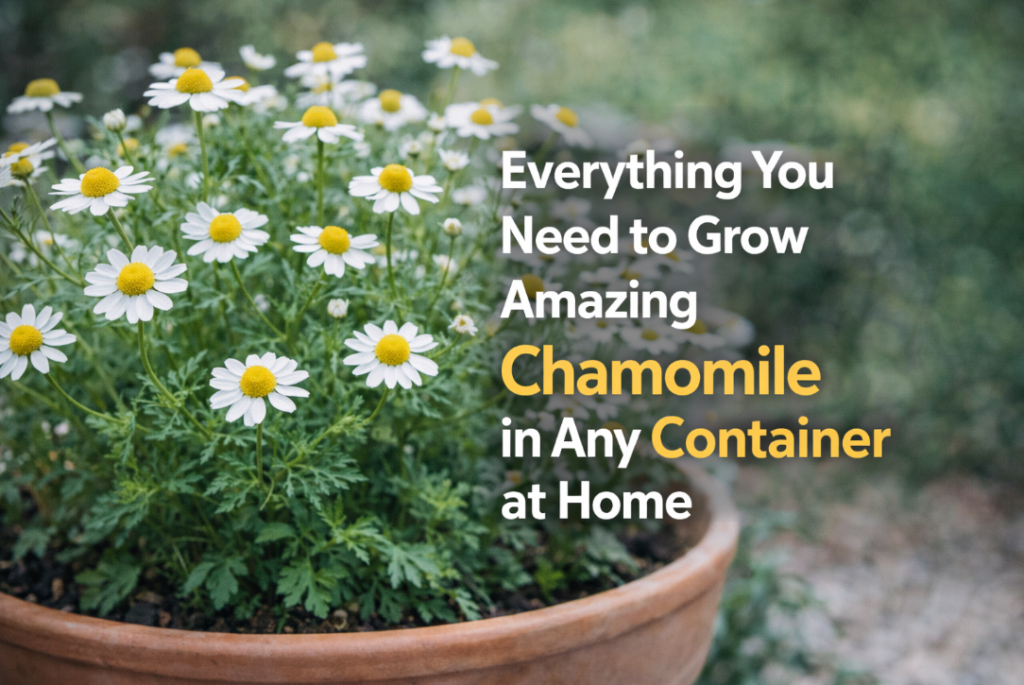
There’s something genuinely lovely about making chamomile tea from flowers you grew yourself. The dried stuff from a tea bag is fine, but fresh chamomile — those little white-and-yellow daisy-like flowers steeped in hot water — has a sweetness and freshness that’s hard to describe until you’ve tried it.
The great news is that chamomile is one of the easiest herbs to grow in containers. It’s hardy, low-maintenance, and flowers generously. Here’s how to grow it successfully in pots.
German vs Roman Chamomile — Which Should You Grow?
There are two types of chamomile commonly grown at home, and they’re different enough that it’s worth knowing which one you’re getting.
German chamomile (Matricaria chamomilla) is an annual that grows 2–3 feet tall, produces masses of flowers, and is the type most commonly used for tea. It self-seeds prolifically, so once you grow it once, it tends to come back year after year on its own.
Roman chamomile (Chamaemelum nobile) is a low-growing perennial — it comes back every year from the same plant. It stays compact (under 12 inches), which makes it ideal for smaller containers. The flowers are slightly larger and have a stronger, more apple-like fragrance.
For tea: both work well, but German chamomile produces more flowers and is the traditional choice. For small containers or decorative growing: Roman chamomile is more practical.
Container and Soil Setup
Chamomile has a relatively modest root system and doesn’t need a huge container. A 6–8 inch pot works fine for Roman chamomile, while German chamomile does better in a 10–12 inch container given its larger size.
Drainage is the key requirement. Chamomile really doesn’t like sitting in wet soil — root rot is its biggest weakness. Use a well-draining potting mix, add some perlite or coarse sand to improve drainage, and make sure the container has good drainage holes.
Chamomile isn’t fussy about soil fertility — it actually grows well in lean, not-too-rich soil. An overly fertile mix produces lush leafy growth at the expense of flowers.
Planting Chamomile in Containers
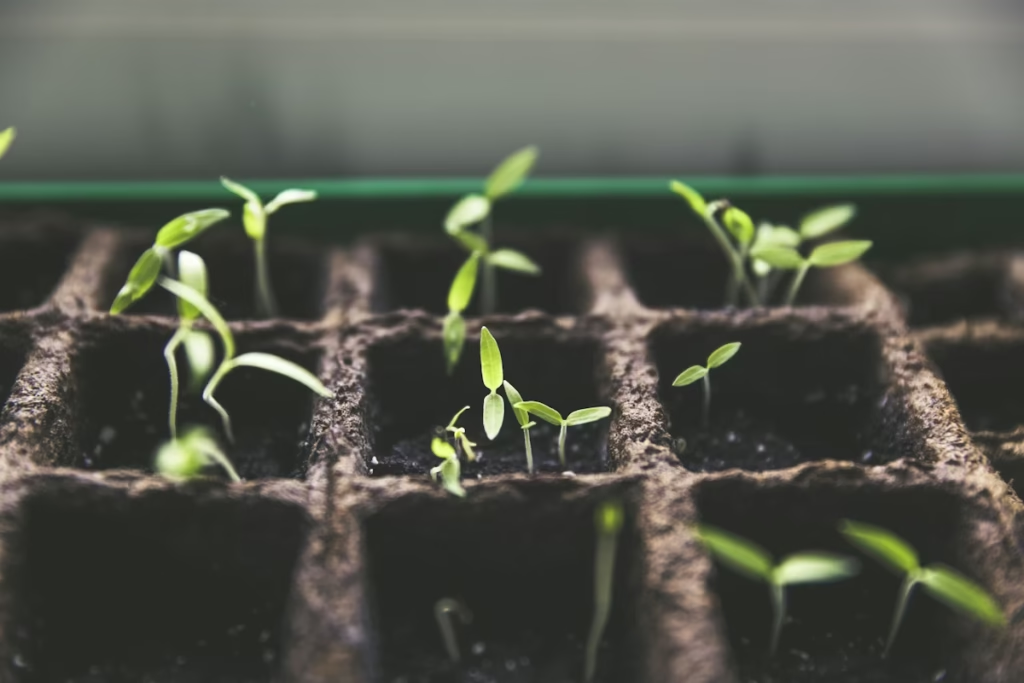
Chamomile grows easily from seed — and because the seeds are so tiny, direct sowing in the container is the most practical approach.
- Sow seeds on the surface of moist potting mix — don’t cover them, as they need light to germinate
- Mist gently to make good contact between seeds and soil
- Cover with a clear plastic bag or dome to retain humidity
- Germination usually takes 7–14 days at 65–68°F (18–20°C)
- Once seedlings are 2 inches tall, thin to about 4–6 inches apart
You can also buy chamomile transplants from nurseries in spring, which gives you a head start. Plant at the same depth as the nursery pot and water well after planting.
Chamomile is a cool-season herb — it grows best in spring and fall. In hot summer conditions, it tends to bolt and flower quickly, which isn’t necessarily a bad thing if harvesting flowers is your goal.
Sun and Water
Chamomile needs full sun — at least 6 hours a day — to flower well. In partial shade, you’ll get a leafy plant with few flowers, which defeats the purpose of growing it.
Watering is where most people go wrong. Chamomile prefers to dry out slightly between waterings. Check the soil before watering — if the top inch still feels moist, wait another day. Overwatering is far more damaging than underwatering for this herb.
| Care Aspect | Requirement |
|---|---|
| Sun | 6+ hours direct sun daily |
| Watering | Allow top inch to dry between waterings |
| Fertilizing | Minimal — once every 4–6 weeks at half strength |
| Temperature | Prefers 60–68°F (15–20°C) — cool season herb |
Harvesting Chamomile Flowers
This is the fun part. Chamomile flowers are ready to harvest when the white petals are fully open and just beginning to bend back toward the stem — this is when the essential oils are most concentrated and the flavor is at its best.
Pick flowers in the morning after the dew has dried. Pinch or snip the flower head off just below the bloom — don’t take any of the stem unless you need to. The more you harvest, the more flowers the plant produces, so pick regularly.
Using fresh chamomile: Steep a small handful of fresh flowers in hot water for 5 minutes. Strain and enjoy. Fresh chamomile tea is noticeably sweeter and more aromatic than dried.
Drying chamomile: Spread flowers in a single layer on a clean surface or drying rack. Leave in a warm, airy spot out of direct sunlight for 1–2 weeks. Store dried flowers in an airtight jar — they’ll keep for up to a year.
Final Thoughts
Chamomile is one of those herbs that earns its place in any container garden many times over. It’s beautiful, fragrant, easy to grow, practically maintenance-free, and gives you a genuinely useful harvest all season long.
If you’ve never grown your own tea herbs before, chamomile is the perfect place to start. 🌼
Questions about growing chamomile in containers? Visit the Contact page!
— mumu, Green Garden Tips