By mumu
If you’ve ever eaten a classic French béarnaise sauce or a simple tarragon chicken, you already know what makes this herb special. That distinctive anise-like, slightly sweet flavor is unlike anything else in the herb garden — and fresh tarragon is dramatically better than dried.
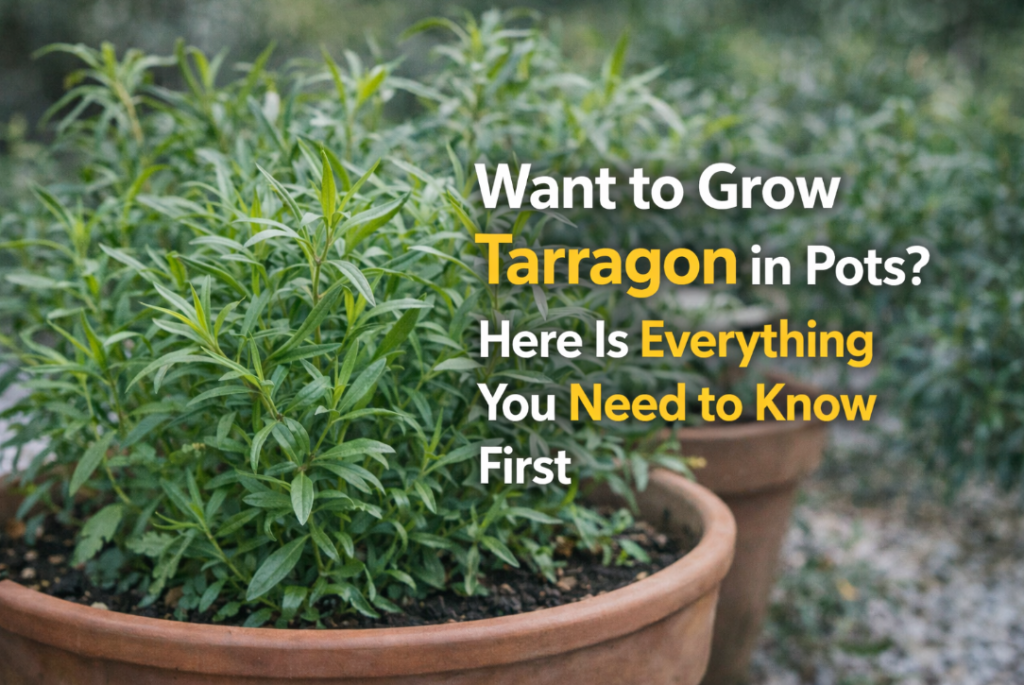
Growing tarragon in pots is very doable, but there’s one important thing to get right from the start: make sure you’re growing the right type. Here’s everything you need to know.
French Tarragon vs Russian Tarragon — This Matters
This is the most important thing to know before buying tarragon. There are two completely different plants sold under the name “tarragon,” and only one of them is worth growing for cooking.
French tarragon (Artemisia dracunculus var. sativa) is the one you want. It has that signature sweet, anise-like flavor that makes it one of the great French culinary herbs. It cannot be grown from seed — French tarragon is sterile and must be propagated from cuttings or divisions. If you see tarragon seeds for sale, it’s Russian tarragon.
Russian tarragon grows easily from seed, gets quite large, and has almost no flavor. It’s essentially a decorative plant with little culinary value.
Always buy French tarragon as a plant from a reputable nursery, and do a quick taste test before buying — a good French tarragon leaf has an immediate, distinctive anise flavor. If it tastes like nothing, it’s Russian.
Container and Soil
French tarragon has a spreading rhizomatous root system that appreciates a bit of room. A 10–12 inch container works well for a single plant — deep enough to accommodate the roots and wide enough to allow some spread.
Drainage is critical. Tarragon is very sensitive to overwatering and will develop root rot quickly in soggy soil. Use a well-draining potting mix with added perlite — roughly 60% potting mix and 40% perlite is ideal. Make sure the container has good drainage holes.
Tarragon prefers a neutral to slightly alkaline soil pH of 6.5–7.5. It’s one of the few culinary herbs that actually does better in less fertile soil — too much nitrogen produces lush, flavorless growth.
Sun, Watering, and General Care
French tarragon needs full sun — at least 6 hours a day. In partial shade, the plant grows but the flavor compounds that make tarragon special are far less concentrated.
Water when the top inch of soil feels dry. Tarragon is moderately drought tolerant once established — it’s far better to underwater than overwater. If you’re ever unsure, wait another day before watering.
Fertilize lightly — once every 4–6 weeks with a balanced fertilizer at half strength is plenty. More than this reduces flavor. As a Mediterranean-origin herb, tarragon produces its best flavor when slightly stressed, not pampered.
| Care | Requirement |
|---|---|
| Sun | 6+ hours direct sun |
| Watering | Allow top inch to dry — moderately drought tolerant |
| Fertilizing | Every 4–6 weeks at half strength — less is more |
| Pot size | 10–12 inches, well-draining |
Harvesting Tarragon
Start harvesting once the plant is well established and actively growing — usually 6–8 weeks after planting. Snip stems from the top of the plant, cutting just above a leaf node. Never remove more than a third of the plant at one time.
The best flavor comes from young, tender growth at the tips of the stems. Harvest in the morning when essential oil concentration is highest.
Pinch off any flower buds as soon as they appear — once tarragon flowers, leaf quality and flavor decline. Regular harvesting naturally delays flowering by redirecting the plant’s energy.
Storing tarragon: Use fresh immediately for the best flavor. For short-term storage, wrap stems in a damp paper towel and refrigerate for up to a week. For longer storage, freeze whole sprigs on a baking sheet, then transfer to a bag — frozen tarragon retains flavor well for 3–4 months.
Overwintering Container Tarragon
French tarragon is a hardy perennial that dies back in winter and regrows in spring — which is actually one of its best qualities as a container herb. The same plant comes back year after year.
In fall, cut the plant back to a few inches above soil level after the first frost. Move the container to a sheltered spot — an unheated garage or shed works well. Water very sparingly through winter, just enough to prevent the roots from drying out completely.
In spring, move back outdoors and resume regular watering as new growth appears. Divide the root clump every 2–3 years in spring to keep the plant vigorous — tarragon can become less flavorful as it gets older and dividing rejuvenates it.
Final Thoughts
French tarragon is one of the great culinary herbs — subtle, sophisticated, and genuinely irreplaceable in certain dishes. It’s not as flashy as basil or as well-known as rosemary, but serious home cooks who grow it once rarely stop.
Just make sure you buy the real French tarragon (taste it first!), give it good drainage and full sun, and don’t overwater or overfeed. It’ll reward you with years of fresh, flavorful harvests. 🌿
Questions about growing tarragon in pots? Visit the Contact page!
— mumu, Green Garden Tips