By mumu
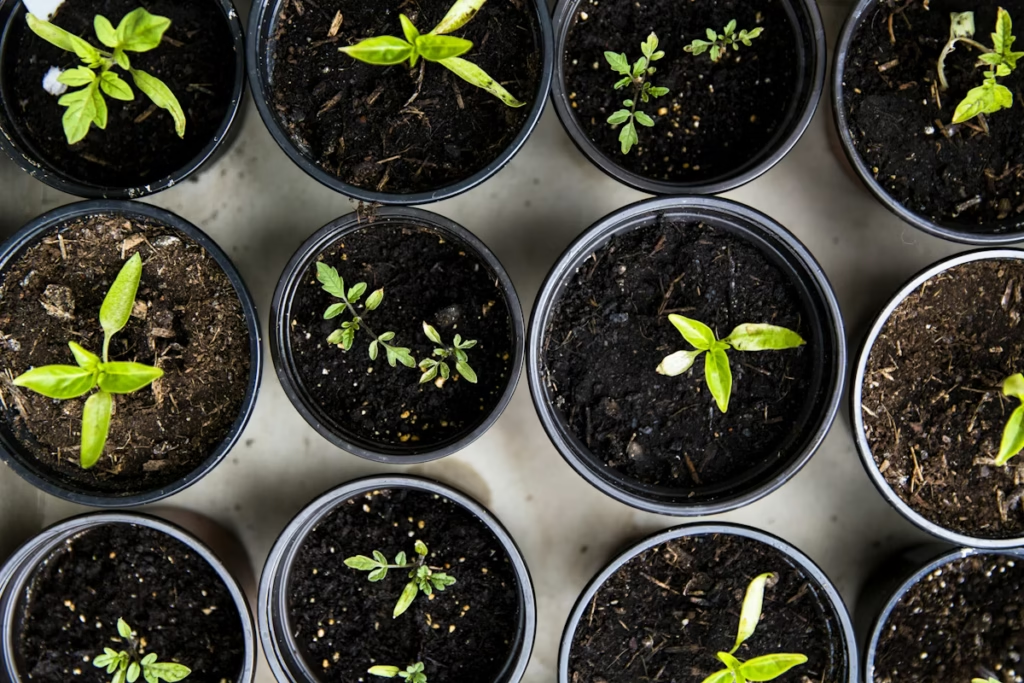
You’ve spent weeks carefully growing seedlings indoors — watering them, watching them under grow lights, getting excited about the season ahead. Then you move them outside, and within a few days they’re wilted, pale, sunburned, or just… dead.
This is one of the most disheartening experiences in container gardening, and it’s almost always caused by skipping or rushing the hardening off process. Here’s what hardening off actually is, why it matters so much, and exactly how to do it right.
What Is Hardening Off and Why Does It Matter?
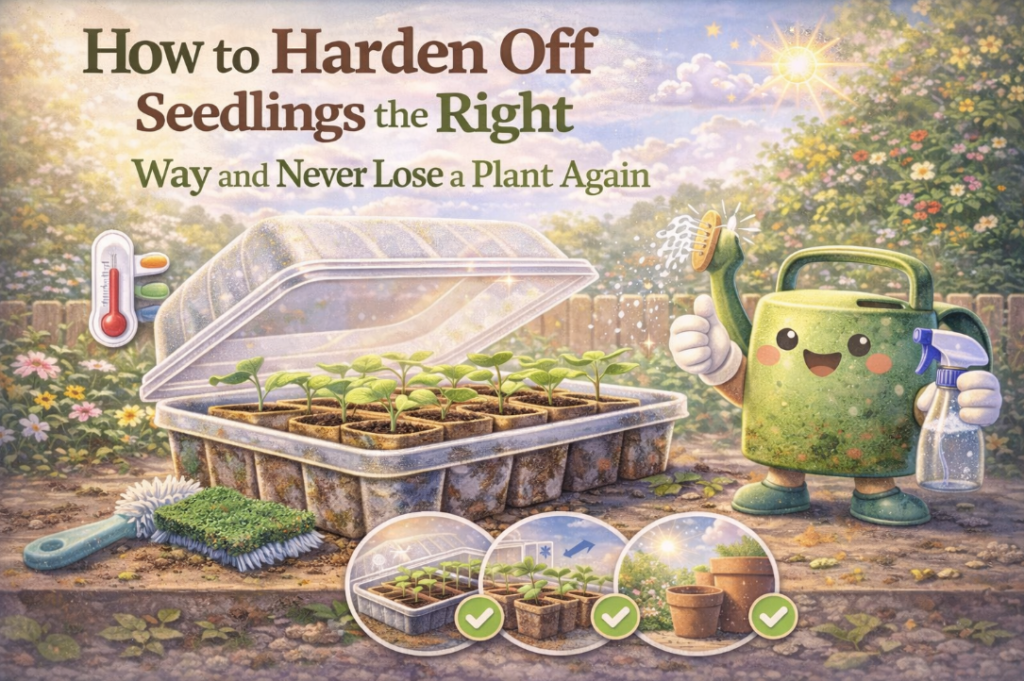
Hardening off is the process of gradually acclimatizing indoor-grown seedlings to outdoor conditions before transplanting them to their final containers.
Seedlings grown indoors have been living in a very controlled environment — stable temperatures, no wind, consistent but relatively low light. The outdoor world is completely different: stronger, more intense sunlight, temperature fluctuations, wind, and lower humidity. Moving seedlings directly from indoors to full outdoor exposure is a shock their systems simply aren’t prepared for.
The results of skipping hardening off are hard to miss: bleached, papery patches on leaves (sunscald), wilted and collapsed plants, or seedlings that just stop growing and sulk for weeks. Some never recover.
Hardening off gradually introduces these stresses so the plant can adapt — thickening its cell walls, developing a waxy cuticle on its leaves, and building tolerance to UV light and wind.
How Long Does Hardening Off Take?
The standard recommendation is 7–14 days. For most container vegetables and flowers, 10 days is a good target. Some plants that are particularly sensitive — basil, eggplant, peppers — benefit from a full 2 weeks.
Don’t rush it. The time you invest in hardening off pays back many times over in transplant success rate and plant vigor.
Step-by-Step Hardening Off Schedule
| Days | What to Do | Notes |
|---|---|---|
| Days 1–2 | Place seedlings in bright shade outdoors for 1–2 hours, then bring back inside | Choose a calm, mild day for first outdoor exposure |
| Days 3–4 | Increase to 3–4 hours in bright shade or very gentle morning sun | Avoid strong afternoon sun at this stage |
| Days 5–6 | 4–5 hours with some direct morning sun | Watch for any signs of stress — wilting or bleaching |
| Days 7–8 | 5–6 hours including direct sun for part of the day | Plants should be handling sun well by now |
| Days 9–10 | Full day outdoors in intended final position | Bring in only if frost is forecast |
| Days 11–14 | Leave outdoors overnight if temperatures are safe | Ready to transplant into final containers |
Practical Tips for Hardening Off
Watch the weather. Don’t start hardening off on an unusually hot, cold, or windy day. Pick a mild, calm day for the first outdoor exposure. Wind is actually more stressful for seedlings than moderate sun, so even a sheltered spot in full sun is better than an exposed spot in shade.
Water before going out. Always water seedlings before moving them outdoors. Dry soil plus outdoor conditions dries them out very quickly, adding water stress on top of light and temperature stress.
Don’t rush the sun. The progression from shade to sun is the most important part of hardening off. Chloroplasts in the leaves need time to adjust to higher light intensity. Jumping straight to full sun causes the same irreversible cell damage as sunburn in humans.
Bring them in for cold nights. During hardening off, bring seedlings back inside if nighttime temperatures are going to drop below the plant’s tolerance. For warm-season crops like tomatoes, peppers, and basil, anything below 50°F (10°C) at night should trigger bringing them in.
Set a phone reminder. It’s surprisingly easy to forget seedlings outside when you get busy. A reminder to bring them in before the temperature drops at night prevents a lot of setbacks.
Signs That Hardening Off Is Going Well
- Leaves look the same or slightly more compact after outdoor time
- Stems become noticeably thicker and sturdier
- Leaf color stays consistent or deepens slightly
- Plants perk back up fully within an hour of coming back inside in the early stages
Signs Something Is Wrong
- White, papery, or bleached patches on leaves — too much sun too fast
- Persistent wilting that doesn’t recover — water stress or too much wind
- Leaves turning yellow or dropping — temperature shock
- Stunted or stopped growth — general stress overload
If you see any of these signs, move back to the previous stage of the schedule and progress more slowly.
Final Thoughts
Hardening off feels like an extra step when you’re eager to get plants outside and the season is calling. But it’s one of the highest-value things you can do in container gardening — the difference between a smooth transplant and a plant that spends weeks recovering (or doesn’t recover at all) often comes down entirely to this process.
Ten days of gradual outdoor exposure. That’s all it takes. Your plants will thank you for it. 🌱
Questions about hardening off or starting seedlings? Visit the Contact page!
— mumu, Green Garden Tips