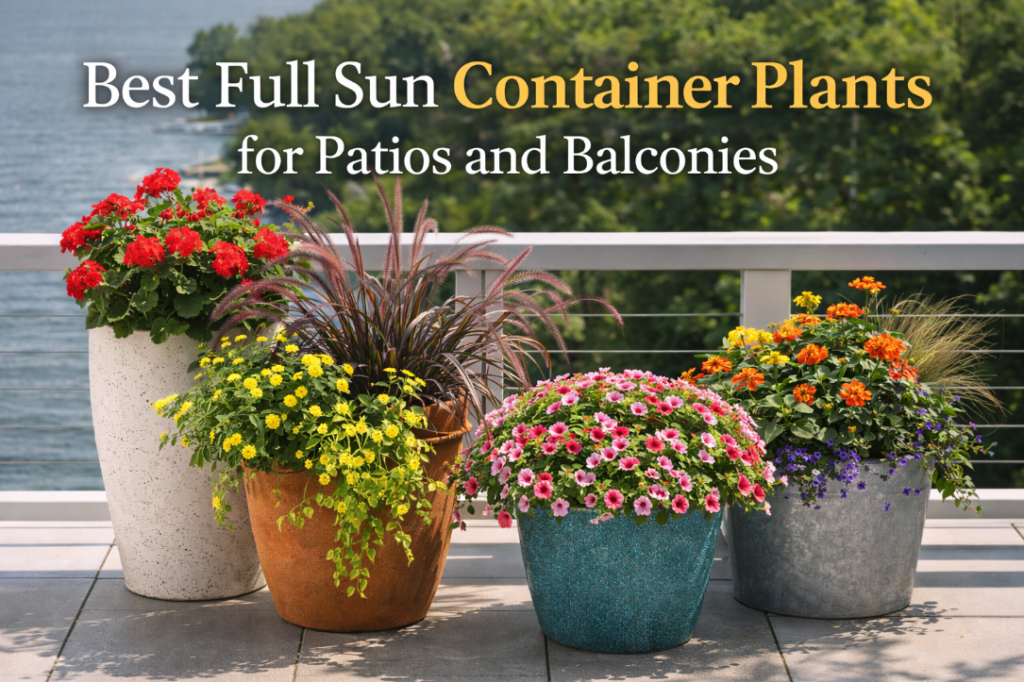
Best Container Plants for Full Sun Patios and Balconies
A sunny patio or balcony can be one of the best places to grow container plants. When a space gets strong direct light for much of the day, flowers bloom more freely, herbs grow with better flavor, and warm-season edibles usually perform better than they do in low-light corners. The tricky part is not the sunlight itself. It is choosing plants that can handle heat, reflected light, drying soil, and the extra stress that comes with growing in pots.
That is why some plants that look great in the garden center fade quickly once they are moved onto a hot balcony. Containers heat up faster than garden beds, and potting mix dries out sooner than soil in the ground. A plant that tolerates sun in a yard may still struggle in a small dark-colored pot against a wall that holds afternoon heat. The best choices for full sun containers are the ones that can handle direct light and adapt well to container life.
In this guide, you will find reliable full sun container plants for patios and balconies, along with a simple comparison table, practical care tips, and a few mistakes that are easy to avoid.
Table of Contents
What full sun really means in containers
In gardening, full sun usually means at least six hours of direct sunlight a day. Many patios and balconies, especially those facing south or west, get even more than that. In those spaces, plants may also deal with reflected heat from concrete, brick, glass, or metal railings. That extra heat matters because roots in containers are more exposed than roots growing in the ground.
This is why it helps to think beyond the plant tag. A flower labeled for full sun may still need more frequent watering in a container than it would in a landscape bed. A herb that likes sun may still decline if the pot stays soggy. When you plant a sunny container, the most dependable choices are plants that enjoy direct light and can also cope with quick drying and warm roots.
If your balcony gets harsh late-afternoon heat, a few sun-loving plants may still appreciate a little relief at the hottest part of the day. This is especially true in very hot summer climates, where “full sun” on a balcony can be more intense than “full sun” in an open garden bed.
Best flowering plants for full sun patios and balconies
Lantana
Lantana is one of the strongest performers for hot, bright containers. It handles intense sun well and keeps blooming through heat that can slow down softer annuals. It works especially well in large patio pots where you want long-lasting color with less daily fuss. In frost-free areas, lantana can be vigorous, so it is smart to check local guidance before planting it widely outdoors.
Portulaca
Portulaca, often called moss rose, is a great option for the hottest, driest container spots. It has succulent-like foliage, loves strong sun, and performs well in containers with fast drainage. It is especially useful in shallow bowls, window boxes, and railing planters where reflected heat is a problem.
Zonal Geraniums
Zonal geraniums are a classic choice for sunny containers because they bloom well, stay fairly tidy, and do not flop as easily as some trailing flowers. They are a good fit for balconies where space is limited and a neat upright shape looks better than a sprawling habit. They do best when the pot drains well and the soil is not kept constantly wet.
Angelonia
Angelonia is a strong warm-weather bloomer with upright flower spikes that add height to mixed planters. It handles summer heat better than many bedding plants and keeps a clean look even in bright conditions. If you want a container that feels a little more vertical and less trailing, angelonia is a smart choice.
Calibrachoa
Calibrachoa gives you a petunia-like look with smaller flowers and a trailing habit that works beautifully in baskets and balcony boxes. It can grow well in full sun, but it is less forgiving when the pot dries out too often. In hot weather, steady moisture and regular feeding make a big difference. It is best for gardeners who are willing to keep up with watering.
Best foliage, herb, and edible plants
Sweet Potato Vine
For bold trailing foliage, sweet potato vine is one of the easiest choices. It fills out a planter quickly and adds movement over the edge of the pot. Lime green and deep purple forms are both popular in summer containers. It likes sun, but it looks best when it gets regular water in hot weather.
Rosemary
Rosemary is an excellent herb for full sun balconies because it enjoys bright light and prefers well-drained conditions. It gives structure to a container, smells wonderful, and can be used in the kitchen. The main thing to avoid is constantly wet soil. A pot with good drainage is more important than extra-rich soil.
Thyme
Thyme stays compact, handles full sun well, and works nicely near the edge of a container. It is ideal for smaller balconies because it does not take up much space. Like rosemary, it performs better when the potting mix drains freely and the roots are not kept soggy.
Basil
Basil grows well in sunny containers, especially in warm weather, and it is one of the most useful herbs for apartment gardeners. It does need more moisture than woody herbs such as rosemary or thyme. In very hot climates, basil may appreciate consistent watering and a little protection from the harshest late-afternoon heat.
Peppers
Peppers are naturally well suited to full sun containers because they like warmth and direct light. They also look attractive enough to mix into ornamental patio planters. Choose a container large enough to support steady growth, and keep the soil evenly moist rather than letting it swing between bone dry and soaked.
Cherry Tomatoes
Cherry tomatoes are one of the most rewarding edible plants for sunny patios and balconies, but they need more root room and more consistent care than many flowering plants. They should be grown in a large container with drainage holes, supported with a cage or stake, and watered deeply and regularly. If you want an edible focal point in a sunny pot, they are hard to beat.
Quick comparison table
| Plant | Best For | Why It Works in Full Sun | Keep in Mind |
|---|---|---|---|
| Lantana | Hot patios and large containers | Strong heat tolerance and long bloom season | Check local guidance in frost-free regions |
| Portulaca | Shallow planters and very hot spots | Thrives in strong sun and fast-draining soil | Does not like heavy, wet potting mix |
| Zonal Geranium | Neat balcony containers | Reliable bloomer with upright habit | Avoid keeping the soil constantly soggy |
| Angelonia | Height in mixed containers | Handles summer heat well | Benefits from regular feeding |
| Calibrachoa | Trailing color in boxes and baskets | Flowers heavily in bright light | Needs steady moisture and fertilizer |
| Rosemary | Edible structure and fragrance | Likes sun and excellent drainage | Do not overwater |
| Basil | Useful herb containers | Grows strongly in warm bright weather | Needs more moisture than woody herbs |
| Peppers | Sunny edible containers | Naturally likes warmth and direct light | Use a large enough pot |
| Cherry Tomatoes | Productive focal-point containers | Strong performance in full sun | Needs support, deep watering, and root space |
Easy container combination ideas
If you want a planter that looks pulled together from the start, it helps to combine plants with similar light and moisture needs. A simple sunny combination can be more successful than an overmixed designer pot that asks every plant to live under the same conditions even when their needs are different.
For a classic bright patio container, try zonal geraniums in the center, calibrachoa or another trailing annual near the edge, and sweet potato vine for extra fullness. For a hotter and drier setup, lantana and portulaca make a more dependable pair. If you prefer something useful, a sunny edible container with basil, thyme, and a compact pepper plant is both practical and attractive.
The safest rule is to avoid combining a plant that likes dry conditions with one that needs constant moisture. A container usually works best when all the plants want roughly the same care.
How to keep full sun containers healthy
Good plant choice matters, but care matters just as much. Full sun containers dry out faster than most beginners expect, especially when they sit on hard surfaces that hold heat. A larger container is usually easier to manage than a very small one because it holds moisture longer and gives roots more room.
Use a high-quality potting mix rather than garden soil. Potting mix is designed to drain well while still holding enough moisture for roots. Make sure every container has drainage holes. Water deeply instead of giving the surface a quick splash, and check containers often during heat waves because some may need water daily.
Fertilizer also matters more in containers than many people realize. Fast-growing annuals and fruiting edibles use nutrients quickly in pots. Regular feeding helps flowering plants bloom longer and helps vegetables keep growing steadily. Follow the label rate for the product you use rather than feeding more often than recommended.
| Care Step | Best Practice |
|---|---|
| Container size | Choose a larger pot when possible to slow drying and support stronger roots. |
| Soil | Use potting mix, not garden soil, for better drainage and root health. |
| Watering | Water deeply and check often during hot weather, especially on balconies. |
| Drainage | Always use pots with drainage holes. |
| Feeding | Feed regularly according to the fertilizer label, especially for annuals and edibles. |
Common mistakes to avoid
One of the most common mistakes is choosing a pot that looks nice but is simply too small. Small containers dry out very quickly in direct sun, and they are far less forgiving when the weather turns hot. Another common problem is mixing plants with completely different water needs in the same planter. That often leads to one plant getting too dry while the other stays too wet.
It is also easy to assume that every full sun plant wants the same care. That is not true. Rosemary and thyme prefer better drainage than basil. Portulaca tolerates dry conditions better than calibrachoa. Cherry tomatoes need much more root space than a flowering annual. The more closely you match plant choice to real conditions, the easier container gardening becomes.
Finally, do not underestimate wind. Many balconies are windier than ground-level patios, and moving air can dry containers faster than you expect. If your space is exposed, check the soil more often and lean toward tougher choices such as lantana, rosemary, thyme, and portulaca.
FAQ
How many hours of sun counts as full sun?
Full sun usually means at least six hours of direct sunlight per day. On patios and balconies, the heat around the container can make those hours feel even more intense than they do in a garden bed.
What is the easiest full sun container plant for beginners?
For a very hot and bright space, portulaca and lantana are among the easier flowering choices. For herbs, rosemary and thyme are dependable if the container drains well.
Can I grow vegetables on a sunny balcony?
Yes, as long as the balcony gets enough direct light and you use a container large enough for the crop. Peppers and cherry tomatoes are two of the most common sunny balcony edibles, but they need steady watering and proper support as they grow.
Final thoughts
The best container plants for full sun patios and balconies are the ones that match both the light and the realities of container care. If your space gets intense summer heat, start with dependable choices such as lantana, portulaca, rosemary, thyme, and peppers. If you want a softer ornamental look, zonal geraniums, angelonia, and calibrachoa can work beautifully with regular watering and feeding. A sunny patio can be one of the easiest places to build a colorful, useful container garden once the plant choices truly fit the space.