By mumu
Container gardening has a reputation for being expensive. Walk into a garden center and it’s easy to spend hundreds of dollars on pots, potting mix, plants, and accessories before you’ve grown a single thing. But here’s the truth — container gardening on a budget is not only possible, it’s actually one of the most cost-effective hobbies you can take up.
With a little creativity, some smart shopping, and a few clever strategies, you can build a beautiful, productive container garden for a fraction of the price most people pay. Some of the most impressive container gardens I’ve ever seen were put together for almost nothing.
Here are the best tips for container gardening on a budget — practical, proven ways to grow more while spending less.
Table of Contents
- Free and Cheap Container Ideas
- Save Money on Potting Mix
- Get Plants for Free or Cheap
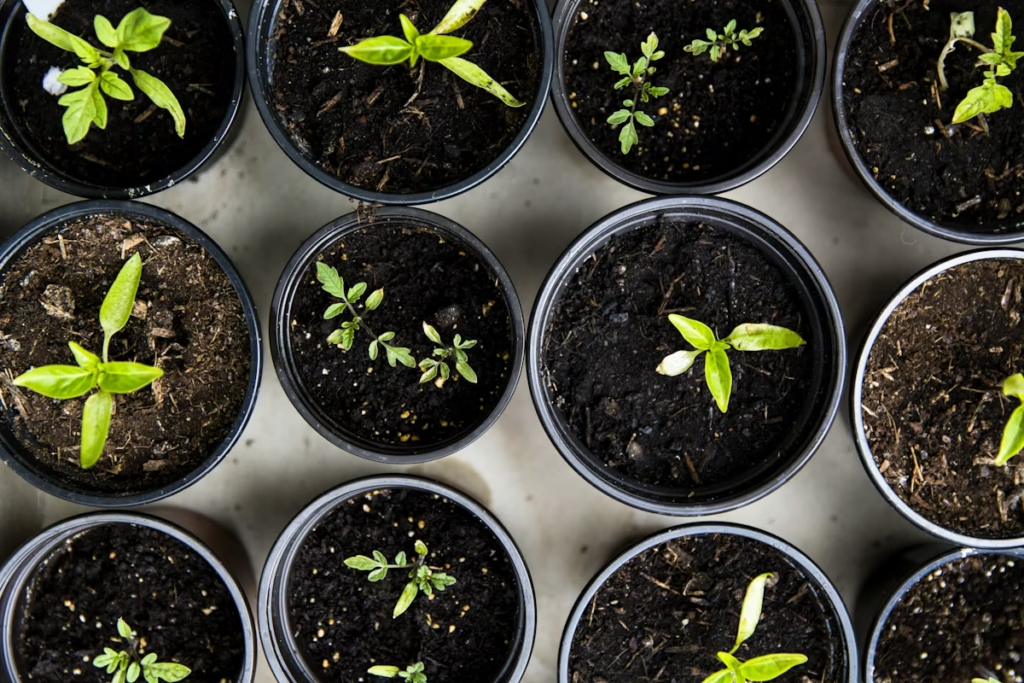
- Grow from Seed Instead of Transplants
- Propagate Your Own Plants
- Make Your Own Compost
- Budget Gardening Tools
- Save Money on Watering
- Budget Fertilizing Tips
- Top Money-Saving Tips for Container Gardeners
1. Free and Cheap Container Ideas
You don’t need to buy expensive pots to grow great container plants. Almost any container that holds soil and has drainage holes — or can be given drainage holes — can be used as a plant pot.
| Container Idea | Cost | Best For |
|---|---|---|
| 5-gallon buckets | $2–4 each | Tomatoes, peppers, cucumbers — great value |
| Fabric grow bags | $1–5 each | All vegetables — excellent drainage and air pruning |
| Wooden crates and pallets | Free–$5 | Herbs, flowers, strawberries |
| Old colanders and strainers | Free (thrift store) | Herbs, strawberries — built-in drainage |
| Plastic storage bins | $3–8 | Lettuce, spinach, root vegetables |
| Old boots and shoes | Free | Herbs, flowers — quirky and fun |
| Nursery pots (saved or free) | Free | All plants — ask garden centers for used ones |
| Food-grade plastic containers | Free | Herbs, lettuce — drill drainage holes in the bottom |
Key tip: Always drill or punch drainage holes in the bottom of any improvised container. Without drainage, your plants will struggle regardless of how well you care for them.
2. Save Money on Potting Mix
Bagged potting mix is one of the biggest expenses in container gardening — and one of the easiest to reduce.
- Buy in bulk — Large bags cost significantly less per liter than small bags. Buy the biggest bag available.
- Make your own — A DIY mix of coco coir, perlite, and compost costs 50–70% less than premium bagged mixes.
- Refresh, don’t replace — Instead of replacing all your potting mix each year, mix in a generous amount of fresh compost to refresh nutrients and structure.
- Fill the bottom of large containers — For deep containers, fill the bottom third with free materials like straw, cardboard, or pine cones before adding potting mix on top. Plants don’t need deep soil — this saves a significant amount of potting mix.
- Source free compost — Many municipalities offer free or very cheap compost. Check your local government website.
3. Get Plants for Free or Cheap
| Strategy | How to Do It |
|---|---|
| Plant swaps | Join local gardening groups on Facebook or Nextdoor — plant swaps are common and free |
| Ask neighbors and friends | Gardeners often have excess plants, divisions, and cuttings they’re happy to give away |
| End of season sales | Garden centers discount plants heavily at the end of summer — often 50–75% off |
| Divide existing plants | Many perennials and herbs can be divided to create multiple plants from one |
| Grow from kitchen scraps | Regrow spring onions, lettuce, celery, and herbs from grocery store scraps in water |
| Online free listings | Craigslist, Facebook Marketplace, and Freecycle often have free plants listed |
4. Grow from Seed Instead of Transplants
Buying plant transplants from a garden center is the most expensive way to fill your containers. Growing from seed is dramatically cheaper — and gives you access to a far wider range of varieties.
| Plant | Cost as Transplant | Cost as Seeds | Savings |
|---|---|---|---|
| Tomatoes | $3–6 per plant | $2–4 per packet (20+ seeds) | Up to 90% |
| Peppers | $3–5 per plant | $2–3 per packet (25+ seeds) | Up to 90% |
| Herbs | $3–5 per pot | $1–3 per packet (100+ seeds) | Up to 95% |
| Flowers | $2–4 per plant | $1–3 per packet (50+ seeds) | Up to 90% |
Best plants to start from seed for beginners: Lettuce, spinach, radishes, basil, marigolds, and sunflowers are all fast, easy, and rewarding to grow from seed.
5. Propagate Your Own Plants
Propagating plants — creating new plants from cuttings or divisions of existing ones — is one of the best ways to expand your container garden for almost nothing.
- Stem cuttings — Take 4–6 inch cuttings from herbs like basil, mint, and rosemary. Place in water until roots form, then pot up in soil. Free plants in 2–3 weeks.
- Division — Divide overcrowded perennials and herbs like chives, mint, and ornamental grasses into multiple plants. One plant becomes three or four.
- Runners — Strawberry plants produce runners (long stems with baby plants at the end) that can be potted up to create free new plants.
- Leaf cuttings — Succulents like echeveria can be propagated from individual leaves — place on moist soil and new plants develop over several weeks.
6. Make Your Own Compost
Compost is one of the most valuable ingredients in a container garden — and making your own is completely free. Kitchen scraps, garden trimmings, and fallen leaves can all be composted and turned into rich, nutritious material for your containers.
Simple apartment-friendly composting options:
- Worm bin (vermicomposting) — Small, odorless, and produces incredibly rich worm castings. Perfect for apartment gardeners.
- Bokashi composting — Ferments kitchen waste quickly in a sealed container — no smell, no mess, works with all food scraps including meat and dairy.
- Traditional compost bin — For those with outdoor space — turns garden and kitchen waste into free compost in 2–3 months.
7. Budget Gardening Tools
You don’t need expensive tools for container gardening. Here’s all you actually need — and how to get it cheaply.
| Tool | Budget Option | Cost |
|---|---|---|
| Watering can | Basic plastic watering can | $5–10 |
| Trowel | Basic stainless steel trowel | $5–10 |
| Pruning scissors | Small kitchen scissors work perfectly for herbs | Free (already have them) |
| Plant labels | Cut up old yogurt containers or use popsicle sticks | Free |
| Spray bottle | Reuse an old cleaning spray bottle | Free |
| Stakes and supports | Bamboo canes — cheap and effective | $1–3 for a bundle |
8. Save Money on Watering
- Collect rainwater — A simple rain barrel collects free water that’s better for plants than tap water. Pays for itself quickly.
- Water in the morning — Morning watering reduces evaporation compared to midday watering, making every drop count more.
- Mulch container surfaces — A thin layer of bark mulch or pebbles on top of the soil significantly reduces moisture evaporation.
- Use self-watering containers — Uses up to 50% less water than top watering by eliminating evaporation from the soil surface.
- Group containers together — Grouped pots create a more humid microclimate, reducing how quickly individual pots dry out.
9. Budget Fertilizing Tips
- Make compost tea — Steep compost in water for 24–48 hours, strain, and use the liquid as a free, nutritious fertilizer.
- Use banana peels — Bury banana peels in the soil or make banana peel tea for a free potassium boost for flowering and fruiting plants.
- Used coffee grounds — Add to potting mix or use as a liquid fertilizer for a free nitrogen boost. Especially good for acid-loving plants.
- Buy fertilizer in bulk — Large containers of liquid fertilizer cost much less per application than small bottles.
- Use slow-release granules — One application lasts 3–6 months — much cheaper than frequent liquid fertilizer applications.
10. Top Money-Saving Tips for Container Gardeners
| Tip | Potential Saving |
|---|---|
| Grow from seed instead of transplants | Up to 90% on plant costs |
| Use repurposed containers | Up to 100% on pot costs |
| Make your own potting mix | 50–70% on soil costs |
| Propagate from cuttings | Up to 100% on new plant costs |
| Make compost tea | Up to 100% on fertilizer costs |
| Collect rainwater | Reduces water bill over time |
| Buy end-of-season plants | 50–75% on plant costs |
Final Thoughts
Container gardening on a budget is not about compromising on quality — it’s about being creative, resourceful, and smart with how you spend your money. The most experienced gardeners I know are often the most frugal ones, because years of gardening teaches you that the expensive option is rarely the better one.
Start with free containers, grow from seed, make your own potting mix, and propagate plants whenever you can. Before long you’ll have a thriving, beautiful container garden that cost a fraction of what most people spend — and tastes, smells, and looks just as good. 🌿💰
Have questions about budget container gardening? Visit the Contact page — I’d love to hear from you!
— mumu, Green Garden Tips