By mumu
Basil is one of the most popular herbs to grow in pots — and one of the most commonly killed. Walk into any garden center in spring and you’ll find dozens of lush, healthy basil plants. Walk back past those same plants two weeks later and half of them will be yellowing, drooping, or dead.
The good news is that basil doesn’t have to be difficult. Once you understand what basil actually needs — and more importantly, what kills it — growing basil in a pot is straightforward, rewarding, and endlessly useful in the kitchen.
Here is everything you need to know about how to grow basil in a pot and keep it alive all season long.
Table of Contents
- Best Basil Varieties for Pots
- Choosing the Right Pot for Basil
- Best Soil for Growing Basil in Pots
- Sunlight Requirements
- How to Water Basil in a Pot
- How to Fertilize Pot Basil
- How to Prune Basil to Keep It Bushy
- How to Prevent Basil from Bolting
- Common Problems and Solutions
- How to Harvest Basil from a Pot
1. Best Basil Varieties for Pots
There are dozens of basil varieties available, each with its own flavor, fragrance, and appearance. Here are the best ones for growing in pots.
| Variety | Flavor | Best For | Notes |
|---|---|---|---|
| Genovese Basil | Classic sweet basil flavor | Cooking, pesto, pasta | Most popular variety — the standard culinary basil |
| Sweet Basil | Mild, sweet | All-purpose cooking | Very easy to grow, widely available |
| Thai Basil | Spicy, anise-like | Asian cooking | More heat-tolerant and slower to bolt than Genovese |
| Purple Basil | Mild, slightly spicy | Cooking and ornamental | Beautiful deep purple leaves — stunning in containers |
| Lemon Basil | Citrusy, fresh | Fish, salads, desserts | Wonderful fragrance, compact growth habit |
| Dwarf Basil (Spicy Globe) | Classic basil flavor | Small pots, windowsills | Compact mound shape — perfect for small containers |
Best choice for beginners: Genovese or Sweet Basil — both are easy to grow, widely available, and the most useful in the kitchen.
2. Choosing the Right Pot for Basil
The pot you choose for basil makes a bigger difference than most people realize. Basil is very sensitive to both overwatering and underwatering — and the right pot helps prevent both problems.
| Detail | Recommendation | Why |
|---|---|---|
| Minimum pot size | 6 inches diameter | Gives roots enough room to grow |
| Ideal pot size | 8–10 inches diameter | More soil means more consistent moisture |
| Best material | Terracotta or plastic with drainage holes | Terracotta prevents overwatering; plastic retains moisture longer |
| Drainage holes | Always required | Basil roots rot very quickly in waterlogged soil |
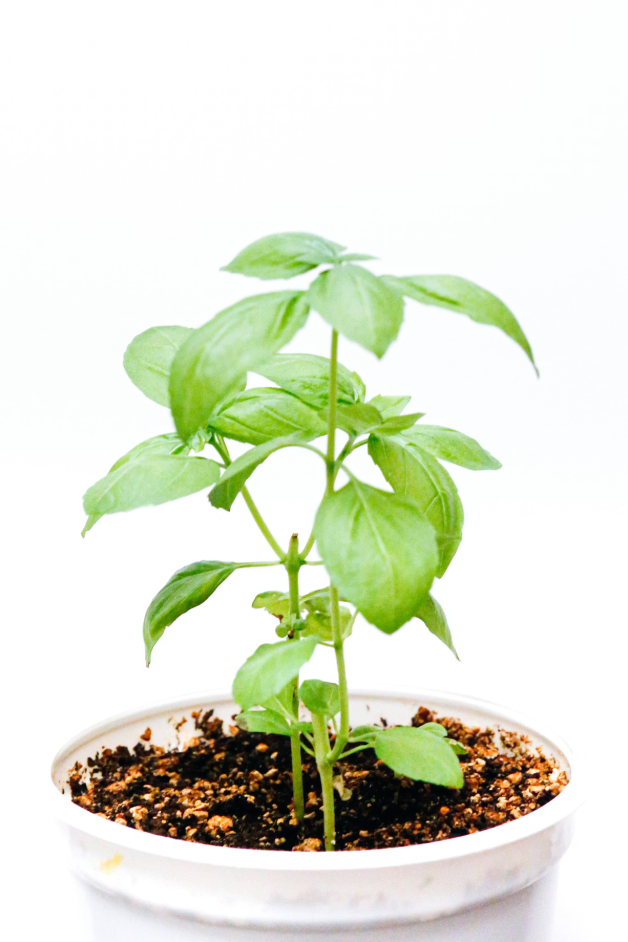
Key tip: Avoid the tiny 3–4 inch pots that supermarket basil plants often come in. These are designed for short-term display, not long-term growing. Always repot supermarket basil into a larger container as soon as you get it home.
3. Best Soil for Growing Basil in Pots
Basil needs light, well-draining soil that retains enough moisture to stay evenly moist between waterings.
Best soil mix for pot basil:
- 60% high-quality potting mix
- 20% compost (for nutrients)
- 20% perlite (for drainage)
Basil prefers a slightly acidic to neutral soil pH of 6.0–7.0. Most quality potting mixes fall within this range naturally.
Tip: Avoid heavy, dense potting mixes. Basil roots need good aeration — compacted soil leads to slow growth and disease problems.
4. Sunlight Requirements
Basil is a sun-loving plant that needs more direct sunlight than almost any other herb. Insufficient light is one of the most common reasons pot basil becomes leggy, weak, and flavorless.
| Sunlight | Result |
|---|---|
| 6–8 hours direct sun | Ideal — compact, bushy growth with intense flavor |
| 4–6 hours direct sun | Acceptable — will grow but less flavorful and more leggy |
| Less than 4 hours | Poor — weak, pale, leggy growth with little flavor |
Indoor basil tip: A south-facing windowsill is the minimum for indoor basil. If your window doesn’t provide enough light, a simple LED grow light placed a few inches above the plant will make a dramatic difference.
5. How to Water Basil in a Pot
Watering is where most people go wrong with pot basil. Basil needs consistently moist soil — not wet, not dry — and it’s sensitive to both extremes.
- Water when the top half inch of soil feels dry
- Water deeply until it drains from the bottom
- Never let basil sit in standing water — empty saucers after watering
- Water at the base, not on the leaves — wet foliage encourages fungal disease
- In hot weather, check daily — basil may need watering every day
- In cool weather or indoors, water less frequently
The biggest basil killer: Overwatering. More pot basil dies from too much water than any other cause. When in doubt, wait a day before watering.
6. How to Fertilize Pot Basil
Basil is a moderate feeder that benefits from regular but gentle fertilizing throughout the growing season.
| Detail | Recommendation |
|---|---|
| Best fertilizer | Balanced liquid fertilizer (10-10-10) diluted to half strength |
| Frequency | Every 2–3 weeks during the growing season |
| When to stop | Stop fertilizing in fall when growth slows |
| Organic option | Fish emulsion or liquid seaweed — gentle and effective |
Important: Don’t over-fertilize basil. Too much nitrogen produces lush, fast-growing leaves but significantly reduces the essential oils that give basil its flavor and fragrance. Less is more with basil fertilizer.
7. How to Prune Basil to Keep It Bushy
Regular pruning is the single most important thing you can do to keep pot basil healthy, productive, and bushy. Without pruning, basil quickly becomes tall and leggy — and then bolts (flowers), after which the leaves become bitter and the plant declines.
How to prune basil correctly:
- Look for a stem that has at least 3 pairs of leaves
- Find the lowest pair of leaves on that stem
- Pinch or cut the stem just above that lowest pair of leaves
- The plant will sprout two new stems from just below where you cut — doubling its branching
- Repeat this process every 1–2 weeks throughout the season
Key result: Every time you prune correctly, your basil plant becomes bushier and more productive. A well-pruned basil plant can produce 4–5 times more leaves than an unpruned one.
8. How to Prevent Basil from Bolting
Bolting is when basil sends up a flower stalk. Once basil bolts, the leaves become progressively more bitter and the plant puts all its energy into producing seeds rather than flavorful leaves.
How to prevent bolting:
- Pinch off any flower buds as soon as they appear — check daily once you see the first bud
- Prune regularly to keep the plant focused on leaf production
- Keep basil in a cooler spot during the hottest part of summer — heat triggers bolting
- Choose slower-bolting varieties like Thai basil or Spicy Globe for summer growing
If basil has already bolted: Cut off all flower stalks immediately and harvest as many leaves as possible. The plant may recover and produce new growth, but its best days are behind it. Start a new plant from seed or cuttings for the best flavor.
9. Common Problems and Solutions
| Problem | Cause | Solution |
|---|---|---|
| Yellow leaves | Overwatering or nutrient deficiency | Check soil moisture, reduce watering, apply balanced fertilizer |
| Wilting despite moist soil | Root rot from overwatering | Repot in fresh dry soil, trim rotten roots |
| Leggy, weak growth | Not enough light | Move to sunnier spot or add a grow light |
| Black spots on leaves | Cold damage or fungal disease | Keep above 50°F (10°C), improve air circulation, water at base only |
| Bitter flavor | Plant has bolted | Remove all flower stalks immediately, harvest remaining leaves |
| Aphids | Common pest on basil | Spray with water or insecticidal soap |
10. How to Harvest Basil from a Pot
Harvesting basil correctly encourages the plant to produce more leaves — the more you harvest, the more it grows.
How to harvest basil:
- Always harvest from the top of the plant, not the bottom
- Cut or pinch stems just above a pair of leaves — the plant will branch from this point
- Never remove more than one-third of the plant at one time
- Harvest in the morning when leaves are at their most flavorful
- Use fresh basil immediately for the best flavor — or store loosely wrapped in a damp paper towel in the refrigerator
Key tip: The best time to harvest is just before the plant flowers — this is when basil leaves contain the highest concentration of essential oils and have the most intense flavor.
Final Thoughts
Basil is one of the most rewarding herbs you can grow in a pot. Fresh, homegrown basil has a fragrance and flavor that store-bought can never match — and with the right pot, the right soil, plenty of sun, and regular pruning, it’s much easier to keep alive than most people expect.
Give your basil the sun it craves, water it carefully, prune it regularly, and pinch off every flower bud you see. Do those four things consistently, and you’ll have fresh, flavorful basil all season long. 🌿
Have questions about growing basil in pots? Visit the Contact page — I’d love to hear from you!
— mumu, Green Garden Tips