By mumu
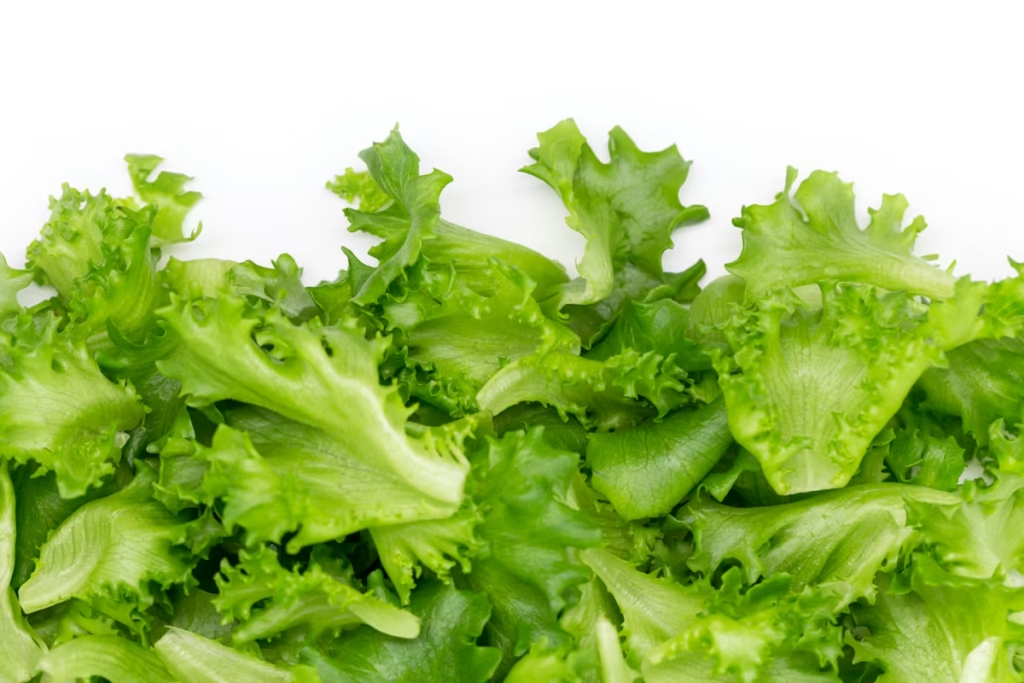
Fresh lettuce straight from your own container garden tastes completely different from anything you can buy at the store. It’s crispier, more flavorful, and incredibly satisfying to grow yourself — especially when you realize just how easy it is.
Lettuce is one of the best vegetables to grow in containers. It has shallow roots, grows quickly, and actually prefers the cool temperatures of spring and fall — meaning you can harvest fresh lettuce almost year round with a little planning.
Here is everything you need to know about how to grow lettuce in containers, including how to keep a continuous harvest going from early spring all the way through late fall — and even through winter in mild climates.
Table of Contents
- Best Lettuce Varieties for Containers
- Choosing the Right Container for Lettuce
- Best Soil for Growing Lettuce in Pots
- How to Plant Lettuce in Containers
- Sunlight Requirements
- How to Water Container Lettuce
- How to Fertilize Lettuce in Containers
- How to Harvest Lettuce from Containers
- How to Grow Lettuce Year Round
- Common Problems and Solutions
1. Best Lettuce Varieties for Containers
Almost all lettuce varieties grow well in containers, but some are better suited to pot growing than others. Loose-leaf varieties are the best choice for beginners because they’re fast-growing, don’t require as much depth, and can be harvested repeatedly over many weeks.
| Variety | Type | Days to Harvest | Best For |
|---|---|---|---|
| Black Seeded Simpson | Loose-leaf | 45 days | Beginners — fast, reliable, heat tolerant |
| Oak Leaf | Loose-leaf | 50 days | Small containers, slow to bolt |
| Buttercrunch | Butterhead | 55 days | Sweet flavor, compact heads |
| Little Gem | Romaine | 60 days | Small, sweet mini romaine — perfect for pots |
| Red Sails | Loose-leaf | 45 days | Beautiful red color, heat tolerant |
| Mesclun Mix | Mixed loose-leaf | 30–40 days | Fastest harvest — mixed salad greens |
Best choice for beginners: Mesclun mix or Black Seeded Simpson — both are fast-growing, easy to harvest, and very forgiving for first-time growers.
2. Choosing the Right Container for Lettuce
Lettuce has shallow roots — typically only 6–8 inches deep — which makes it one of the most flexible vegetables for container growing. It will grow in almost any container that is at least 6 inches deep.
| Container Type | Minimum Size | Plants Per Container | Notes |
|---|---|---|---|
| Standard pot | 8 inches deep, 10 inches wide | 2–3 plants | Simple and effective |
| Window box | 6 inches deep, 24 inches long | 4–6 plants | Perfect for balconies and windowsills |
| Fabric grow bag | 5 gallons | 4–5 plants | Excellent drainage, lightweight |
| Large rectangular planter | 8 inches deep, 18+ inches long | 6–8 plants | Best for continuous harvest — stagger planting |
Most important rule: Always use containers with drainage holes. Lettuce roots rot quickly in waterlogged soil.
3. Best Soil for Growing Lettuce in Pots
Lettuce needs light, well-draining soil that retains enough moisture to keep it from drying out between waterings. Heavy or compacted soil will slow growth and encourage disease.
Best soil mix for container lettuce:
- 50% high-quality potting mix
- 30% compost (for nutrients and moisture retention)
- 20% perlite (for drainage)
Lettuce prefers a slightly acidic to neutral soil pH of 6.0–7.0. Most quality potting mixes fall within this range naturally.
4. How to Plant Lettuce in Containers
Starting from seed:
- Fill your container with prepared soil mix to within 1 inch of the rim
- Scatter seeds thinly across the surface — lettuce seeds are tiny and don’t need to be buried deeply
- Cover with a very thin layer of soil (about ¼ inch)
- Water gently with a fine mist — don’t wash the seeds away
- Keep soil consistently moist until seeds germinate (5–10 days)
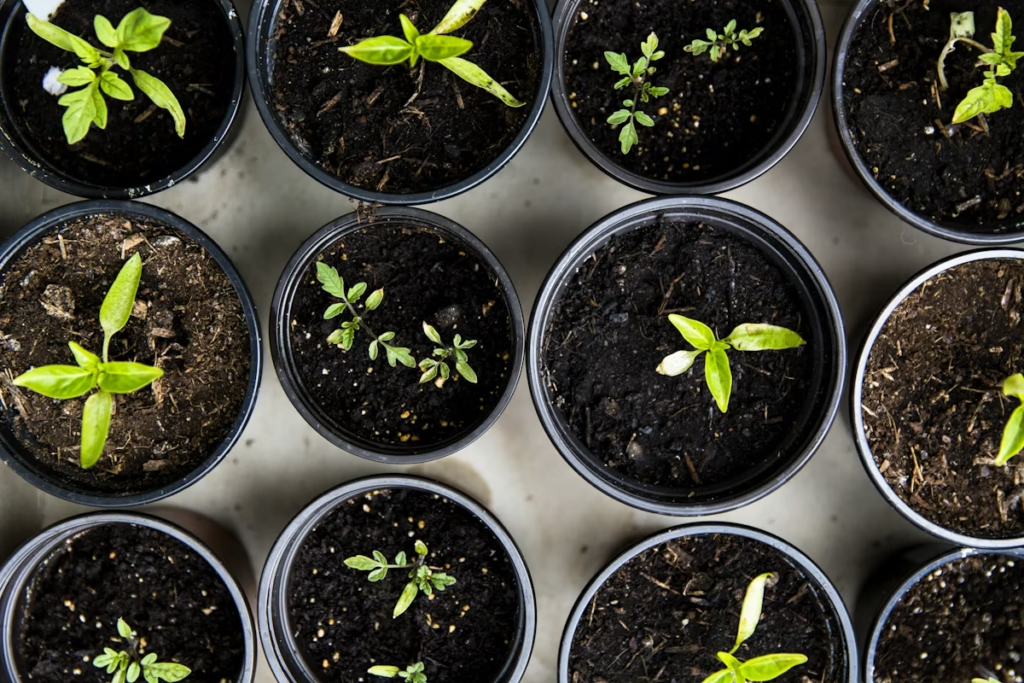
- Thin seedlings to 6–8 inches apart once they reach 2 inches tall
Starting from transplants: If you’re buying lettuce starts from a garden center, simply plant them 6–8 inches apart in your prepared container and water thoroughly.
Tip: The thinnings from seeded lettuce are delicious as microgreens — don’t throw them away!
5. Sunlight Requirements
Lettuce grows best in 4–6 hours of sunlight per day. Unlike most vegetables, it actually prefers cooler conditions and will tolerate partial shade — making it one of the most versatile container vegetables for less sunny spots.
| Light Condition | Result |
|---|---|
| Full sun (6+ hours) | Fast growth but may bolt quickly in hot weather |
| Partial sun (4–6 hours) | Ideal — steady growth, slower to bolt |
| Partial shade (2–4 hours) | Slower growth but stays sweeter longer in summer |
Summer tip: Move lettuce containers to a spot with afternoon shade during hot summer months. This slows bolting and keeps leaves sweet and tender longer.
6. How to Water Container Lettuce
Lettuce is mostly water — about 95% — which means consistent moisture is critical for good growth and flavor. Drought-stressed lettuce becomes bitter and bolts quickly.
- Keep soil consistently moist but never waterlogged
- Water when the top half inch of soil feels dry
- Water at the base of the plant — wet leaves invite disease
- In hot weather, check containers daily — they may need watering every day
- Mulch the soil surface with a thin layer of compost to retain moisture
7. How to Fertilize Lettuce in Containers
Lettuce is a leafy green that needs nitrogen to produce lush, flavorful leaves. Feed it regularly throughout the growing season for the best harvest.
- Best fertilizer: A liquid fertilizer high in nitrogen (the first number in the NPK ratio)
- Frequency: Every 2–3 weeks throughout the growing season
- How to apply: Dilute to half strength and apply when watering
Tip: Fish emulsion or liquid seaweed are excellent organic fertilizer options for container lettuce — they’re gentle, effective, and improve both growth and flavor.
8. How to Harvest Lettuce from Containers
One of the greatest advantages of growing lettuce in containers is the ability to harvest it using the “cut and come again” method — which gives you multiple harvests from the same plants.
Cut and come again method:
- Once lettuce reaches 4–6 inches tall, use scissors to cut the outer leaves
- Cut to about 1 inch above the soil level
- Leave the inner growing point (center of the plant) untouched
- The plant will regrow and be ready for another harvest in 1–2 weeks
- Repeat until the plant bolts (sends up a flower stalk)
Harvest in the morning when leaves are cool, crisp, and at their most flavorful. Rinse immediately and refrigerate for the best texture.
9. How to Grow Lettuce Year Round
| Season | What to Do |
|---|---|
| Early spring | Start seeds indoors 4–6 weeks before last frost. Move outside once temperatures stay above 40°F (4°C). |
| Spring | Peak lettuce season — plant succession crops every 2–3 weeks for continuous harvest. |
| Summer | Move containers to partial shade. Choose heat-tolerant varieties. Expect some bolting in extreme heat. |
| Fall | Second peak season — plant a new crop 6–8 weeks before first frost for an excellent fall harvest. |
| Winter | Grow indoors near a sunny window or under grow lights. Use a cold frame outdoors in mild climates. |
Succession planting tip: Sow a small batch of lettuce seeds every 2–3 weeks instead of all at once. This gives you a continuous, manageable harvest rather than a huge glut all at the same time.
10. Common Problems and Solutions
| Problem | Cause | Solution |
|---|---|---|
| Bolting (flowering) | Heat and long days trigger flowering | Move to shade, harvest immediately, start a new crop |
| Bitter leaves | Heat stress or bolting | Move to cooler spot, water consistently, harvest young leaves |
| Slugs and snails | Attracted to moist conditions | Hand pick at night, use copper tape around containers |
| Tip burn (brown leaf edges) | Calcium deficiency or heat stress | Water consistently, move to cooler spot |
| Leggy, pale seedlings | Not enough light | Move to brighter spot or add a grow light |
Final Thoughts
Growing lettuce in containers is one of the most rewarding and practical things a beginner container gardener can do. It’s fast, easy, productive, and gives you fresh, delicious salad greens right outside your door — or even on your kitchen windowsill.
Start with a simple loose-leaf variety, master the cut-and-come-again harvest method, and use succession planting to keep fresh lettuce growing almost year round. Once you taste homegrown lettuce for the first time, you’ll never want to go back to store-bought. 🥬
Have questions about growing lettuce in containers? Visit the Contact page — I’d love to hear from you!
— mumu, Green Garden Tips