By mumu
One of the most frustrating things about winter for anyone who cooks with fresh herbs is watching the outdoor herb garden shut down for the season. Dried herbs are fine, but they’re a pale substitute for the real thing — and the good news is they don’t have to be. A well-set-up indoor herb garden can keep you in fresh herbs right through winter, and it’s easier to pull off than most people think.
Here’s how to grow a successful indoor herb garden through the cold months.
Which Herbs Actually Work Indoors in Winter?
Not all herbs are equally suited to indoor growing, and winter light conditions make the selection more limited than summer. The herbs that work best indoors through winter are ones that tolerate lower light and don’t need intense heat to thrive.
Best choices for indoor winter herb gardens:
- Chives — One of the most reliable indoor herbs. Handles low light well, grows steadily, and the mild onion flavor is endlessly useful in cooking.
- Parsley — Slow but steady indoors. A compact variety like ‘Forest Green’ works well on a bright windowsill.
- Mint — Thrives indoors in winter and actually prefers slightly cooler conditions. Grows vigorously with moderate light.
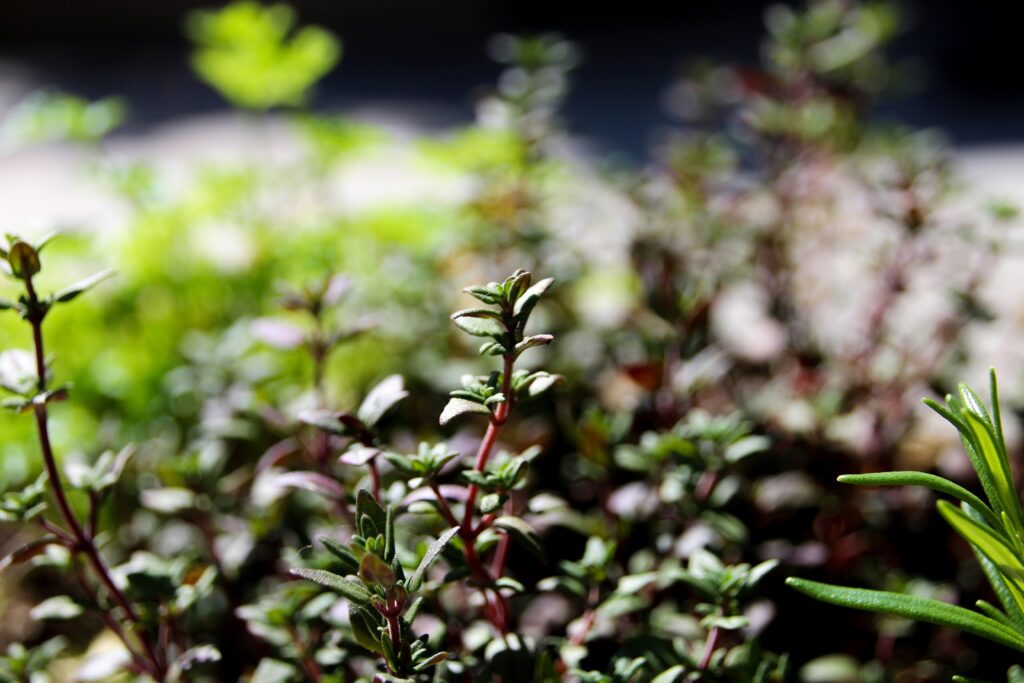
- Thyme — A Mediterranean herb that handles indoor conditions reasonably well. Needs a sunny window.
- Oregano — Grows well indoors with good light. Flavor is slightly milder than outdoor oregano but still very usable.
- Rosemary — Can work indoors with a very bright, sunny window and careful watering. Tricky but doable.
Herbs to avoid in winter indoors: Basil is the biggest one — it needs warmth and intense light that indoor conditions rarely provide. It becomes leggy, weak, and flavorless quickly. Cilantro also struggles and bolts fast indoors.
Light Is the Biggest Challenge
This is the honest truth about indoor herb gardening in winter: light is the limiting factor for almost everyone. Winter days are short, windows filter UV, and most indoor spaces simply don’t provide enough light for herbs to thrive without supplementation.
What your options are:
A south-facing window in winter provides the most natural light available indoors — if you have one, it’s your best option. Place herbs as close to the glass as possible without touching it. Even with a south-facing window, growth will be slower than outdoors in summer.
A grow light is genuinely transformative for indoor herb gardens. Even a basic LED grow light run for 14–16 hours a day makes the difference between struggling herbs and genuinely productive ones. Grow lights have become much more affordable — a good LED panel suitable for a windowsill herb garden costs $20–40 and pays for itself quickly in fresh herbs through the winter.
Container Setup for Indoor Herbs
Indoor herbs need containers with good drainage — overwatering is even more of a risk indoors in winter, when evaporation is slower and roots sit wet for longer.
- Use individual small pots (4–6 inches) rather than one large planter — different herbs have different water needs and it’s easier to manage them separately
- Always use containers with drainage holes, and place saucers underneath to catch water
- Use a lightweight, well-draining potting mix — or a mix specifically formulated for herbs
- Terracotta pots are excellent for Mediterranean herbs like thyme, oregano, and rosemary — their porous walls prevent overwatering
Watering and Feeding Indoor Herbs in Winter
Overwatering kills more indoor herbs than any other cause. In winter, herbs grow slowly and don’t drink nearly as much as they do outdoors in summer. The soil stays wet for much longer between waterings.
The rule is simple: check the soil before every watering. Stick your finger an inch into the soil — if it feels moist, wait. If it feels dry, water. For most herbs indoors in winter, this means watering every 7–14 days, sometimes less.
For feeding, herbs don’t need much fertilizer in winter when they’re growing slowly. A very dilute liquid fertilizer once a month is plenty — or skip it entirely and feed again when growth picks up in spring.
| Herb | Light Needed | Watering | Difficulty |
|---|---|---|---|
| Chives | Moderate — tolerates lower light | Every 7–10 days | Easy ⭐ |
| Mint | Moderate — tolerates lower light | Every 5–7 days — likes more moisture | Easy ⭐ |
| Parsley | Bright — south window or grow light | Every 7–10 days | Easy ⭐ |
| Thyme | Bright — south window or grow light | Every 10–14 days — allow to dry | Moderate ⭐⭐ |
| Rosemary | Very bright — best with grow light | Every 10–14 days | Moderate ⭐⭐ |
Harvesting Indoor Herbs Through Winter
Indoor herbs in winter grow more slowly than outdoor herbs in summer — manage your expectations and harvest lightly. Taking too much from a slow-growing indoor herb can set it back significantly.
- Harvest no more than a quarter of the plant at one time
- Allow several days between harvests from the same plant
- Always cut just above a leaf node — the plant will branch from that point
- For chives, cut leaves an inch above the base — new growth emerges from the base
Final Thoughts
A winter indoor herb garden is one of the most practical and rewarding things you can set up as a container gardener. Fresh chives on scrambled eggs, fresh mint in tea, fresh thyme in a winter stew — these small pleasures make a real difference to winter cooking.
Start with chives, parsley, and mint — the three most reliable indoor winter herbs — and add a grow light if your windows are limited. That combination will serve you well through even the darkest months. 🌿
Questions about growing herbs indoors in winter? Visit the Contact page!
— mumu, Green Garden Tips