By mumu
You’ve done everything right — or so you thought. You bought good plants, put them in pots, watered them regularly, and placed them in a sunny spot. And yet, your container plants are dying anyway.
If this sounds familiar, you’re not alone. Most beginner container gardeners lose plants in their first season — not because they have a black thumb, but because they haven’t yet learned the most common reasons container plants fail.
The good news is that almost all container plant problems have a clear cause and a straightforward fix. Here are the 7 most common reasons container plants die — and exactly what to do about each one.
Table of Contents
- Overwatering
- Underwatering
- Poor Drainage
- Wrong Amount of Light
- Nutrient Deficiency
- Root Bound Plants
- Pests and Disease
- How to Diagnose Your Plant Problem
- Tips to Keep Container Plants Alive and Thriving
1. Overwatering
Overwatering is the single most common reason container plants die. It’s a counterintuitive problem — most people kill their plants with too much love, not too little. When soil stays constantly wet, roots are deprived of oxygen and begin to rot. A plant with rotting roots cannot absorb water or nutrients, no matter how much you give it.
| Symptoms | What to Do |
|---|---|
| Yellow leaves, soft stems, wilting despite wet soil, mold on soil surface | Stop watering immediately. Allow soil to dry out completely. Check roots for rot — trim any brown, mushy roots. Repot in fresh dry soil if necessary. |
The fix: Always check the soil before watering. Stick your finger 1 inch into the soil — only water if it feels dry. Never water on a fixed schedule.
2. Underwatering
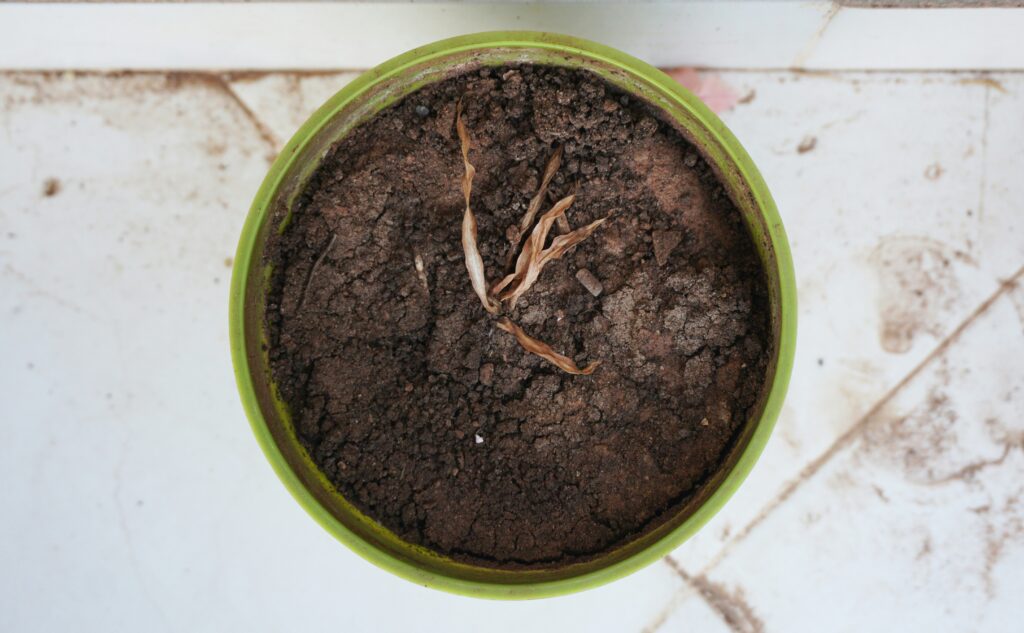
While overwatering gets most of the attention, underwatering is equally deadly — especially for container plants in hot summer weather. Container soil dries out much faster than garden soil, and a plant that goes without water for too long will wilt, drop leaves, and eventually die.
| Symptoms | What to Do |
|---|---|
| Wilting in the morning, crispy brown leaf edges, bone-dry soil pulling away from pot edges, very light pot | Water immediately and deeply. If soil is completely dry and repelling water, place the entire pot in a basin of water for 30 minutes to rehydrate. |
The fix: Check containers daily during hot weather. Small pots may need watering once or even twice a day in peak summer heat.
3. Poor Drainage
Even if you water correctly, a container without proper drainage will kill your plants. Water that has nowhere to drain collects at the bottom of the pot, keeping roots permanently wet and leading to root rot — the same outcome as overwatering.
| Symptoms | What to Do |
|---|---|
| Water pooling on soil surface for a long time, consistently wet soil, root rot despite careful watering | Always use containers with drainage holes. Never use decorative pots without drainage as primary containers. Empty saucers 30 minutes after watering. |
The fix: Use only containers with drainage holes. If you love a decorative pot without drainage, use it as a cachepot — place your plant in a plain nursery pot inside the decorative one.
4. Wrong Amount of Light
Light is one of the most critical factors in container plant success — and one of the most commonly misjudged. Too little light causes weak, leggy growth and poor flowering. Too much direct sun scorches leaves and dries out containers dangerously fast.
| Problem | Symptoms | Fix |
|---|---|---|
| Too little light | Leggy, stretched growth; pale leaves; no flowers or fruit | Move to a sunnier spot or use a grow light indoors |
| Too much direct sun | Scorched, bleached, or crispy leaves; soil drying out very fast | Move to a spot with afternoon shade or filtered light |
The fix: Always check the light requirements before buying a plant. Match the plant to the light conditions you actually have — not the conditions you wish you had.
5. Nutrient Deficiency
Container plants rely entirely on the nutrients in their potting mix — and those nutrients wash out every time you water. Without regular fertilizing, container plants become nutrient-deficient and gradually decline, even if everything else is perfect.
| Symptom | Likely Deficiency | Fix |
|---|---|---|
| Pale yellow leaves overall | Nitrogen (N) | Apply balanced liquid fertilizer |
| Purple-tinged leaves | Phosphorus (P) | Apply fertilizer with higher P content |
| Brown leaf edges, poor fruiting | Potassium (K) | Apply high-potassium fertilizer |
| Yellow leaves with green veins | Iron or Magnesium | Apply a micronutrient fertilizer or iron supplement |
The fix: Fertilize container plants regularly throughout the growing season. Use a balanced liquid fertilizer every 1–2 weeks for vegetables and flowering plants, every 3–4 weeks for herbs and foliage plants.
6. Root Bound Plants
When a plant’s roots fill its container completely, the plant becomes root bound. A severely root bound plant can’t absorb water or nutrients efficiently, dries out almost immediately after watering, and stops growing — no matter how well you care for it.
| Symptoms | What to Do |
|---|---|
| Roots growing out of drainage holes, water running straight through without absorbing, plant drying out very quickly, stopped growth | Repot into a container 1–2 inches larger with fresh potting mix. Do this in spring for best results. |
The fix: Check your containers for signs of root binding every spring. Most container plants need repotting every 1–2 years.
7. Pests and Disease
Pests and diseases are a less common cause of container plant death than watering or light problems, but they can still devastate a container garden if left unchecked. The key is catching problems early — before they spread to other containers.
| Pest/Disease | Symptoms | Fix |
|---|---|---|
| Aphids | Sticky residue, distorted new growth, tiny insects on stems | Spray with water or insecticidal soap |
| Spider mites | Fine webbing, yellow stippled leaves | Increase humidity, spray with neem oil |
| Fungus gnats | Tiny flies around soil, larvae damage roots | Allow soil to dry out more between waterings |
| Root rot | Brown mushy roots, wilting despite wet soil | Repot in fresh soil after trimming affected roots |
| Powdery mildew | White powdery coating on leaves | Improve air circulation, apply baking soda spray |
The fix: Check plants weekly for early signs of pests or disease. Isolate affected plants immediately to prevent spreading. Treat promptly with the least toxic option first.
8. How to Diagnose Your Plant Problem
When your container plant is struggling, work through this simple checklist to identify the cause:
- Check the soil moisture — Is it too wet or too dry?
- Check the drainage — Does the pot have drainage holes? Is water draining freely?
- Check the light — Is the plant getting the right amount of light for its needs?
- Check the roots — Are they coming out of the drainage holes? Are they white and healthy or brown and mushy?
- Check the leaves — Are there insects, webbing, or spots that suggest pests or disease?
- Check your fertilizing schedule — When did you last feed your plant?
Going through this checklist systematically will identify the problem in almost every case.
9. Tips to Keep Container Plants Alive and Thriving
| Tip | Why It Matters |
|---|---|
| Check soil daily | Catching watering problems early prevents most plant deaths |
| Always use pots with drainage holes | Prevents waterlogging and root rot |
| Match plant to light conditions | The right plant in the right spot thrives with minimal effort |
| Fertilize regularly | Prevents nutrient deficiency that weakens plants |
| Repot every 1–2 years | Fresh soil and more root space keeps plants growing strong |
| Inspect plants weekly | Early detection of pests and disease prevents serious damage |
Final Thoughts
Losing container plants is frustrating — but it’s also one of the best ways to learn. Every plant that doesn’t make it teaches you something valuable about what your plants need and how to provide it.
Work through the 7 common reasons outlined above, apply the fixes, and you’ll find that keeping container plants alive and thriving is much more achievable than you thought. Every gardener loses plants — the great ones just learn from it and keep growing. 🌱
Have questions about struggling container plants? Visit the Contact page — I’d love to hear from you!
— mumu, Green Garden Tips