By mumu
Yellow leaves are one of the most common problems in container gardening — and one of the most confusing. A plant that was perfectly healthy last week is suddenly turning yellow, and you have no idea why.
The frustrating truth is that yellow leaves can be caused by many different problems — overwatering, underwatering, nutrient deficiency, pest damage, and more. The key is learning to read the clues your plant is giving you so you can identify the real cause and fix it quickly.
Here is a complete guide to diagnosing and fixing yellow leaves on container plants.
Table of Contents
- Overwatering
- Underwatering
- Nitrogen Deficiency
- Iron Deficiency
- Magnesium Deficiency
- Too Little Light
- Root Bound Plant
- Pest Damage
- Natural Leaf Drop
- Quick Diagnosis Chart
1. Overwatering
Overwatering is the most common cause of yellow leaves in container plants. When soil stays constantly wet, roots are deprived of oxygen and begin to rot — and rotting roots cannot deliver water or nutrients to the plant, causing leaves to yellow and drop.
| Signs | Fix |
|---|---|
| Yellow leaves + wet soil + possibly mushy stems | Stop watering immediately. Allow soil to dry out completely. Check roots — if brown and mushy, repot in fresh dry soil after trimming rotting roots. |
How to tell if overwatering is the cause: Check the soil. If it’s wet and has been wet for several days, overwatering is almost certainly the problem. Healthy soil should feel moist but never soggy.
2. Underwatering
Underwatering also causes yellowing, but the clues are different from overwatering. Drought-stressed plants develop yellow leaves that are often accompanied by wilting, crispy brown edges, and bone-dry soil.
| Signs | Fix |
|---|---|
| Yellow leaves + crispy brown edges + dry soil + wilting | Water thoroughly immediately. If soil is very dry and repelling water, bottom soak the pot in a basin of water for 30 minutes to rehydrate the soil. |
3. Nitrogen Deficiency
Nitrogen is the nutrient plants use most — and it’s also the one that washes out of container soil fastest. Nitrogen deficiency causes a characteristic yellowing pattern that starts with the oldest, lowest leaves and works its way up the plant.
| Signs | Fix |
|---|---|
| Pale yellow leaves starting from the bottom of the plant, moving upward. Entire leaf turns yellow — no green veins. | Apply a balanced liquid fertilizer immediately. Begin a regular fertilizing schedule — every 1–2 weeks for vegetables, every 3–4 weeks for herbs. |
4. Iron Deficiency
Iron deficiency produces a very distinctive yellowing pattern — the leaf turns yellow but the veins stay green. This pattern is called interveinal chlorosis and is a reliable indicator of iron or pH problems.
| Signs | Fix |
|---|---|
| Yellow leaves with green veins — especially on new growth at the top of the plant | Apply a liquid iron supplement or micronutrient fertilizer. Check soil pH — iron deficiency is often caused by soil that is too alkaline (pH above 7.0). Lower pH with sulfur if needed. |
5. Magnesium Deficiency
Magnesium deficiency looks similar to iron deficiency — yellow leaves with green veins — but it typically appears on older, lower leaves rather than new growth at the top.
| Signs | Fix |
|---|---|
| Yellow leaves with green veins — on older, lower leaves. Sometimes with a reddish or purple tint. | Apply Epsom salt solution — dissolve 1 tablespoon of Epsom salt in 1 gallon of water and water the plant. Repeat every 2 weeks until improvement is seen. |
6. Too Little Light
Plants that don’t get enough light gradually lose their green color as they’re unable to produce sufficient chlorophyll. Leaves become pale, yellowish-green, and the plant becomes leggy as it stretches toward the light source.
| Signs | Fix |
|---|---|
| Pale, yellowish-green leaves overall. Leggy, stretched growth. Slow growth despite good watering and fertilizing. | Move to a brighter spot gradually — don’t move directly from deep shade to full sun. Increase light exposure over 1–2 weeks. Add a grow light for indoor plants. |
7. Root Bound Plant
When a plant’s roots completely fill its container, it can no longer absorb water and nutrients efficiently — leading to yellowing leaves, slow growth, and overall decline.
| Signs | Fix |
|---|---|
| Yellow leaves + roots growing out of drainage holes + water running straight through without absorbing + plant drying out very quickly after watering | Repot into a container 1–2 inches larger with fresh potting mix. Do this in spring for best results. |
8. Pest Damage
Several common container garden pests cause yellow leaves — spider mites, aphids, and scale insects all damage leaves by sucking sap, which disrupts the plant’s ability to produce chlorophyll.
| Pest | Signs | Fix |
|---|---|---|
| Spider mites | Fine webbing on leaves, stippled yellow dots | Spray with neem oil or insecticidal soap |
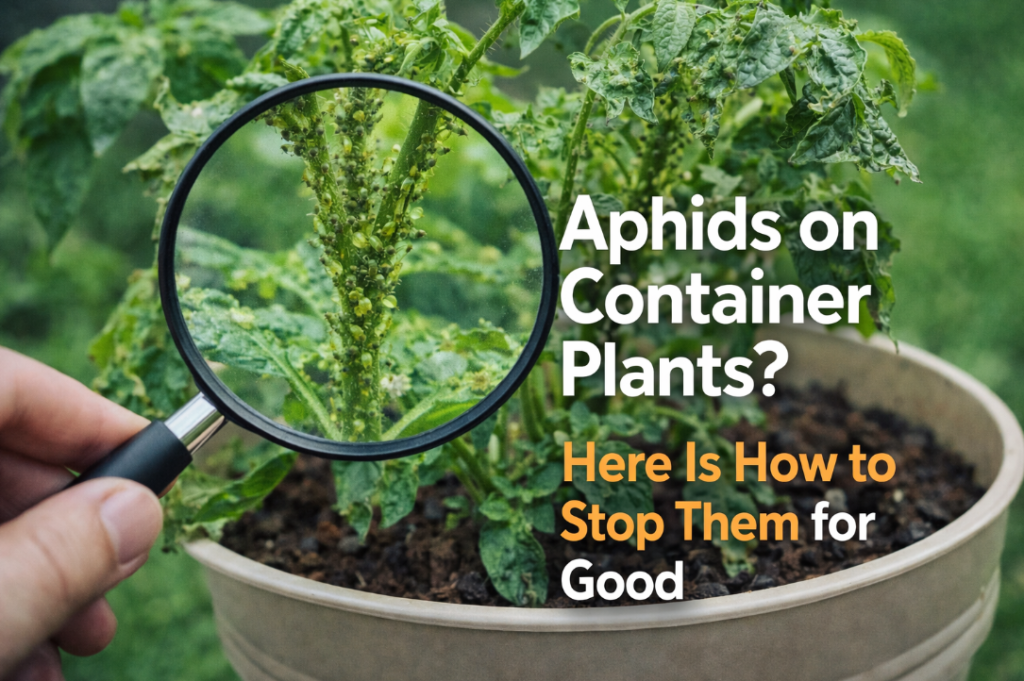
| Aphids | Sticky residue, distorted new growth, clusters of tiny insects | Spray with water or insecticidal soap |
| Scale insects | Brown bumps on stems, sticky residue, yellowing leaves | Remove with alcohol-dipped cotton swab, apply neem oil |
9. Natural Leaf Drop
Not all yellow leaves indicate a problem. It’s completely normal for plants to shed older, lower leaves as they grow. If only the very lowest, oldest leaves are yellowing while the rest of the plant looks healthy, this is almost certainly just natural leaf turnover — nothing to worry about.
How to tell natural yellowing from a problem:
- Natural yellowing — affects only the lowest, oldest leaves, one or two at a time
- Problem yellowing — affects multiple leaves across the plant, or starts at the top, or progresses rapidly
10. Quick Diagnosis Chart
| What You See | Most Likely Cause | First Action |
|---|---|---|
| Yellow leaves + wet soil | Overwatering | Stop watering, let soil dry out |
| Yellow leaves + dry soil + wilting | Underwatering | Water thoroughly immediately |
| Pale yellow leaves from bottom up | Nitrogen deficiency | Apply balanced liquid fertilizer |
| Yellow leaves with green veins (new growth) | Iron deficiency | Apply iron supplement, check pH |
| Yellow leaves with green veins (old growth) | Magnesium deficiency | Apply Epsom salt solution |
| Pale yellowish-green overall + leggy growth | Insufficient light | Move to brighter location |
| Yellow leaves + roots out of drainage holes | Root bound | Repot in larger container |
| Yellow with webbing or sticky residue | Pest damage | Inspect for pests, treat with neem oil |
| Only lowest leaves yellowing | Natural leaf drop | Remove yellow leaves — no action needed |
Final Thoughts
Yellow leaves are your plant’s way of telling you something is wrong — or sometimes, just telling you it’s growing normally. Learning to read the specific pattern and context of the yellowing is the key to diagnosing the problem correctly and fixing it fast.
Work through the diagnosis chart above, identify the most likely cause, and take the appropriate action. In most cases, yellow leaves can be fixed quickly — and once you understand what caused them, you’ll be much better equipped to prevent the same problem from happening again. 🌱
Have questions about yellow leaves on container plants? Visit the Contact page — I’d love to hear from you!
— mumu, Green Garden Tips