By mumu
There’s something really satisfying about popping open a fresh pea pod and eating the peas straight from the plant. And the good news? You don’t need a garden to make it happen. Peas grow surprisingly well in containers, and with a little planning, you can harvest a decent crop from your balcony, patio, or doorstep.
Here’s everything you need to know to grow peas in pots — from picking the right variety to harvesting at just the right moment.
Choose the Right Variety First
This is the single most important decision you’ll make. Peas come in three main types, and they all behave differently in containers.
Dwarf/bush varieties are your best bet for containers. They stay compact — usually under 2 feet tall — and don’t need much support. Varieties like Tom Thumb, Little Marvel, and Patio Pride were practically made for pot growing.
Climbing varieties can work too, but they need a trellis and a larger, heavier container to stay stable. If you have the space and don’t mind building a support, Sugar Snap is absolutely worth growing — the flavor is exceptional.
Snow peas are another great option for containers. They’re picked young before the peas fully develop, so you get a longer harvest window from each plant.
What Kind of Container Works Best?
Peas need more depth than most people expect. Their roots go down quite far, and a shallow pot will stress the plant quickly. Aim for at least 12 inches deep — deeper is better.
For width, a 12-inch pot can comfortably fit 4–6 dwarf pea plants. If you want a more generous harvest, a long window box or rectangular planter works really well — you can fit more plants in a row and they’ll prop each other up a little.
Fabric grow bags are also a great choice for peas. They drain well, the roots stay healthy, and they’re easy to move around. A 5-gallon bag is a solid starting point.
Whatever container you use — make sure it has drainage holes. Peas hate sitting in wet soil.
Soil, Planting, and Timing
Peas are cool-season plants. They actually prefer growing in cool weather and will struggle — and eventually give up — once summer heat really kicks in. This makes them perfect for early spring and fall growing.
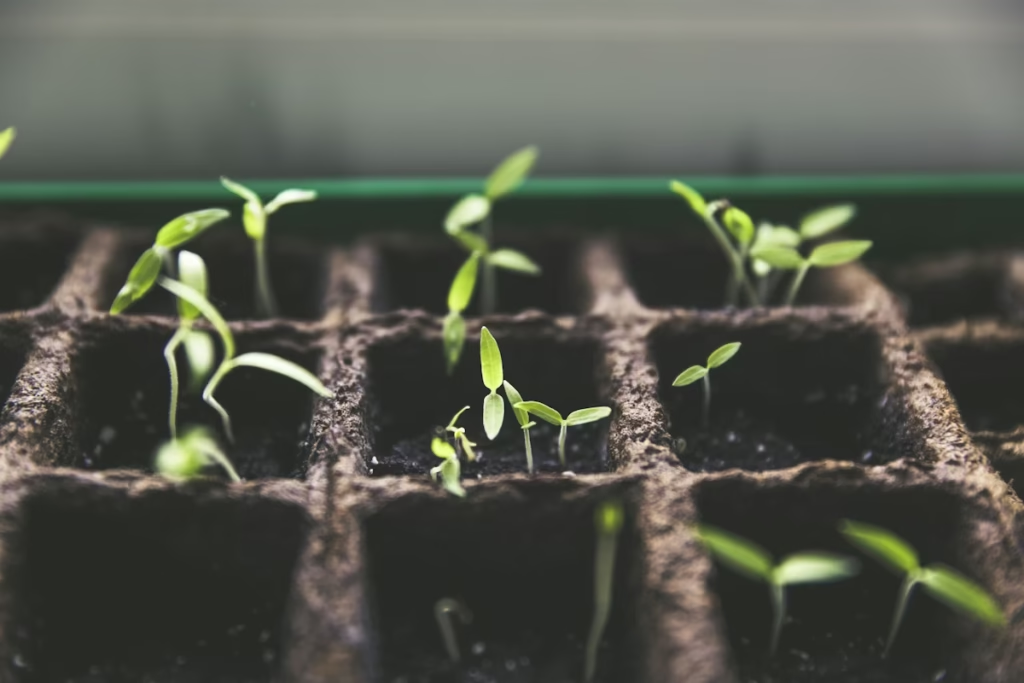
Sow peas directly in the container — they don’t like being transplanted. Push seeds about 1 inch deep and 2–3 inches apart. Water well after sowing and keep the soil moist until they sprout, which usually takes 7–14 days.
For soil, use a good quality potting mix with some compost mixed in. Peas fix their own nitrogen, so they don’t need a heavily fertilized soil — just something with decent structure and drainage.
| Season | When to Sow | Notes |
|---|---|---|
| Spring | 4–6 weeks before last frost | Peas tolerate light frost — start early |
| Fall | 8–10 weeks before first frost | Often produces sweeter peas than spring |
Sun, Water, and Support
Peas need at least 6 hours of sun a day to produce well. They’ll grow in partial shade, but expect fewer pods.
Water consistently — peas don’t like drying out, especially once they start flowering. Check the soil every day or two and water when the top inch feels dry. Avoid wetting the foliage if you can, as damp leaves invite powdery mildew, which is peas’ biggest enemy.
Even dwarf varieties benefit from a little support. A few bamboo stakes and some twine, or a small trellis pushed into the container, will keep plants tidy and improve air circulation. Climbing varieties need proper support — they’ll grab onto almost anything with their little tendrils.
Do Peas Need Fertilizer?
Not much, honestly. Peas are nitrogen-fixers — they pull nitrogen from the air and convert it themselves. Too much nitrogen fertilizer actually makes them produce more leaves and fewer pods, which is the opposite of what you want.
A light feed with a balanced fertilizer once or twice during the growing season is plenty. Once flowers appear, switch to a low-nitrogen, higher-potassium feed to encourage pod development.
Harvesting Peas from Containers
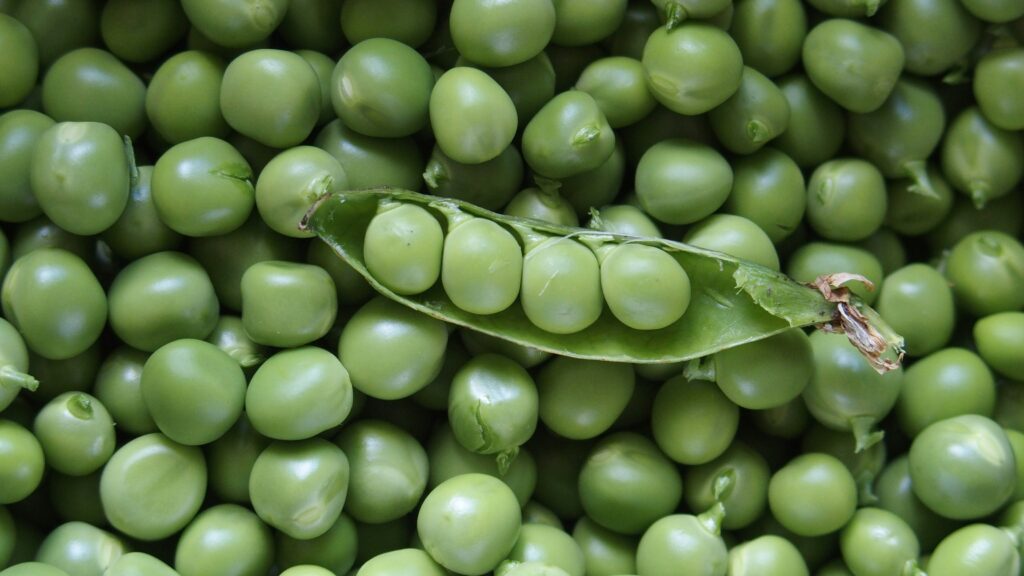
This is the fun part. Garden peas are ready when the pods look round and full — you should be able to feel the individual peas inside. Don’t wait too long, though. Overmature peas become starchy and tough very quickly.
Snow peas and sugar snap peas are harvested earlier — when the pods are flat (snow peas) or just before the peas fully swell (snap peas). Pick regularly — every 2–3 days during peak season — because leaving pods on the plant signals it to slow down production.
Always use two hands when harvesting — hold the stem with one hand and pull the pod with the other. Yanking at the pod can pull the whole plant out of the container.
Quick Troubleshooting
| Problem | Likely Cause | Fix |
|---|---|---|
| Flowers but no pods | Too hot, poor pollination | Grow in cooler weather, gently shake plants to help pollination |
| Powdery white coating on leaves | Powdery mildew | Improve air circulation, water at base only |
| Yellowing lower leaves | Natural as plant matures, or overwatering | Check soil moisture, remove yellow leaves |
| Pods shriveling before filling out | Heat stress or inconsistent watering | Water more consistently, provide shade in afternoon |
Final Thoughts
Peas are one of those vegetables that taste dramatically better when they’re fresh. The difference between a pea eaten minutes after picking and one that’s been sitting in a bag in the fridge for three days is genuinely remarkable. Growing your own in containers — even just a pot or two — is absolutely worth it for that reason alone.
Start with a dwarf variety, use a deep enough container, sow in cool weather, and pick regularly. That’s really all there is to it. 🌿
Questions about growing peas in pots? Head over to the Contact page — I’d love to hear from you!
— mumu, Green Garden Tips