By mumu
Floor space is the limiting factor for most container gardeners. Patios fill up quickly, balconies have weight limits, and doorsteps will only hold so many pots. But most container gardeners completely ignore the most abundant growing space available to them: the vertical space on walls, fences, and railings.
A well-designed vertical container garden can double or even triple your growing capacity without adding a single square foot to your footprint. Here’s how to create one that works.
Why Vertical Growing Works So Well in Containers
Vertical growing isn’t just about saving space — it has some genuine practical advantages for container gardeners specifically.
South-facing walls absorb heat during the day and release it at night, creating a warmer microclimate that benefits fruiting crops like tomatoes and peppers. Vertical plants also get better air circulation than ground-level containers packed tightly together, which reduces disease. And plants trained upward rather than allowed to sprawl are often more productive — the structure forces the plant’s energy into fruiting rather than leafy growth.
Vertical Growing Options for Container Gardens
Wall-mounted pocket planters are the most space-efficient option for small plants. A single panel of fabric pockets mounted on a wall or fence can hold 12–20 individual plants in the space of a couple of square feet. They’re ideal for herbs, lettuce, strawberries, and small flowers. Most are made from felt or fabric that allows roots to breathe and drains well.
Trellis with climbing plants is one of the most productive vertical options. A freestanding trellis in a large container, or a trellis attached to a wall with a container at its base, allows climbing vegetables to grow upward rather than outward. Cucumbers, climbing beans, peas, and even small-fruited tomatoes all do well this way.
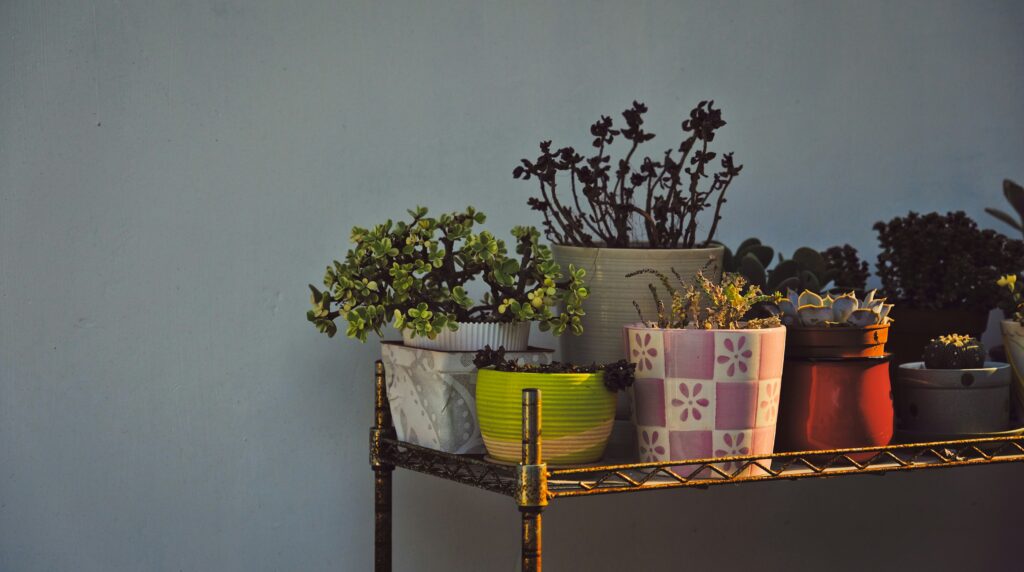
Tiered plant stands stack multiple containers in a single footprint. A 3–5 tier stand can hold as many pots as would cover 4–6 times the floor space. They work best for plants of similar height that don’t shade each other — herbs, lettuce, flowers, and small vegetables.
Railing planters clip directly onto balcony or deck railings, using the railing itself as the structure. They’re particularly useful because they don’t take any floor space at all. Most are sized for herbs, strawberries, and compact flowers.
Stacked tower planters are tall, column-shaped containers with planting pockets around the outside. They’re specifically designed for growing strawberries, herbs, or salad greens in a small footprint. Water drains from top to bottom through the column, irrigating all levels.
Best Plants for Vertical Container Gardens
| Plant | Best Vertical Method | Notes |
|---|---|---|
| Herbs (basil, mint, thyme, parsley) | Pocket planters, railing planters, tiered stands | Perfect for vertical growing — small root systems |
| Lettuce and salad greens | Pocket planters, tower planters | Shallow roots, harvest frequently — ideal for pockets |
| Strawberries | Tower planters, railing planters, pocket planters | Classic vertical container plant — trailing habit works perfectly |
| Cucumbers | Trellis in container | Train upward — saves floor space, improves yield |
| Climbing beans | Trellis or bamboo teepee in container | Very productive vertically — harvest for weeks |
| Peas | Trellis or netting in container | Natural climbers — grab onto almost anything |
| Cherry tomatoes | Trellis or stake trained upward | Indeterminate varieties especially suited to vertical training |
Practical Tips for Vertical Container Gardens
Think about watering before you build. Vertical structures — especially pocket planters and tower gardens — can be tricky to water evenly. The top positions dry out faster than the bottom. Water slowly and thoroughly, and check lower pockets after watering to make sure moisture is reaching them. Self-watering tower planters solve this problem by distributing water from the top down.
Use lighter weight growing media. Anything mounted on a wall needs to be as light as possible. Standard potting mix is heavy when wet. Consider mixing in perlite or coconut coir to reduce weight while maintaining good drainage and moisture retention.
Secure structures properly. A trellis loaded with heavy cucumber or bean plants, or a full pocket planter on a fence, can be surprisingly heavy. Make sure wall fixings and freestanding structures are sturdy enough to handle the load — especially in windy conditions.
Fertilize more frequently. Vertical containers — especially pocket planters — have very small soil volumes that deplete nutrients quickly. A dilute liquid fertilizer every 1–2 weeks through the growing season keeps vertical plants productive.
Final Thoughts
Vertical container gardening transforms how much you can grow in a small space. It takes a little more thought upfront — choosing the right structures, matching plants to positions, working out watering — but the extra growing capacity it creates is genuinely dramatic.
If your floor space is maxed out but your walls are bare, vertical growing is the obvious next step. 🌿
Questions about creating a vertical container garden? Visit the Contact page!
— mumu, Green Garden Tips