By mumu
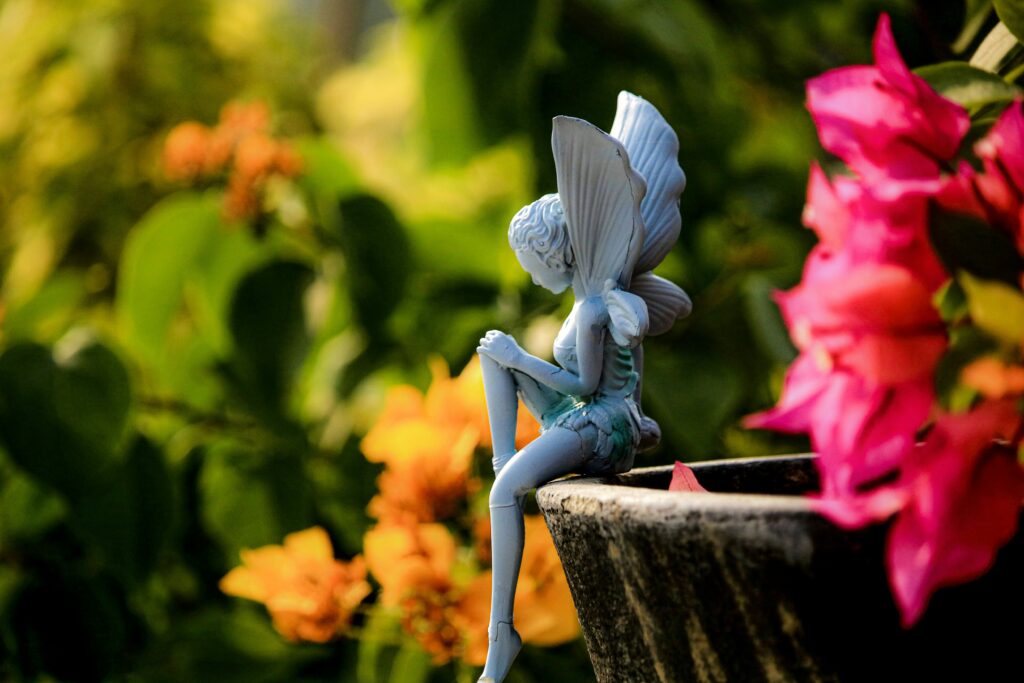
There’s something genuinely delightful about a fairy garden — a tiny, carefully crafted miniature world complete with miniature plants, pathways, furniture, and tiny details that reward close inspection. They’re equally appealing to adults and children, they work beautifully in almost any container, and they’re one of the most creative and personal things you can do in container gardening.
Here’s how to create one from scratch.
Choosing Your Container
Almost any container works for a fairy garden, and the choice of container sets the tone for the whole design. The most popular options:
- Wide, shallow dishes or bowls — The most classic fairy garden container. A low profile lets you see the whole miniature landscape easily and creates a natural “clearing” feel. Half wine barrels, wide ceramic dishes, and shallow troughs all work beautifully.
- Wheelbarrows and wagons — Vintage or rustic metal wheelbarrows and wooden wagons make charming fairy garden containers with built-in character.
- Old boots, teapots, or unusual vessels — Fairy gardens are a perfect home for quirky, unusual containers. An old rain boot, a cracked teapot, or a hollowed-out log all add whimsy and storytelling.
- Terracotta pots arranged together — A cluster of different-sized terracotta pots can become a connected fairy village, with each pot representing a different area.
Whatever container you choose, make sure it has drainage holes or that you can add them. Miniature plants are just as susceptible to root rot as regular ones.
The Best Plants for Fairy Gardens
Fairy garden plants need to be small enough to maintain the illusion of scale — a full-sized petunia overwhelms a miniature scene. Look for plants labeled “miniature,” “dwarf,” or “compact,” and think about what different plants represent in your tiny landscape:
| Plant | What It Looks Like in Scale | Notes |
|---|---|---|
| Thyme (especially creeping thyme) | Ground cover or lawn | Stays flat, has tiny leaves, produces small purple flowers |
| Miniature hostas | Large leafy shrubs | Tiny versions of classic hostas — perfect scale for fairy gardens |
| Dwarf conifers | Trees | Slow-growing, perfectly proportioned miniature trees |
| Moss | Lawn or forest floor | Creates an instantly magical, ancient atmosphere |
| Miniature ferns | Woodland plants | Add delicate texture and a forest feel |
| Sedums (small varieties) | Succulent boulders or ground cover | Very low maintenance, sculptural shapes |
| Baby tears (Soleirolia) | Rolling meadow or ground cover | Tiny round leaves, spreads beautifully |
Designing Your Fairy Garden
Before planting anything, sketch a rough layout — it takes only a few minutes and prevents the frustration of having to move plants around after they’re in.
Think in terms of a real landscape, just miniaturized:
- A focal point — a fairy house, a wishing well, or a particularly dramatic plant as the centerpiece
- Pathways — pea gravel, small pebbles, broken slate, or pressed pennies create tiny paths winding through the garden
- Levels and elevation — stack small stones to create hills, use different soil heights to add topography
- Water features — a small mirror or piece of blue glass buried slightly below soil level creates a convincing pond or lake
- Seating areas — miniature furniture (benches, chairs, tables) creates the sense of an inhabited world
Planting and Assembly
- Fill the container with potting mix — leave 1–2 inches of space at the top
- Build any landscape features first — hills, pathways, the “pond” — before planting
- Plant the largest plants first, working from back to front
- Add ground cover plants around the base of larger plants
- Place miniature accessories and furniture
- Fill in gaps with moss, pebbles, or additional ground cover
- Water gently — use a watering can with a fine rose so you don’t disturb the arrangement
Caring for a Container Fairy Garden
Fairy gardens need the same care as any container planting — watering when the top inch of soil dries out, occasional fertilizing during the growing season, and trimming plants that outgrow their intended scale.
The biggest maintenance task is trimming. Miniature plants are still plants — they grow, and they’ll eventually outgrow the scale of your scene. Regular light trimming keeps everything in proportion and maintains the miniature illusion.
Replace any plants that die or become diseased promptly — in a small, closely planted arrangement, problems spread quickly.
Final Thoughts
A container fairy garden is one of the most personal and creative things you can make in the garden. There are no rules beyond your own imagination — every fairy garden is unique, and that’s exactly what makes them so engaging to create and to tend.
Start simple, add details gradually, and enjoy the process of building a tiny world. 🧚
Questions about creating a fairy garden? Visit the Contact page — I’d love to see what you create!
— mumu, Green Garden Tips