By mumu
Blackberries might seem like a plant that belongs in a sprawling garden hedge — not a container on your patio. But thornless varieties have changed the game completely. Compact, manageable, and surprisingly productive, container blackberries can give you handfuls of sweet, juicy fruit every summer without taking over your outdoor space.
Here’s everything you need to know to grow blackberries successfully in pots.
Start with a Thornless Variety
This is non-negotiable for container growing. Traditional blackberries are vigorous, thorny, and spread aggressively — completely impractical in a pot. Thornless varieties are different. They’re more compact, much easier to manage, and just as flavorful.
Some great options for containers:
- Baby Cakes — Dwarf thornless variety specifically bred for containers. Stays under 3 feet, produces full-sized berries. Excellent choice.
- Apache — Thornless, upright canes, excellent berry flavor. Needs a larger container but very productive.
- Triple Crown — Thornless, semi-erect canes, very flavorful. One of the best-tasting blackberry varieties available.
- Ouachita — Thornless, upright, extremely productive. Handles heat well too.
For a true container setup, Baby Cakes is the standout choice — it was designed for exactly this purpose and performs beautifully in large pots.
Container and Soil Requirements
Blackberries need a substantial container. Their root systems aren’t huge, but they need enough soil volume to support healthy growth and consistent moisture.
A 15-gallon container is the sweet spot for most thornless varieties. Baby Cakes can work in a 10-gallon pot, but bigger always produces better results. Make sure the container has large drainage holes — blackberries absolutely hate waterlogged roots.
For soil, use a mix of quality potting mix and compost — roughly 60/40. Blackberries prefer slightly acidic soil (pH 5.5–6.5), so if your potting mix is neutral, adding a small amount of peat moss or sulfur helps.
| Variety | Minimum Container | Notes |
|---|---|---|
| Baby Cakes | 10 gallons | Dwarf — most compact option |
| Apache, Triple Crown | 15 gallons | Standard thornless varieties |
| Ouachita | 15–20 gallons | Vigorous — needs more space |
Sun, Water, and Feeding
Sun: Blackberries need full sun — at least 6 hours, ideally 8. Less sun means fewer berries and less sweetness. Position your container in the sunniest spot you have.
Watering: Keep soil consistently moist, especially when berries are developing. Inconsistent watering during fruiting causes small, dry berries. In hot summer weather, check the container daily. A layer of mulch on the soil surface helps retain moisture between waterings.
Fertilizing: Feed with a balanced fertilizer in early spring as new growth starts. Once flowering begins, switch to a high-potassium fertilizer to support berry development. Feed every 2–3 weeks through the fruiting season.
Supporting Your Blackberry Plant
Even compact varieties benefit from some support — the canes get heavy when loaded with fruit and can flop over or snap without help.
A simple bamboo stake tied loosely to the main canes works well for Baby Cakes. For larger varieties, a small trellis or a few stakes with horizontal wire between them keeps everything tidy and upright. Insert any supports at planting time to avoid damaging roots later.
Pruning for Better Harvests
Blackberries fruit on second-year canes (called floricanes). Understanding this is key to getting consistent harvests year after year.
After the second-year canes finish fruiting, cut them all the way down to the base — they won’t fruit again. The first-year canes (primocanes) that grew during the current season will fruit next year. Leave those alone. This annual pruning keeps the plant productive and the container manageable.
In spring, tip-prune the remaining canes to about 3–4 feet to encourage side branching — more branches means more fruiting sites and a better harvest.
Harvesting and Overwintering
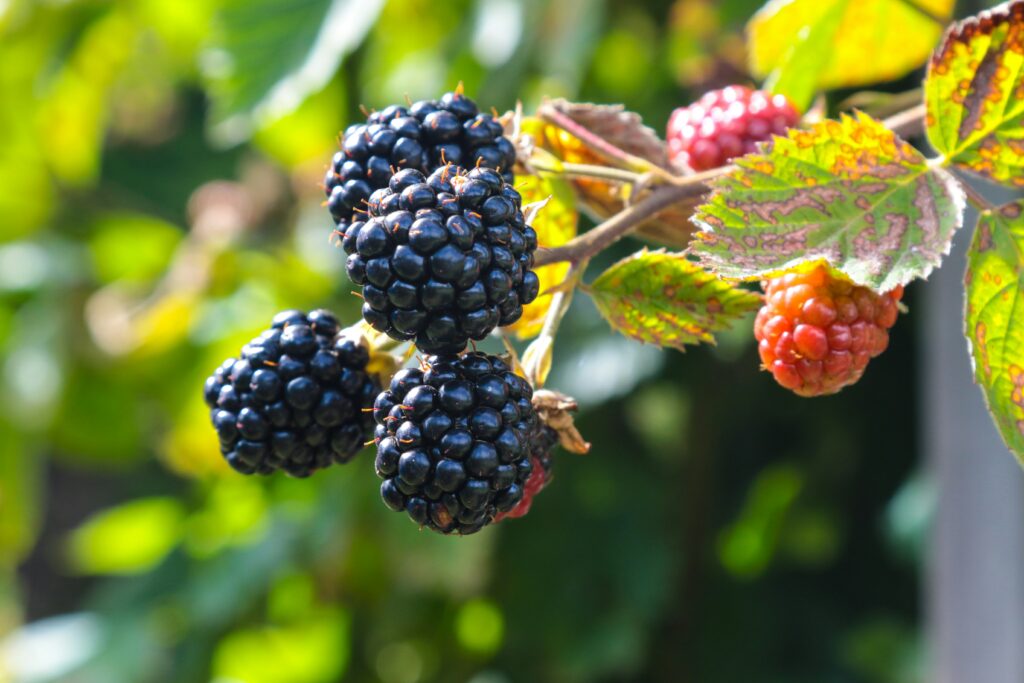
Blackberries are ready to harvest when they’re fully black, plump, and come away from the plant with just a gentle tug. Taste one first — fully ripe blackberries are sweet with almost no tartness. Under-ripe ones are noticeably tart.
Pick every couple of days during peak season — berries ripen quickly and overripe fruit attracts pests.
For winter, most thornless varieties are reasonably cold-hardy. In mild climates, leave them outside in a sheltered spot. In cold climates, move the container to an unheated garage or shed after the leaves drop — they need a cold dormancy period but shouldn’t freeze solid.
Final Thoughts
Blackberries in containers are one of those pleasant surprises in gardening. Most people assume it can’t work — and then they try Baby Cakes in a large pot and end up with more berries than they expected from such a small plant.
Give them full sun, consistent water, annual pruning, and a large enough container, and they’ll reward you with fresh blackberries every summer for years. 🫐
Growing blackberries in pots? I’d love to hear about it — visit the Contact page!
— mumu, Green Garden Tips