By mumu
Growing your own citrus fruit might sound like something only possible in a warm climate with a large garden — but dwarf citrus trees in containers have changed all of that. With the right variety and care, you can grow beautiful, productive citrus trees in pots on a balcony, patio, or even indoors near a sunny window.
The fragrance of citrus blossom alone makes growing dwarf citrus in containers worth every bit of effort — and harvesting fresh lemons, limes, or oranges from your own potted tree is a genuinely magical experience. Here is everything you need to know.
Table of Contents
- Best Dwarf Citrus Varieties for Containers
- Choosing the Right Container
- Best Soil for Container Citrus
- How to Plant Dwarf Citrus in Containers
- Sunlight Requirements
- How to Water Container Citrus
- How to Fertilize Dwarf Citrus in Pots
- Growing Citrus Indoors in Winter
- Common Problems and Solutions
- When and How to Harvest
1. Best Dwarf Citrus Varieties for Containers
Choosing the right variety is the most important decision when growing citrus in containers. Dwarf varieties stay compact enough to manage in pots while still producing full-sized, flavorful fruit.
| Variety | Fruit | Container Size | Notes |
|---|---|---|---|
| Meyer Lemon | Sweet lemons | 15–20 gallons | Most popular container citrus — sweeter than regular lemons, very productive |
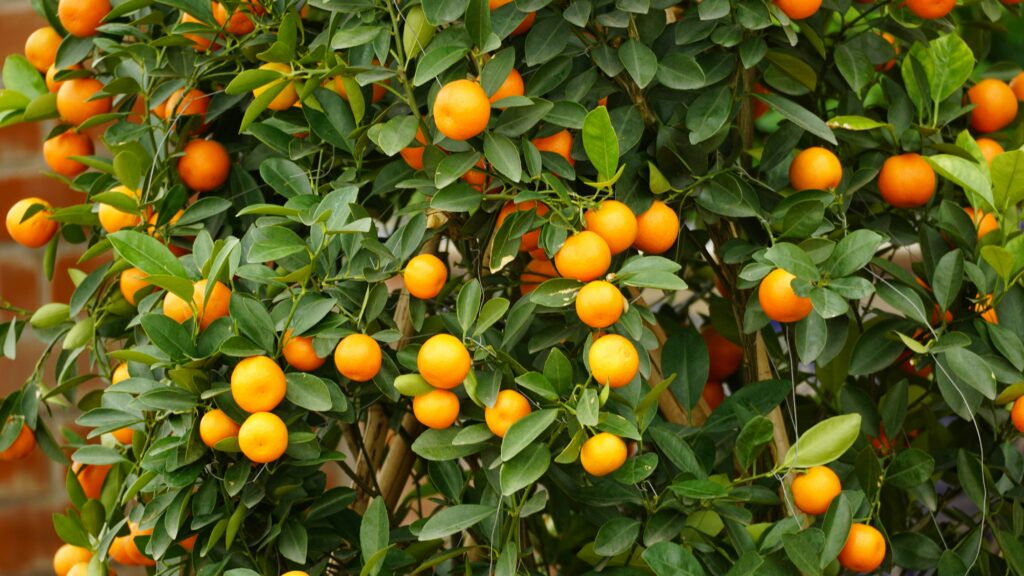
| Calamondin Orange | Small tart oranges | 10–15 gallons | Most compact citrus — beautiful ornamental tree, very fragrant flowers |
| Dwarf Navel Orange | Sweet oranges | 15–20 gallons | Produces full-sized navel oranges on a compact tree |
| Kaffir Lime | Aromatic limes and leaves | 10–15 gallons | Leaves and fruit both used in cooking — compact and beautiful |
| Dwarf Key Lime | Small tart limes | 10–15 gallons | Compact, productive, excellent for cooking |
Best choice for beginners: Meyer Lemon or Calamondin Orange — both are compact, widely available, relatively easy to care for, and produce abundantly.
2. Choosing the Right Container
Citrus trees have extensive root systems and need substantial containers to perform well.
| Tree Size | Minimum Container | Recommended Container |
|---|---|---|
| Very compact (Calamondin, Kaffir Lime) | 10 gallons | 15 gallons |
| Standard dwarf varieties | 15 gallons | 20–25 gallons |
Key tips for container choice:
- Always choose containers with large drainage holes — citrus is very sensitive to waterlogged roots
- Choose lightweight materials (plastic or resin) — large citrus containers become very heavy when filled with soil
- Use containers with wheels or place on a plant trolley — you’ll need to move citrus indoors in winter in cold climates
3. Best Soil for Container Citrus
Citrus needs well-draining, slightly acidic soil. Standard potting mixes often hold too much moisture for citrus — adding perlite is essential.
Best soil mix for container citrus:
- 50% high-quality potting mix
- 30% perlite (for excellent drainage)
- 20% compost (for nutrients)
Citrus prefers a slightly acidic soil pH of 5.5–6.5. If using a neutral potting mix, add a small amount of sulfur or use an ericaceous potting mix to lower the pH slightly.
4. How to Plant Dwarf Citrus in Containers
- Fill the container with prepared soil mix, leaving 3 inches at the top
- Remove the tree from its nursery pot and gently loosen any circling roots
- Plant at the same depth — the graft union (a slight bulge near the base of the trunk) must stay above soil level
- Fill around the roots with soil, pressing gently to eliminate air pockets
- Water thoroughly after planting
- Place in the sunniest spot available immediately
Critical tip: Never bury the graft union — the point where the dwarf rootstock meets the fruiting variety. If buried, the tree may revert to growing as a full-size tree.
5. Sunlight Requirements
Citrus needs more direct sunlight than almost any other container plant. Insufficient light is the most common reason container citrus fails to fruit.
| Sunlight | Result |
|---|---|
| 8+ hours direct sun | Excellent — maximum fruit production, best flavor |
| 6–8 hours direct sun | Good — acceptable fruit production |
| 4–6 hours direct sun | Poor — flowers but little fruit |
| Less than 4 hours | Very poor — little growth, no fruit |
6. How to Water Container Citrus
Correct watering is critical for container citrus. Both overwatering and underwatering cause serious problems.
- Water when the top 2 inches of soil feel dry
- Water deeply until it drains from the bottom
- Never let citrus sit in standing water — empty saucers after watering
- In summer, check every 2–3 days — large containers in hot weather may need watering twice a week
- In winter indoors, water much less — once every 2–3 weeks is often sufficient
- Use room-temperature water — cold water stresses citrus roots
7. How to Fertilize Dwarf Citrus in Pots
Citrus is a heavy feeder that needs regular fertilizing to produce well. A citrus-specific fertilizer is the best choice — it contains the right balance of nutrients including the micronutrients citrus particularly needs.
| Season | Fertilizer | Frequency |
|---|---|---|
| Spring and summer | Citrus-specific liquid fertilizer | Every 2 weeks |
| Fall | Citrus fertilizer at half strength | Once a month |
| Winter | Stop or minimal feeding | Once every 6–8 weeks if growing indoors |
8. Growing Citrus Indoors in Winter
In climates with frost, container citrus must be brought indoors when temperatures drop below 50°F (10°C). Here is how to successfully overwinter citrus indoors:
- Move indoors before the first frost — don’t wait for cold damage to occur
- Place in the sunniest window available — south-facing is ideal
- Add a grow light if natural light is insufficient — citrus needs significant light even in winter
- Reduce watering significantly — indoor citrus in winter needs much less water
- Maintain indoor humidity — citrus prefers humidity above 50%. Run a humidifier nearby or place the pot on a pebble tray filled with water.
- Watch for spider mites — warm, dry indoor air is ideal for spider mite infestations
9. Common Problems and Solutions
| Problem | Cause | Solution |
|---|---|---|
| Yellow leaves with green veins | Iron or manganese deficiency — pH too high | Apply citrus fertilizer with micronutrients, lower soil pH |
| Dropping leaves | Overwatering, underwatering, or sudden temperature change | Check soil moisture, avoid drafts, maintain consistent temperature |
| Flowers dropping without fruit | Insufficient light, low humidity, or temperature stress | Maximize light, increase humidity, maintain stable temperatures |
| Spider mites | Very common on indoor citrus in dry conditions | Spray with neem oil, increase humidity |
| Scale insects | Common pest on citrus | Remove with cotton swab dipped in rubbing alcohol, apply neem oil |
10. When and How to Harvest
Citrus fruit develops slowly — it can take 6–12 months from flower to fully ripe fruit depending on the variety. Here is how to know when to harvest:
- Color — Most citrus turns fully yellow or orange when ripe. However, some varieties (like limes) are actually ripe when still green.
- Feel — Ripe citrus feels slightly soft when gently squeezed — not rock hard
- Smell — Ripe citrus has a strong, sweet fragrance at the stem end
- Taste test — The only certain way to know is to try one!
How to harvest: Use scissors or pruning shears to cut the fruit from the branch, leaving a short stem attached. Never twist or pull fruit — this can damage the branch.
Final Thoughts
Growing dwarf citrus in containers is one of the most rewarding and impressive container gardening projects you can take on. The fragrant flowers, beautiful glossy foliage, and incredible reward of harvesting your own fresh citrus fruit make every bit of care worthwhile.
Start with a Meyer Lemon or Calamondin Orange, give it maximum sun and regular feeding, and bring it indoors before frost. Do those things consistently, and you’ll have a productive, beautiful citrus tree in a container for many years to come. 🍋
Have questions about growing dwarf citrus in containers? Visit the Contact page — I’d love to hear from you!
— mumu, Green Garden Tips