By mumu
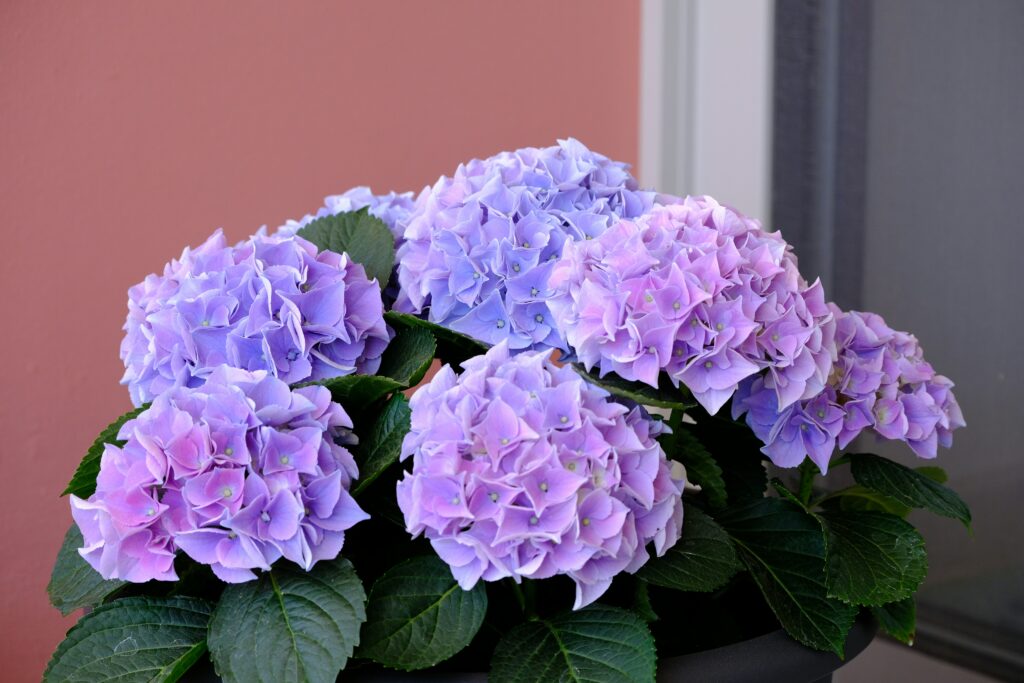
Hydrangeas in containers are one of the most spectacular flowering plants you can grow on a patio or balcony. Their enormous, globe-shaped flower heads in shades of blue, purple, pink, and white create a lush, cottage-garden atmosphere that transforms any outdoor space into something truly beautiful.
Growing hydrangeas in pots requires a little more attention than some other container plants — they need consistent moisture and the right conditions to thrive — but the stunning results are absolutely worth the effort. Here is everything you need to know.
Table of Contents
- Best Hydrangea Varieties for Pots
- Choosing the Right Container
- Best Soil for Container Hydrangeas
- How to Plant Hydrangeas in Containers
- Sunlight Requirements
- How to Water Container Hydrangeas
- How to Fertilize Hydrangeas in Pots
- How to Change Hydrangea Flower Color
- Common Problems and Solutions
- Overwintering Container Hydrangeas
1. Best Hydrangea Varieties for Pots
Choosing the right variety is essential for container hydrangeas. Compact varieties that stay manageable in size are far more practical for pots than large garden varieties.
| Variety | Type | Height | Notes |
|---|---|---|---|
| Endless Summer | Bigleaf (mophead) | 2–3 feet | Most popular container hydrangea — reblooms all summer |
| Incrediball | Smooth hydrangea | 3–4 feet | Enormous white flower heads, very hardy, reblooms reliably |
| Little Quick Fire | Panicle hydrangea | 2–3 feet | Compact, extremely hardy, flowers turn pink in fall |
| Bobo | Panicle hydrangea | 2–3 feet | Award-winning dwarf variety — perfect for containers |
| Cityline Series | Bigleaf (mophead) | 18–24 inches | Most compact mophead variety — ideal for smaller pots |
Best choice for beginners: Bobo or Little Quick Fire — both are compact, very hardy, and reliably beautiful in containers with minimal fuss.
2. Choosing the Right Container
Hydrangeas need substantial containers — their root systems are extensive and they need plenty of soil volume to support their large flower heads and moisture requirements.
| Hydrangea Size | Minimum Container | Recommended Container |
|---|---|---|
| Compact (18–24 inches) | 10 gallons | 15 gallons |
| Medium (2–3 feet) | 15 gallons | 20 gallons |
| Large (3–4 feet) | 20 gallons | 25+ gallons |
Key tips:
- Always use containers with drainage holes — hydrangeas hate waterlogged roots
- Choose light-colored containers — dark pots absorb heat and dry out faster, which is problematic for moisture-loving hydrangeas
- Larger containers hold more moisture — reducing how often you need to water
3. Best Soil for Container Hydrangeas
Hydrangeas need moisture-retentive soil that also drains well — they need consistent moisture but cannot tolerate waterlogged roots.
Best soil mix for container hydrangeas:
- 50% high-quality potting mix
- 30% compost (for moisture retention and nutrients)
- 20% perlite (for drainage)
Soil pH matters for flower color:
- Acidic soil (pH 5.5–6.0) → Blue flowers
- Alkaline soil (pH 6.5–7.0) → Pink flowers
- White hydrangeas are not affected by pH
4. How to Plant Hydrangeas in Containers
- Fill the container with prepared soil mix, leaving 3 inches at the top
- Remove the hydrangea from its nursery pot and gently loosen any circling roots
- Plant at the same depth as it was growing in its nursery pot
- Fill around the roots with soil, pressing gently
- Water thoroughly after planting — hydrangeas need a good initial watering
- Mulch the surface — a layer of bark mulch retains moisture and keeps roots cool
- Place in appropriate light — morning sun, afternoon shade is ideal
Best time to plant: Spring or early fall when temperatures are mild — avoid planting in the heat of summer.
5. Sunlight Requirements
Hydrangeas need a careful balance of light and shade — too much direct sun causes wilting and stress, while too little light reduces flowering.
| Light Condition | Result |
|---|---|
| Morning sun + afternoon shade | Ideal — good flowering without heat stress |
| Dappled shade all day | Good — slightly fewer flowers but less stress |
| Full sun all day | Poor — wilts dramatically, flowers fade quickly |
| Full shade all day | Poor — very few flowers |
Key advantage of containers: Move your hydrangea container to the ideal position — morning sun, afternoon shade. This is much easier to achieve with a container than with an in-ground plant.
6. How to Water Container Hydrangeas
Hydrangeas are thirsty plants — their large leaves lose a lot of moisture through transpiration. Consistent watering is critical. A hydrangea that wilts dramatically on a hot afternoon is telling you it needs more water.
- Water when the top inch of soil feels dry
- Water deeply until it drains from the bottom
- In hot summer weather, check daily — hydrangeas may need watering every day
- Mulch the soil surface to retain moisture and reduce watering frequency
- Water in the morning to reduce evaporation
- Use self-watering containers for hydrangeas — the consistent moisture is ideal for these thirsty plants
Key tip: If your hydrangea wilts on a hot afternoon but recovers by evening, it’s experiencing heat stress rather than drought — this is normal. If it’s still wilted in the morning, it needs water immediately.
7. How to Fertilize Hydrangeas in Pots
| Timing | Fertilizer | Frequency |
|---|---|---|
| Early spring (before growth starts) | Balanced slow-release fertilizer | Once at start of season |
| Spring through midsummer | Balanced liquid fertilizer or hydrangea-specific fertilizer | Every 2–3 weeks |
| Late summer | Stop or reduce feeding | Allow plant to prepare for dormancy |
Important: Stop fertilizing by late summer. Late-season feeding encourages tender new growth that is vulnerable to frost damage in fall.
8. How to Change Hydrangea Flower Color
One of the most fascinating aspects of bigleaf hydrangeas (mopheads and lacecaps) is that their flower color can be changed by adjusting the soil pH.
| Desired Color | Soil pH Needed | How to Achieve It |
|---|---|---|
| Blue flowers | 5.5–6.0 (acidic) | Add aluminum sulfate or sulfur to lower pH. Water with rainwater. |
| Pink flowers | 6.5–7.0 (alkaline) | Add garden lime to raise pH. Use tap water which is often alkaline. |
| Purple flowers | 6.0–6.5 (neutral) | pH between acidic and alkaline produces purple or mixed colors |
Note: Color changes take time — a full color change from pink to blue or vice versa typically takes one full growing season to fully develop.
9. Common Problems and Solutions
| Problem | Cause | Solution |
|---|---|---|
| Wilting in afternoon heat | Heat stress — normal in very hot weather | Move to afternoon shade, water more consistently, mulch soil |
| No flowers | Pruned at wrong time, too much shade, or frost damage to buds | Don’t prune in fall — wait until spring. Move to better light. |
| Brown leaf edges | Underwatering or too much direct sun | Water more consistently, move to afternoon shade |
| Yellow leaves | Overwatering or nutrient deficiency | Check soil moisture, apply balanced fertilizer |
| Powdery mildew | Fungal disease in poor air circulation | Improve air circulation, avoid wetting leaves |
10. Overwintering Container Hydrangeas
Container hydrangeas are more vulnerable to winter damage than in-ground plants because their roots are exposed to cold through the pot walls.
- Hardy varieties (panicle, smooth hydrangeas) — Can stay outdoors in most climates. Move to a sheltered spot and wrap the container for insulation.
- Bigleaf hydrangeas (mopheads) — More cold-sensitive. In cold climates, move to an unheated garage or shed after the first frost.
- All varieties — Reduce watering significantly in winter. Check soil monthly and water only if completely dry.
- Pruning — Do not prune in fall. Wait until spring when you can see which buds have survived winter.
Final Thoughts
Hydrangeas in containers are one of the most spectacular investments you can make in your container garden. Their enormous, lush flower heads in beautiful colors create a display that few other container plants can match.
Choose a compact variety, give it a large container with moisture-retentive soil, water consistently, and place it in morning sun with afternoon shade. Do those things well, and your container hydrangea will reward you with breathtaking blooms for many years to come. 🌸
Have questions about growing hydrangeas in containers? Visit the Contact page — I’d love to hear from you!
— mumu, Green Garden Tips