By mumu
Zucchini has a reputation for being a garden bed vegetable — and a very prolific one at that. But compact bush varieties of zucchini grow surprisingly well in large containers, and a single well-grown container zucchini plant can produce enough fruit to keep a family well-supplied all summer long.
Growing zucchini in a container requires more space and water than most container vegetables, but the abundant harvest makes it completely worthwhile. Here is everything you need to know to grow zucchini in a container successfully.
Table of Contents
- Best Zucchini Varieties for Containers
- Choosing the Right Container
- Best Soil for Container Zucchini
- How to Plant Zucchini in Containers
- Sunlight Requirements
- How to Water Container Zucchini
- How to Fertilize Zucchini in Containers
- Pollination Tips for Container Zucchini
- Common Problems and Solutions
- When and How to Harvest
1. Best Zucchini Varieties for Containers
Choosing a compact bush variety is essential for container zucchini growing. Standard vining zucchini varieties spread 4–6 feet in every direction and are completely impractical in pots.
| Variety | Type | Container Size | Notes |
|---|---|---|---|
| Bush Baby | Compact bush | 10–15 gallons | Most compact variety — specifically bred for containers |
| Patio Star | Compact bush | 10–15 gallons | Bred for containers — compact, productive, excellent flavor |
| Bush Gorini | Compact bush | 15 gallons | Italian variety — excellent flavor, compact growth |
| Eight Ball | Round zucchini, compact | 10–15 gallons | Round fruits on compact plants — unique and productive |
| Astia | Compact bush | 10 gallons | Award-winning container variety — very productive |
Best choice for beginners: Bush Baby or Astia — both are specifically bred for container growing and produce abundantly in relatively small pots.
2. Choosing the Right Container
Zucchini needs the largest container you can practically manage. Small containers severely restrict production and cause the plant to stress quickly in hot weather.
| Container Size | Suitability | Expected Yield |
|---|---|---|
| 10 gallons | Minimum for very compact varieties | Modest harvest |
| 15 gallons | Good — recommended for most varieties | Good harvest |
| 20+ gallons | Excellent — best results | Abundant harvest |
Best container materials: Large fabric grow bags are ideal for container zucchini — they’re lightweight, provide excellent drainage, and their dark color absorbs warmth that zucchini roots love. Large plastic containers are the next best option.
3. Best Soil for Container Zucchini
Zucchini is a heavy feeder that needs rich, well-draining soil to support its rapid growth and large fruit production.
Best soil mix for container zucchini:
- 60% high-quality potting mix
- 20% compost (zucchini loves rich, fertile soil)
- 20% perlite (for drainage and aeration)
Zucchini prefers a slightly acidic to neutral soil pH of 6.0–7.0. Most quality potting mixes fall within this range naturally.
4. How to Plant Zucchini in Containers
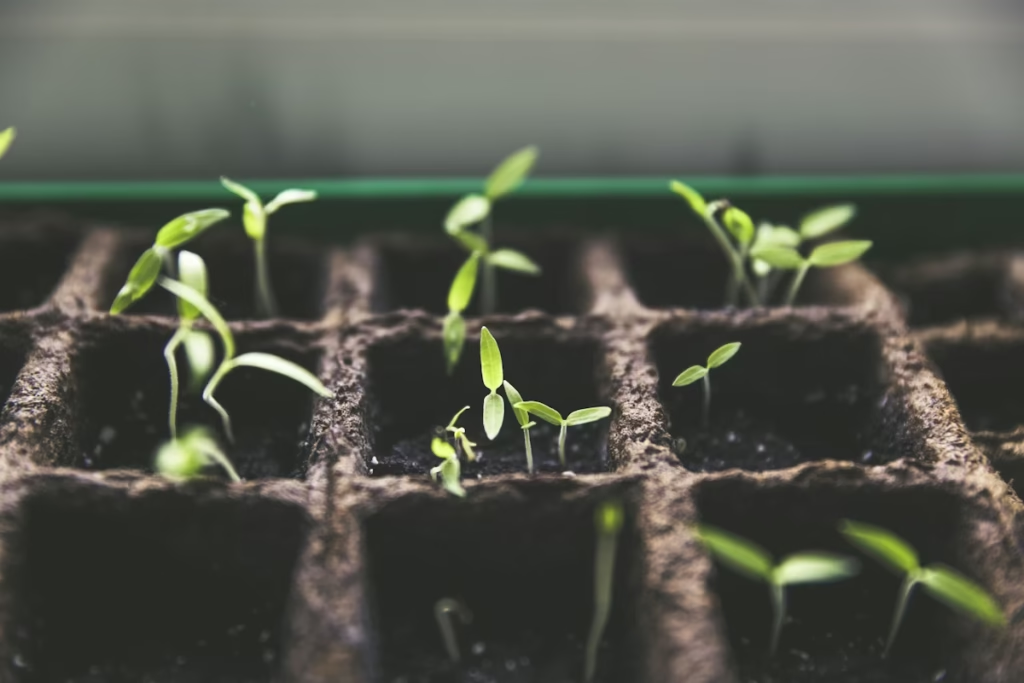
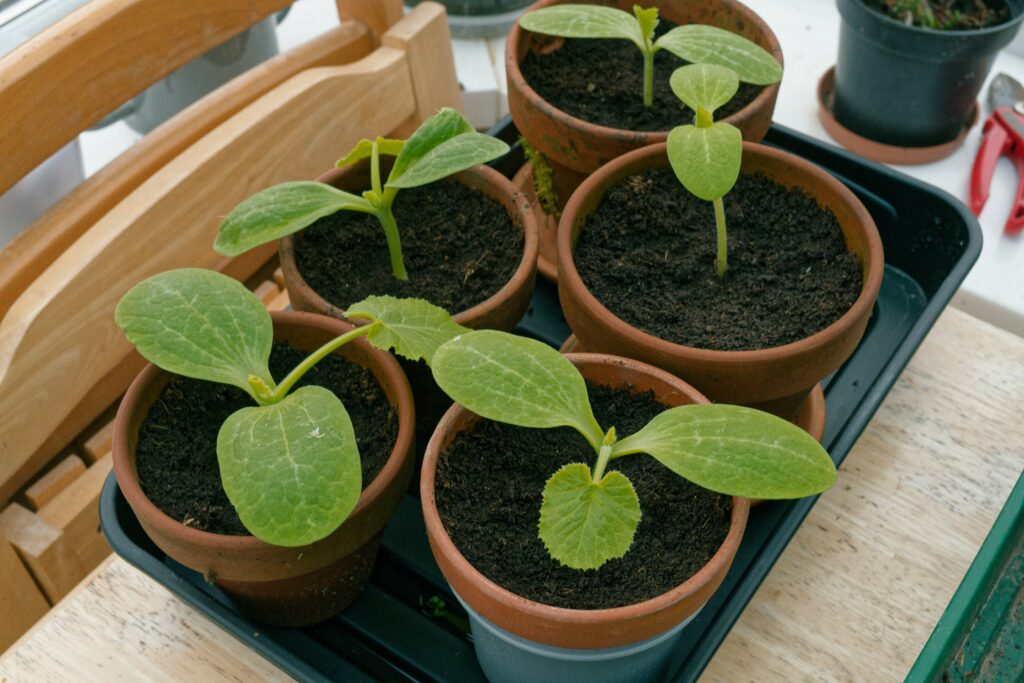
Zucchini can be grown from seed directly in the container or from transplants. Direct sowing is often preferred as zucchini dislikes root disturbance.
- Wait for warm weather — Don’t plant outside until all frost danger has passed and temperatures are consistently above 60°F (15°C)
- Fill the container with prepared soil mix, leaving 2 inches at the top
- Sow 2–3 seeds 1 inch deep in the center of the container
- Thin to one plant once seedlings reach 3 inches — keep the strongest seedling
- Water gently after sowing
- Place in full sun immediately
Key tip: Only grow one zucchini plant per container — even large containers. Zucchini needs all the root space it can get, and two plants in one container will compete too aggressively.
5. Sunlight Requirements
| Sunlight | Result |
|---|---|
| 6–8 hours direct sun | Ideal — maximum production |
| 4–6 hours direct sun | Acceptable — reduced but worthwhile harvest |
| Less than 4 hours | Poor — very few fruits produced |
6. How to Water Container Zucchini
Zucchini is a thirsty plant — its large leaves lose a lot of moisture through transpiration, and its rapid fruit development requires consistent soil moisture. Inconsistent watering is the most common cause of poor fruit production in container zucchini.
- Water when the top inch of soil feels dry
- Water deeply until it drains from the bottom
- In hot summer weather, check daily — a large zucchini in a 15-gallon container may need watering every day
- Mulch the soil surface to slow moisture evaporation
- Always water at the base — wet foliage encourages powdery mildew
- Consider self-watering containers for zucchini — the consistent moisture dramatically improves production
7. How to Fertilize Zucchini in Containers
Zucchini is one of the heaviest feeders in the vegetable garden. Without regular fertilizing, production drops off quickly in containers.
| Growth Stage | Best Fertilizer | Frequency |
|---|---|---|
| Early growth (leafy stage) | Balanced fertilizer (10-10-10) | Every 2 weeks |
| Flowering and fruiting stage | High-potassium fertilizer | Every 1–2 weeks |
Important: Switch from balanced to high-potassium fertilizer once flowers appear. Too much nitrogen at this stage produces lush leaf growth but poor fruit set.
8. Pollination Tips for Container Zucchini
Zucchini produces separate male and female flowers on the same plant. Both types are needed for fruit to develop. Poor pollination is one of the most common reasons container zucchini produces flowers but no fruit.
How to identify male vs female flowers:
- Male flowers — appear first, on a thin straight stem, no small fruit behind the flower
- Female flowers — appear later, have a tiny miniature zucchini behind the flower
How to hand pollinate:
- In the morning when flowers are open, use a small soft paintbrush or cotton swab
- Collect pollen from a male flower by brushing the center
- Transfer the pollen to the center of a female flower
- Repeat with multiple flowers for best results
9. Common Problems and Solutions
| Problem | Cause | Solution |
|---|---|---|
| Flowers but no fruit | Poor pollination or only male flowers present | Hand pollinate, wait for female flowers to appear |
| Fruit rotting at blossom end | Poor pollination or calcium deficiency | Hand pollinate, water consistently |
| Powdery mildew on leaves | Most common zucchini disease — fungal | Water at base only, improve air circulation, remove affected leaves |
| Wilting in afternoon heat | Heat stress — normal in very hot weather | If plant recovers by evening, it’s fine. If wilting persists, check soil moisture. |
| Squash vine borer | Moth larvae bore into stems | Cover stems with row cover early in season, grow in containers raised off ground |
10. When and How to Harvest
Harvesting zucchini at the right time is critical — and the right time is earlier than most people think. Small zucchini are far more flavorful than large ones, and leaving fruit on the plant too long signals it to slow down production.
- Harvest when zucchini are 6–8 inches long — while the skin is still tender and glossy
- Never let zucchini grow to baseball bat size — they become watery, seedy, and flavorless
- Use a sharp knife or scissors to cut the stem — never twist or pull
- Check containers every 1–2 days during peak season — zucchini grows incredibly fast in warm weather
- Regular harvesting encourages the plant to produce more fruit continuously
Final Thoughts
Growing zucchini in a container is one of the most productive container vegetable gardening projects you can take on. With a large enough container, a compact bush variety, consistent watering, and regular fertilizing, a single container zucchini plant can produce dozens of delicious fruits all summer long.
Choose your variety wisely, give it the space it needs, and harvest early and often. Your container zucchini will reward you with an abundance that will surprise you — and keep your kitchen well-stocked with fresh, tender zucchini all season long. 🥒
Have questions about growing zucchini in containers? Visit the Contact page — I’d love to hear from you!
— mumu, Green Garden Tips